The global diplomatic core is obsessed with a fantasy. They call it "Security Council Reform." Every few years, a fresh candidate for UN Secretary-General—currently Michelle Bachelet—steps onto the stage and promises to fix the "anachronism" of the P5. They talk about "geographic representation," "equity," and "modernizing the architecture of peace."
It is a performance. It is a hollow ritual designed to signal virtue while ignoring the brutal physics of power.
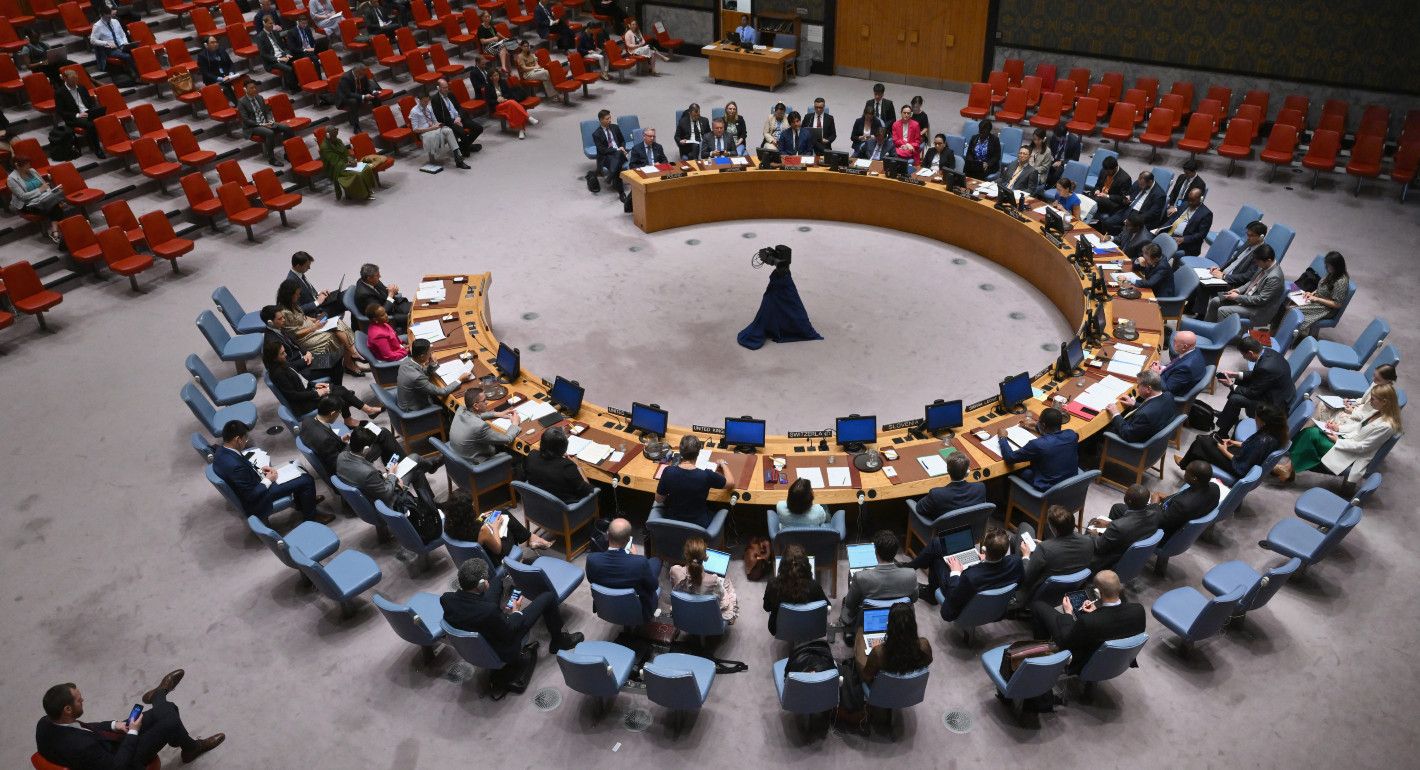
The push to expand the UN Security Council (UNSC) isn’t just a logistical nightmare; it is a fundamental misunderstanding of why the UN still exists. People love to point at the veto power of the United States, Russia, China, France, and the UK as the reason for global gridlock. They argue that adding India, Brazil, or an African permanent seat would "democratize" the room.
They are wrong. Totalitarianism isn’t the problem. Reality is.
The Security Council was never meant to be a parliament of equals. It was designed as a pressure valve for the world’s most dangerous nuclear powers. If you "fix" it by diluting their influence, you don't create a more just world. You create a useless one.
The Myth of Representation
The "lazy consensus" argues that the UNSC is a relic of 1945. Diplomats claim that because the world’s GDP and population centers have shifted, the council’s membership must shift too.
This assumes the UNSC is a reward for being a "good" or "large" country. It isn't.
The council is a management committee for hard power. In the private sector, if you have a board of directors, you don't add five new members just because they’re popular in the office. You keep the board small enough to make decisions and powerful enough to fund them.
Expanding the council to 20 or 25 members, as many reformists suggest, would turn the only body capable of binding international law into a glorified debating society. We already have one of those. It’s called the General Assembly. It passes hundreds of resolutions a year that nobody reads and even fewer follow.
If you give everyone a seat at the table, nobody is actually eating.
The Veto is the Only Thing Keeping the UN Alive
Bachelet and her peers often frame the veto as the ultimate obstacle to peace. They want to limit its use or abolish it entirely.
This is dangerous idealism.
The veto exists to ensure that the UN never tries to enforce a policy that would lead to a direct military confrontation between nuclear-armed states. If the Security Council could outvote Russia or the United States on a matter of their core national interest, the UN would cease to exist within forty-eight hours. The offended power would simply leave, take its funding with it, and we would be back in the 1930s—watching a League of Nations collapse while the tanks roll.
The veto isn't a bug; it’s a feature of geopolitical stability. It forces the Great Powers to acknowledge that they cannot use the UN as a weapon against one another. To "reform" this is to remove the very mechanism that prevents World War III.
The India and Brazil Paradox
Let’s look at the "legitimacy" argument. Proponents say India, as the world’s most populous nation, deserves a permanent seat. From a moral standpoint, they are right. From a functional standpoint, it’s a disaster.
Adding India means you must add Pakistan’s opposition. Adding Brazil means you must address Argentina’s concerns. Adding a seat for the African Union triggers a decade-long fight between Nigeria, South Africa, and Egypt.
I’ve spent years watching these multilateral negotiations stall. The moment you open the Charter for amendment, you aren't just adding a chair; you are opening a Pandora’s Box of regional rivalries. Every country has a neighbor who will burn the building down before they let their rival gain permanent status.
The result? Total paralysis. By the time the "reform" is finished, the institution will be so bruised by the infighting that it will have zero credibility left to handle a real crisis in the Middle East or the South China Sea.
The Cost of "Equity"
In business, we talk about "decision fatigue." In diplomacy, we have "consensus fatigue."
The current P5 can barely agree on the color of the sky. Imagine a P10 or a P15.
- The Logistical Drag: Every new permanent member brings a new set of national interests, a new set of red lines, and a new domestic audience to appease.
- The Dilution of Responsibility: When everyone is responsible for global security, no one is. Small, elite groups get things done. Large, "representative" groups produce bland, watered-down communiqués that solve nothing.
- The Funding Gap: Many of the nations screaming for a seat aren't willing or able to foot the bill. The US currently pays about 22% of the UN's regular budget. Are the newcomers ready to write those checks? History suggests they want the status without the invoice.
Stop Fixing the Council, Start Bypassing It
The real "industry secret" that Bachelet won’t tell you is that the Security Council is increasingly irrelevant to how the world actually runs.
While diplomats argue about seating charts in New York, the real work is happening in "minilateral" groups. The Quad, the G7, the BRICS+, and various ad-hoc coalitions are where the actual policy shifts occur.
If you want to solve a regional conflict, you don't wait for a UNSC resolution that Russia or China will block. You build a coalition of the willing. You use economic sanctions via the global financial system. You use direct bilateral pressure.
The Security Council is a museum of 20th-century power. Trying to "reform" it is like trying to upgrade a horse and carriage with a jet engine. It’s the wrong vehicle for the 21st century.
The Brutal Truth
The push for reform is a career-building exercise for international civil servants. It allows them to hold conferences, write papers, and feel like they are "shaping the future" without ever having to solve a real war.
If Michelle Bachelet or any other candidate truly wanted to make the UN effective, they wouldn't talk about adding more seats. They would talk about streamlining the Secretariat, firing the dead weight in the bureaucracy, and focusing the UN on what it’s actually good at: humanitarian aid, vaccine distribution, and technical standards.
Instead, they chase the dragon of "Security Council Reform" because it sounds noble. It’s the ultimate "People Also Ask" trap. People ask, "How do we make the UN more fair?" The answer is: You don't. Fairness isn't the goal of a security body. Survival is.
The current system is ugly. It’s unfair. It’s elitist. And it works exactly as intended by preventing a total break between the world’s most dangerous players.
If you break the P5 to satisfy a sense of "geographic balance," you aren't evolving the international order. You are dismantling the only thing keeping the Great Powers inside the tent.
Stop trying to fix the Security Council. It isn't broken; it’s just honest about who holds the guns.
If you want a more representative world, build new institutions that reflect today’s reality. Leave the Council alone before you "reform" us all into a global conflict the UN was built to prevent.
The Council doesn’t need more voices. It needs fewer illusions.