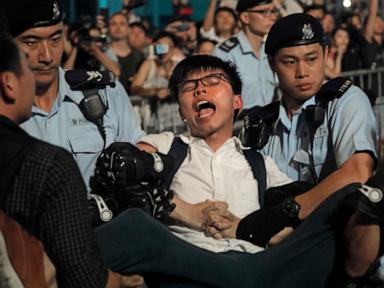
Sequential prosecution under Hong Kong’s national security framework converts isolated political infractions into compounding custodial liabilities, systematically eliminating judicial leniency through overlapping statutory regimes. When a pro-democracy activist faces sentencing in a second national security case, the event is not merely an isolated courtroom development; it is the execution of a dual-track legal architecture designed to maximize incapacitation while adhering to formal procedural legality. Standard reporting frames these proceedings through individual biographical narratives and discrete court dates, missing the underlying mechanics of statutory stacking, bail denial presets, and cumulative sentencing principles that govern the outcome before the judge enters the bench.
The Architecture of Dual-Track Prosecution
To understand why a defendant faces a second sentencing proceeding under national security charges, one must separate the two distinct legal instruments currently operating in Hong Kong: the 2020 National Security Law (NSL), imposed directly by Beijing, and the Safeguarding National Security Ordinance (Article 23), enacted locally in 2024 alongside legacy colonial-era sedition statutes.
Prosecutorial strategy relies on dividing conduct across time and statutory definitions rather than consolidating all alleged offenses into a single indictment. This separation yields three operational advantages for the state:
- Elimination of Concurrent Sentencing Discounts: Under standard common law principles, offenses arising from a single course of conduct typically result in concurrent sentences, capping total prison time at the maximum penalty for the single most severe offense. By separating acts—such as distinguishing participation in an unauthorized assembly or primary election from subsequent social media commentary or foreign advocacy—prosecutors force the court to consider consecutive or partially consecutive terms.
- Continuous Pre-Trial Detention: Under Article 42 of the NSL, the traditional common law presumption in favor of bail is reversed. A defendant cannot be granted bail unless the judge has sufficient grounds for believing they will not continue to commit acts endangering national security. When an activist is already serving a sentence or awaiting trial on a primary charge, filing a second indictment ensures that even if the first sentence expires or an appeal succeeds, the defendant remains in custody without interruption.
- Escalation of Sentencing Tiers: The NSL establishes mandatory minimum sentencing bands based on the defendant's classified role—distinguishing between "principal offenders," "active participants," and "other participants." A prior conviction or pending sentencing in a related security matter strips the defendant of good-character mitigation and provides evidentiary weight for prosecutors arguing that the defendant belongs in a higher tier of culpability.
The Mechanics of Cumulative Punishment
In Hong Kong’s judiciary, sentencing judges designated by the Chief Executive to handle national security cases operate within strict appellate guardrails. Landmark rulings by the Court of Final Appeal and the Court of Appeal have established that statutory minimum sentences under the NSL are mandatory and cannot be reduced below the floor through standard mitigating factors such as a timely guilty plea or prior public service.
When a second national security case reaches the sentencing phase, the court applies the totality principle. In conventional criminal law, the totality principle prevents a cumulative sentence from becoming crushing or disproportionate to the overall criminality of the offender. Within the national security jurisdiction, appellate jurisprudence has recalibrated this principle. Deterrence and retribution take absolute precedence over rehabilitation.
The calculation of the final sentence follows a rigid sequence:
- Baseline Assessment: The judge determines the starting point for the second offense based on the gravity of the act and the statutory tier. For offenses like conspiracy to commit subversion or collusion with foreign forces, starting points routinely exceed ten years for those deemed principal actors, while sedition under the Crimes Ordinance or Article 23 carries lower statutory caps but serves as an additive layer.
- Mitigation Discount: A standard one-third discount for a guilty plea applies only to the discretionary range above the statutory minimum, unless the defendant provides substantial assistance to authorities by implicating co-defendants.
- Consecutive Execution: Because the second case typically involves distinct factual predicates—often separated by months or involving different organizational networks—the court orders all or a substantial portion of the new sentence to run consecutively to the existing term. The mathematical result is an effective extension of incapacitation that neutralizes political actors for a decade or more without requiring a single life sentence.
Evidentiary Feedback Loops and Retroactive Framing
A critical flaw in superficial coverage of second-wave national security trials is treating each indictment as an independent evidentiary event. In practice, prosecutors utilize an evidentiary feedback loop. Statements, organizational charters, and digital communications introduced as background context in a first trial—such as the 2021 primary election subversion case—are repurposed as primary actus reus (guilty acts) in a second prosecution, or vice versa.
This operates through the expansive legal doctrine of conspiracy. Under Hong Kong law, a conspiracy charge allows prosecutors to introduce acts and statements made by alleged co-conspirators even before the specific defendant joined the enterprise, provided those acts were in furtherance of the common design. When an activist faces a second sentencing, the factual matrix established in the first case often serves as the foundation for proving criminal intent (mens rea) in the second. The defendant is effectively estopped from relitigating the political nature of their broader movement, leaving defense counsel limited room to argue that the secondary actions were benign or protected speech.
Furthermore, while the 2020 NSL explicitly states that it does not apply retroactively, courts have permitted pre-2020 conduct to be admitted as evidence of a continuing conspiracy or to establish the context and intent of post-2020 actions. In a second sentencing proceeding, any political activity occurring prior to June 30, 2020, frequently functions as an aggravating factor demonstrating persistent ideological commitment, thereby justifying a sentence at the upper end of the discretionary bracket.
Systemic Constraints and Judicial Friction
Evaluating this legal machinery requires acknowledging the structural boundaries within which Hong Kong courts operate. The system is not devoid of procedural rules; rather, those rules have been codified to produce predictable state-favoring outcomes while preserving the institutional form of a common law jurisdiction.
Three primary limitations define the defense posture in these proceedings:
- Absence of Jury Trials: Under Article 46 of the NSL, the Secretary for Justice can issue a certificate directing that a case be tried without a jury on grounds including the protection of state secrets or the involvement of foreign factors. Trials are adjudicated by a panel of three designated judges, eliminating the unpredictability of lay fact-finders and centralizing both factual determination and sentencing discretion.
- Narrowed Constitutional Review: Hong Kong courts lack the jurisdiction to strike down provisions of the NSL or challenge decisions made by the Committee for Safeguarding National Security, whose operations are shielded from judicial review under Article 14. Defense arguments rooted in the Basic Law’s human rights guarantees or the International Covenant on Civil and Political Rights (ICCPR) have been consistently subordinated to the overarching statutory mandate of national security.
- Attrition Through Delay: The complexity of multi-defendant national security trials, combined with a limited pool of designated judges and senior prosecutors, creates severe docket congestion. Defendants frequently spend two to three years in remand before a first verdict is reached. By the time a second case moves to sentencing, the prolonged pre-trial detention has already achieved the primary political objective of removing the individual from public life, rendering the eventual sentencing hearing a formalization of an existing reality.
The Strategic Trajectory of Secondary Prosecutions
The progression of a pro-democracy activist through a second national security sentencing signals the maturation of Hong Kong’s post-2020 legal order. The initial phase of enforcement relied on broad, sweeping arrests to dismantle mass mobilization networks and civil society organizations. The current phase relies on granular, sequential litigation to exhaust legal avenues and extend custodial timelines for high-profile figures.
For legal observers, risk analysts, and institutional stakeholders assessing Hong Kong’s regulatory and political environment, the operational takeaway is unambiguous: statutory compliance and legal exposure in the territory cannot be modeled using pre-2020 common law assumptions. Sequential charging ensures that legal jeopardy is cumulative rather than bounded by single-event prosecution. Any analytical model forecasting political stability or judicial independence in Hong Kong must weight the structural mechanics of consecutive sentencing, non-jury adjudication, and the permanent subordination of civil liberties to national security imperatives as fixed parameters rather than temporary emergency measures.