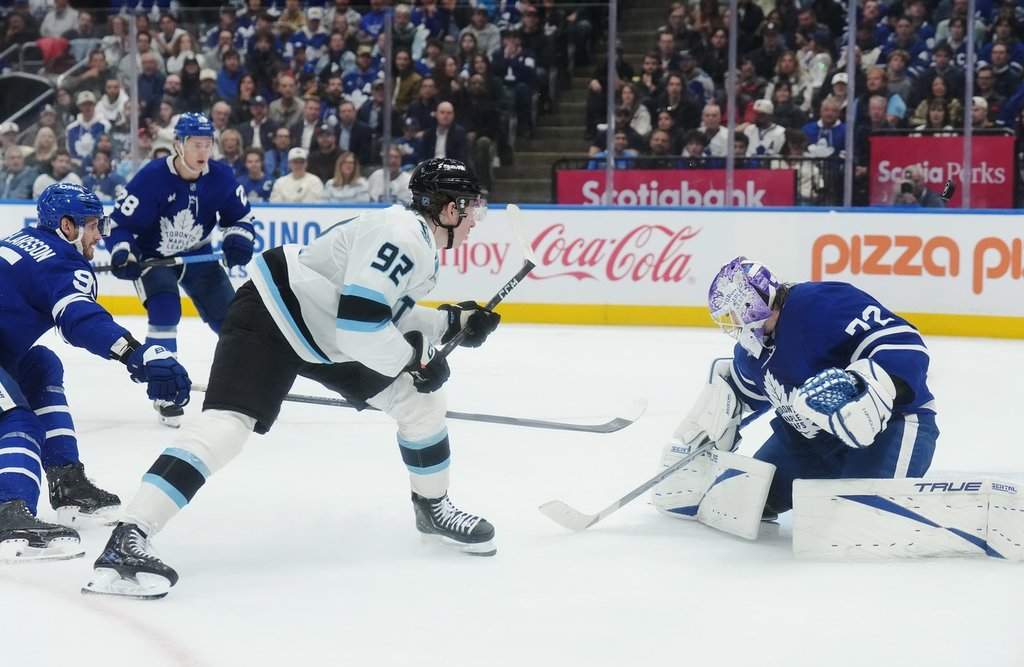
Hockey box scores lie all the time. If you only glanced at the final result of the Florida Panthers' loss to the Utah Mammoth, you might assume goaltending let Florida down again, especially with Sergei Bobrovsky coming off a rough stretch where every rebound seemed to find an opposing stick.
That assumption would be completely wrong. Bobrovsky actually looked like himself again, tracking pucks cleanly through traffic, controlling his post-to-post pushes, and giving a depleted or disjointed Panthers lineup a legitimate chance to steal points they didn't really earn on the night.
What Actually Happened When Bobrovsky Faced the Utah Mammoth
Goaltending evaluation is tricky because fans and casual observers judge a netminder almost entirely by wins, losses, and raw save percentage. When a veteran goalie with two Vezina Trophies and a Stanley Cup ring goes through a slump, every goal against gets magnified under a microscope.
Against the Mammoth, the story wasn't about soft goals leaking through his five-hole or poor angles on routine perimeter shots. Instead, Florida's skaters struggled to manage the neutral zone, turning pucks over at the blue lines and handing Utah's fast young forwards clean odd-man rushes and extended offensive-zone cycle time.
Bobrovsky had to make high-danger saves early just to keep the game from getting out of hand in the first period. You could see the difference in his body language immediately. During bad stretches, Bobrovsky tends to drop into his butterfly a split-second too early, leaving the top corners exposed and forcing himself to scramble laterally when the puck moves east-west. Against Utah, he stayed patient on his skates, held his edges, and forced shooters to beat him cleanly rather than guessing on passes.
Why Box Scores Mislead Fans on Goalie Bounce-Backs
If you want to know whether a goalie has truly snapped out of a funk, stop looking at whether his team won the game. Look at three specific things instead:
- Rebound control into the corners. When Bobrovsky is fighting the puck, shots off his chest protector or pads bounce right back into the slot where trailing forwards feast on second chances. Against the Mammoth, he steered low shots into the mesh or kicked rebounds wide to his defensemen, killing Utah's cycle before it could snow-ball.
- Calmness under net-front traffic. Utah loves to funnel pucks from the point with bodies crashing the crease. Instead of swimming in the blue paint or losing sight of the release point, Bobrovsky fought around screens smoothly and absorbed heavy traffic shots without coughing up loose change.
- Lateral recovery speed. The modern NHL is built on royal-road passes—passes that cross the center line of the ice in the offensive zone. Bobrovsky's edge work on cross-crease feeds looked crisp, square, and controlled rather than desperate.
Honestly, a goalie can play an A-minus game and still lose 3-2 or 4-2 if his team fails to generate sustained pressure at five-on-five or takes undisciplined penalties at the worst possible moments. That's just how hockey works over an 82-game grind.
The Bigger Picture for Sergei Bobrovsky and the Florida Panthers
Every NHL season brings stretches where a veteran starter hits a wall. Bobrovsky isn't twenty-five anymore, and Florida has leaned heavily on him across multiple deep playoff runs that stretched well into June. Fatigue—both mental and physical—shows up in tiny mechanical flaws before it ever shows up on an injury report.
When those flaws creep in, Florida's aggressive, forechecking identity suddenly looks much riskier. Paul Maurice's system relies on defenders pinching down the walls and forwards pressuring puck carriers high in the offensive zone. That style suffocates opponents when the goalie behind them cleans up the occasional breakaway or two-on-one. When the goalie isn't sharp, those same aggressive pinches turn into three-goal deficits before the second intermission.
That's why this particular loss to the Mammoth matters way more than a standard regular-season defeat. For Florida's coaching staff, seeing Bobrovsky regain his timing and composure in the crease takes massive pressure off the locker room. Players grip their sticks tighter when they feel like every defensive mistake ends up in the back of their own net. When they see their starter stonewalling grade-A chances again, they start playing fast and fearless instead of tentative.
What Utah Did Right to Still Walk Away With Two Points
Giving Bobrovsky credit doesn't mean taking anything away from the Utah Mammoth. Utah has quietly built a roster packed with speed, skill, and relentless transition pressure, and they punished Florida's puck-management mistakes efficiently.
Utah didn't beat Bobrovsky with lucky bounces or weak wrist shots from the half-wall. They earned their goals by forcing turnovers in the middle of the ice, attacking with speed before Florida's backcheckers could sort out assignments, and burying quality looks from inside the home-plate area. Even the best goaltenders in the world are going to get beaten when opponents get uncontested looks from the inner slot after a defensive breakdown.
How to Actually Evaluate Goaltending Performance Going Forward
Most hockey commentary falls into lazy extremes. Either a goalie is washed up after three rough starts, or he's back to Vezina form after one shutout. Neither take helps you understand what's really happening on the ice.
If you're watching the Panthers over their next handful of games, pay less attention to the final score and watch how Bobrovsky handles the first ten shots of the game. Early confidence dictates everything for a technical, rhythm-based goalie like him. Watch whether he's challenging shooters at the top of his crease or sinking deep toward his goal line. Watch how quickly he tracks pucks off the end boards, and notice how his defensemen react when the puck enters their zone.
When Bobrovsky is locked in, Florida's entire structure clicks back into place—and based on how he battled against the Mammoth, that reset has already started.