Dawn in a modern city rarely arrives with silence anymore. It comes with the whine of small electric motors, a high-pitched, insectoid buzz that used to mean a child flying a toy in a park, but now means something entirely different.
Across borders where ordinary lives have been compressed into statistics, the sky has become a ceiling of potential dread. Imagine waking up to the sound of shattered glass not from a storm, but from a mechanical intruder that hovers just outside a second-story window. This is the new reality of the conflict between Russia and Ukraine, where the battle lines have long since dissolved into the interiors of apartment blocks, quiet residential neighborhoods, and places where children are supposed to learn how to draw, not how to duck. Learn more on a similar subject: this related article.
Recent reports brought a chilling focus to this creeping proximity. A drone strike struck dangerously close to children in Russian territory, puncturing the psychological armor that once separated the home front from the front lines. When the debris settled, the political shockwaves moved faster than any interceptor missile.
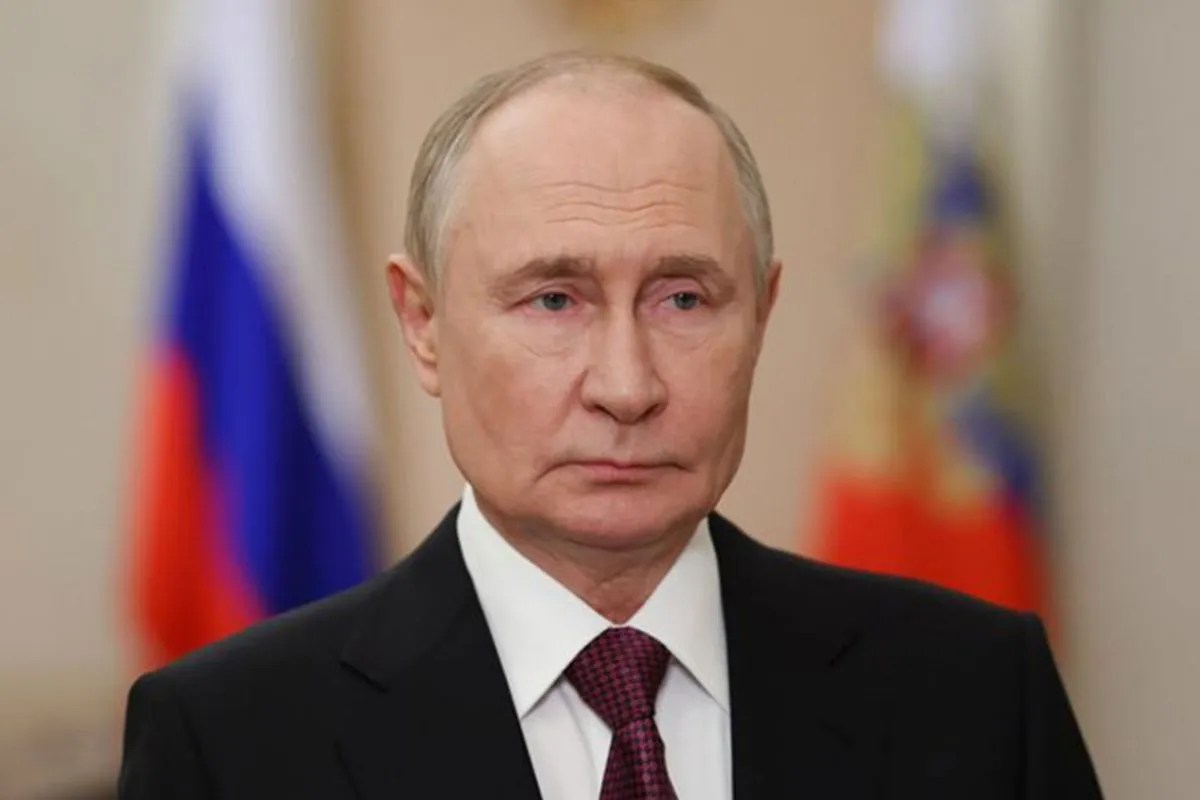
President Vladimir Putin did not respond with diplomacy. He responded with an ultimatum. An ultimate warning. A line drawn in blood and electronic signals. Additional journalism by TIME highlights comparable views on the subject.
To understand the weight of that warning, you have to look past the podiums and the diplomatic cables. You have to look at the geometry of escalation. Wars do not end because people grow tired of fighting; they escalate until the cost of continuing exceeds the imagination of both sides. When airborne hazards cross borders and threaten the most vulnerable, the language of governance shifts from negotiation to retaliation.
Consider what happens when a threshold is breached. For months, the war was a distant spectacle for millions on both sides—something watched on pixelated screens over morning coffee. But modern technology has a way of shrinking distances. Cheap commercial hulls strapped with explosives have democratized long-range terror. They fly low, beneath the heavy radar nets, guided by satellite constellations and human operators sitting miles away in warm, safe rooms.
When those machines touch down where children play, the psychological contract of the war changes forever.
The Kremlin's latest pronouncements carried a distinct cadence of finality. In the calculus of modern statecraft, an attack on domestic soil involving the young is treated not merely as a tactical nuisance, but as a strategic provocation designed to cross psychological red lines. The warning issued from Moscow was explicit: cross this boundary again, and the nature of the response will alter the geography of the conflict entirely.
Yet, looking at this through a single lens misses the broader, tragic symmetry of the tragedy. On the other side of the border, towns and cities have spent years absorbing a daily, relentless rain of much larger ordinance. Schools there have long since moved underground, converted into windowless bunkers where teachers try to maintain a semblance of normalcy while air raid sirens wail overhead. The escalation is a staircase where every step up is mirrored by the other side.
This is the mechanical trap of attrition. No one wants to be the first to blink, because blinking looks like defeat. And defeat, in the eyes of leadership, is an existential catastrophe.
We talk about geopolitics as if it were a game of chess, neat and bloodless, played by men in suits moving carved pieces across a polished mahogany board. But real war is messy, loud, and terrifyingly small. It is the sound of a mother pulling her child under a kitchen table. It is the smell of burnt plastic and high explosives lingering in a courtyard where bicycles were parked just hours before.
When the news cycle moves on to the next briefing, the human residue remains. The ultimatum delivered by Moscow hangs in the cold air, a shadow stretching longer with each passing day. Will it be answered with restraint, or will it serve as the trigger for a wider, darker phase of a conflict that has already rewritten the history of the twenty-first century?
The warning has been issued. The sky remains open, humming with invisible threats. And down below, the world waits for the other shoe to drop.