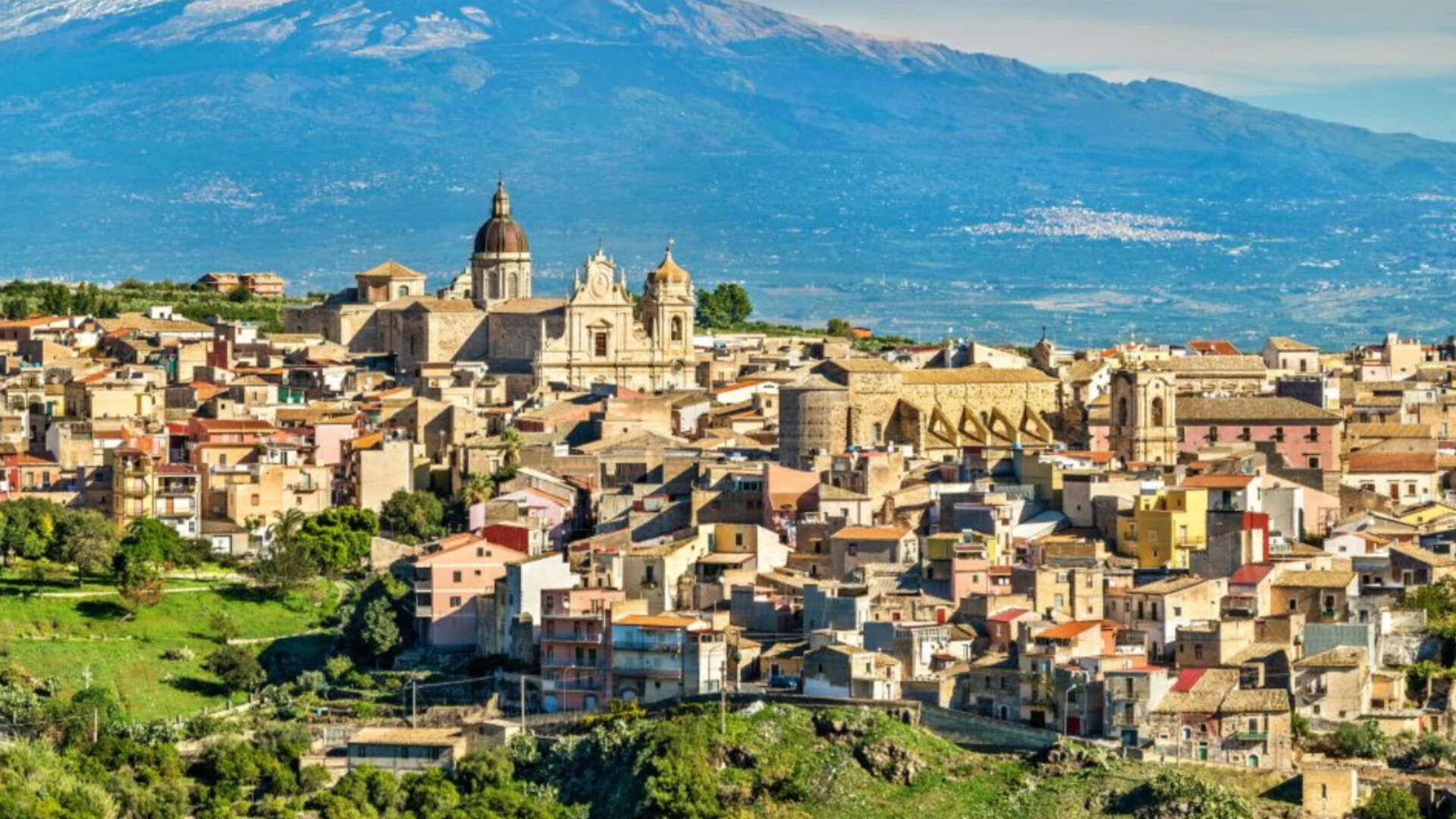
The air in Altea, a sun-bleached corner of southeastern Spain, usually smells of salt and dry earth. It is a place where retirees come to fade into the Mediterranean scenery and where the light is so bright it seems to bleach the secrets right out of the cobblestones. But inside a secluded villa on the outskirts of town, the atmosphere was different. It was heavy. It was static. It was the kind of silence that doesn’t signal peace, but rather a profound, vibrating tension.
At the center of this silence stood a 58-year-old German-Indian man who called himself a spiritual guide. He didn't offer just meditation or yoga; he offered a complete restructuring of reality. To his followers, he was the bridge to a higher plane. To the two children stationed at his door, he was the sun around which their entire, fractured universe orbited.
They were seven and eleven years old.
In a normal world, children those ages are negotiating the politics of a playground or arguing over the rules of a video game. Their biggest fears should be a missed homework assignment or a scraped knee. But these two boys were not living in a normal world. They were "guards." They were the gatekeepers of a self-styled guru’s sanctum, tasked with protecting a man who claimed to have the keys to the universe but was apparently terrified of the world outside his front door.
The Architecture of a Private Universe
To understand how a child ends up standing watch over a middle-aged man in a Spanish villa, you have to understand the slow, seductive crawl of spiritual coercion. It never starts with the bars; it starts with the promise of wings.
Imagine a seeker—let’s call her Clara. Clara is tired. She is tired of the noise of the modern world, the hollowness of her career, and the feeling that there is a giant, God-shaped hole in her chest. She meets a man who speaks with the calm authority of the ancient woods. He tells her that her children are not just children; they are "pure souls" or "warriors" or "protectors of the light." He tells her that the traditional school system is a factory for drones and that he alone can provide the "authentic" education their spirits require.
This is the hook. It’s an appeal to a parent’s deepest desire to protect their child from a cynical world. By the time the "guru" suggests the children stay with him for "specialized training," the parent has already been conditioned to see his every whim as a divine mandate.
In the Altea case, Spanish authorities found that this wasn't just a quirky communal living arrangement. It was a fortress of psychological control. The children weren't just living there; they were being used as human shields and psychological anchors to keep the adult followers in line. If the children are committed, the parents cannot leave. The children become the ultimate collateral.
The Weight of a Seven Year Old’s Duty
There is a specific kind of trauma that occurs when the roles of protector and protected are inverted. Psychologists call it parentification, but even that clinical term feels too small for what happened in that villa.
When a seven-year-old is told he is a guard, he isn't playing. He is absorbing the weight of a responsibility that his nervous system is not equipped to handle. Every footstep in the hallway becomes a threat. Every car driving past the gate is a potential enemy. The child lives in a state of "hyper-vigilance," a constant, jagged adrenaline spike that fries the developing brain’s ability to feel safe.
During the raid, the Civil Guard—Spain’s oldest law enforcement agency—didn't just find a man with a messiah complex. They found a calculated system of isolation. The children were kept away from other peers. Their "education" was entirely dictated by the German-Indian leader. They were told the outside world was a place of darkness, and only within the walls of the villa, under the shadow of their teacher, was there safety.
The irony is as thick as the Mediterranean heat: the man claiming to be a spiritual master was the most frightened person in the room. He needed the children to watch the door because he was terrified of reality. He needed them to be his guards because, without the theatre of their service, he was just a man in a room, alone with his own grandiosity.
The Mechanics of the Mirage
How does one man convince a group of adults to hand over their children and their autonomy? It isn’t magic. It’s a series of well-documented psychological levers.
- Love Bombing: The initial phase is a flood of affection and validation. The guru makes the follower feel like they are the most important person in the world, the only one who truly "gets" the message.
- The Shared Secret: He creates an "us versus them" mentality. The world is "asleep," and only those in the inner circle are "awake."
- The Gradual Escalation: You don't start by asking a mother to let her seven-year-old guard a door. You start by asking her to skip a family dinner. Then you ask her to quit her job. Then you ask for a "donation." By the time the children are involved, the follower has invested so much—socially, financially, and emotionally—that admitting the guru is a fraud would mean admitting their entire life is a wreck.
The brain would rather believe a lie than face that level of devastation.
In Altea, the leader’s dual heritage—German and Indian—served as a convenient backdrop for this mirage. He could play into Western fascinations with "Eastern wisdom" while maintaining the rigid, disciplined organizational structure often associated with his European roots. He was a brand, carefully curated to bridge the gap between exoticism and authority.
The Silence After the Siren
When the Civil Guard finally moved in, the physical walls came down easily. The handcuffs clicked. The leader was taken into custody, and the children were moved to a protective center. But the invisible walls—the ones built inside the minds of those children—don't crumble so quickly.
For the seven-year-old, the world is suddenly vast and terrifyingly quiet. There is no door to guard. There is no guru to please. For the first time in his memory, he is allowed to be unimportant. That transition is violent. To go from being a "warrior of the light" to just another kid in a classroom is a profound demotion that feels like a loss of identity.
The recovery from this kind of spiritual abuse is a long, stuttering process of learning that the world is not an enemy and that love does not require a trade-off.
The Altea villa stands empty now, or perhaps it’s being rented out to vacationers who will never know that the hallway they walk through was once a post for a tiny, terrified soldier. The sun still shines on the white-washed walls. The sea still crashes against the shore. But the story remains a jagged reminder that the most dangerous cages don't have bars; they have "teachers," and they are built out of our own desperate need to belong to something greater than ourselves.
The children are safe now, in the legal sense of the word. They have beds and food and teachers who don't demand they stand watch. But at night, when the house grows still, they probably still listen for the floorboards to creak. They are waiting for a command from a man who promised them heaven but gave them a sentry post instead.
Truth is a heavy thing to carry, but it is lighter than the armor of a child who was never allowed to play.