The convergence of Houthi missile strikes hitting deep within Saudi airspace and the solemn, heavy national grief marking the anniversary of the October 7 conflict reveals a stark geopolitical reality. The Middle East is not merely enduring a protracted regional crisis. It is careening into a permanent state of decentralized warfare where traditional state lines, deterrence models, and diplomatic frameworks no longer apply.
For years, mainstream foreign policy analysis treated localized flare-ups, proxy actions, and sovereign defense postures as isolated variables. That analytical luxury has evaporated. When ballistic and cruise missile salvos reach King Khalid International Airport in Riyadh, while simultaneous explosions rattle the internationally recognized government’s seat in Aden, the structural anatomy of modern regional conflict changes entirely. For a closer look into similar topics, we recommend: this related article.
The Mechanics of Shadow Escalation
To understand why these strikes matter beyond the immediate panic of disrupted flight paths and grounded arrivals on tracking platforms, one must examine how non-state actors have acquired precision-strike capabilities once reserved for major military powers. The operational evolution of Yemen’s Ansar Allah, commonly known as the Houthis, illustrates a dangerous decentralization of strategic leverage.
Discussions in defense circles often focus on the hardware—the drones, the guidance systems, the crude yet effective missile variants. But the real story lies in network resilience. Traditional deterrence relied on the vulnerability of state infrastructure; if a government launched or sponsored an attack, its own territory, economy, and military assets offered clear targets for retaliation. When dealing with deeply entrenched asymmetric forces embedded within civilian populations and rugged terrain, classical deterrence calculations fail. For additional context on this topic, detailed coverage can also be found on USA Today.
Riyadh finds itself caught in an increasingly narrow corridor of strategic choices. The kingdom has spent years trying to exit the quagmire of the Yemeni civil war, shifting toward economic diversification and domestic mega-projects under Vision 2030. Yet, regional gravity continually pulls the kingdom back into the theater of war. Defending airspace against incoming projectiles is an extraordinarily expensive game of asymmetric economics. Intercepting low-cost loitering munitions with multi-million-dollar air defense batteries creates an unsustainable fiscal and operational imbalance.
The Weight of Collective Memory and Ongoing Trauma
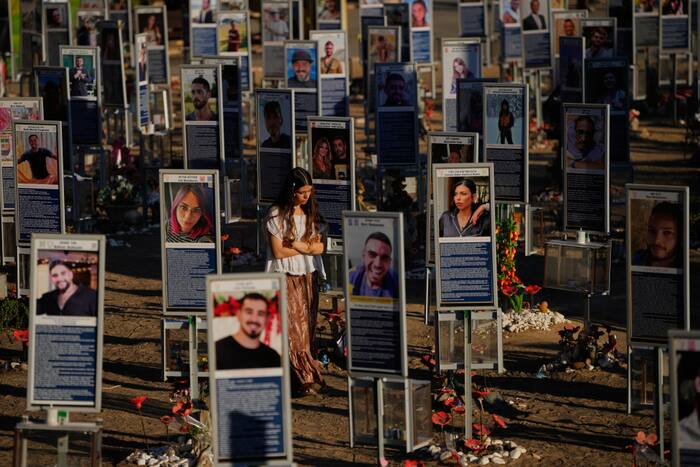
While the skies over the Arabian Peninsula register the friction of intercepted missiles, the psychological landscape elsewhere remains frozen in the trauma of October 7. Memorial gatherings at festival sites, intersections, and community centers across Israel capture a society still reckoning with an unprecedented security failure and an ongoing hostage crisis.
At the same time, across the borderlands and within decimated urban sectors, the civilian population experiences a very different reality of survival. The juxtaposition is jarring, yet entirely connected. Every military action, every cross-border rocket, and every diplomatic stalemate feeds into a shared psychological ecosystem of perpetual insecurity. The anniversary is not merely a marker of time elapsed; it serves as a baseline measurement of how deep the structural wounds have become.
Consider the wider economic ramifications. Global trade routes through the Red Sea and the Bab el-Mandeb strait have faced continuous disruption, forcing shipping lines to circumnavigate the African continent. This logistical tax is paid quietly by consumers worldwide through inflated shipping costs, delayed manufacturing components, and jittery energy markets. The illusion that localized Middle Eastern conflicts can be quarantined from the global economy has been thoroughly dismantled.
The Limits of Containment
Diplomatic efforts led by international bodies often lean on the vocabulary of ceasefires and de-escalation, but these terms obscure the ground-level incentives driving each faction. For Tehran's network of regional allies, sustained pressure keeps adversaries off-balance, prevents regional normalization tracks from solidifying, and maintains ideological cohesion through perpetual mobilization. For regional governments attempting to chart a course of stability, every intercepted drone is a reminder that sovereignty is no longer guaranteed by borders alone, but by active, unceasing vigilance.
The underlying architecture of Middle Eastern security is broken. Temporary truces and tactical interceptions do not constitute a resolution; they are merely pauses between rounds in a wider contest for regional hegemony. Until policymakers confront the reality that asymmetric networks can indefinitely disrupt global trade and sovereign airspace with impunity, the cycle will continue to spin faster than diplomacy can track.