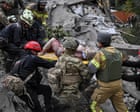
A strike by a Sudanese paramilitary drone near the Ethiopian border left forty-one civilians dead, exposing a widening theater of devastation that stretches far beyond the urban centers of Khartoum. Rights monitors documented the attack, framing it within a broader pattern of aerial escalation by the Rapid Support Forces. Unmanned aerial vehicles, once prized by state militaries for surveillance, now serve as accessible terror tools for non-state actors operating across porous borders. The human cost piles up in peripheral regions where international journalism rarely lingers.
The mechanics of this expansion reveal a tactical shift in the Sudan conflict. General Mohamed Hamdan Dagalo’s forces have increasingly relied on commercial and modified drones to project power where ground troops face stubborn resistance or logistical bottlenecks. Borderlands function as gray zones, poorly monitored by regional governments and rich with supply routes that evade traditional customs and sanctions regimes. When a munitions-laden quadcopter or loitering munition drops out of the sky onto a border market or farming village, the target is rarely a hardened military installation. The victims are traders, farmers, and families caught between warring factions whose ambitions outlive every ceasefire agreement brokered in foreign capitals.
Tracing the supply chains behind these unmanned systems leads away from the frontlines and into the opaque corridors of global gray-market procurement. Commercial off-the-shelf components, carbon-fiber frames, and guidance electronics move through third-party intermediaries across the Middle East and North Africa. Sanctions enforcement remains porous. Export controls designed for traditional arms shipments fail to catch modular technology shipped in pieces and assembled locally. The Rapid Support Forces and allied militias have exploited these structural blind spots, acquiring the means to wage precision warfare without owning an indigenous aerospace industry.
Addis Ababa watches these developments with growing apprehension. Ethiopia’s own internal security challenges, particularly in Amhara and Oromia, leave federal authorities reluctant to engage in military entanglements across the western frontier. Yet, the spillover effects of Sudan's fragmentation refuse to stay contained. Refugees cross daily, straining local infrastructure and creating friction points over dwindling resources. When military strikes land within striking distance of the border, the risk of miscalculation escalates exponentially. A stray projectile or a deliberate cross-border provocation could easily drag regional armies into a quagmire that defies containment.
Human rights investigators face immense hazards documenting these incidents. Satellite imagery, fragmented witness testimonies, and digital forensics collected from charred wreckage provide the only verifiable proof of what happened on the ground. Local medical facilities, already overwhelmed by systemic collapse, struggle to treat blast injuries that require specialized surgical intervention. The international community issues routine condemnations, yet diplomatic statements lack the teeth to alter battlefield calculations. As long as external patrons continue to supply cash and hardware, the drone strikes will persist, turning every border settlement into a potential graveyard.
The geopolitical landscape of the Horn of Africa grows more volatile with each week of unchecked violence. Traditional diplomatic frameworks, modeled on state-to-state negotiations, prove utterly inadequate for dealing with nimble, heavily armed paramilitary structures that answer to no central authority. Analysts warning of a prolonged regional destabilization are no longer looking at hypothetical scenarios. The warning signs burn in the debris of frontier towns, marking a grim new chapter in modern warfare where technology democratizes destruction while accountability remains entirely absent.