The Monon High Bridge does not scream its history. It rests quietly above Deer Creek, a skeletal spine of iron and timber stretching across an Indiana ravine, swallowed by the thick embrace of surrounding woods. On a freezing February afternoon, two young girls walked out onto that bridge. They recorded a grainy video. They captured a stranger's silhouette descending an embankment.
And then, silence.
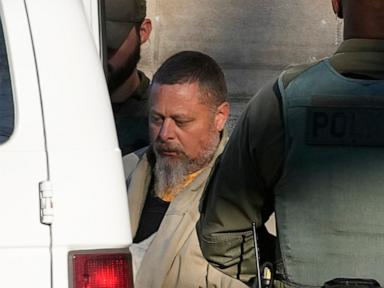
For years, that silence defined Delphi. It echoed through town hall meetings, hung heavy over grocery store aisles, and turned every passing stranger into a suspect. The nation watched, transfixed by a mystery that defied easy answers. When an arrest finally came, years down the line, a weary community let out a collective, fragile breath. Richard Allen, a local pharmacy worker, stood accused of the murders of Liberty German and Abigail Williams. The trial that followed was heavy, suffocating under the weight of national obsession and local grief. The jury listened, deliberated, and delivered a verdict of guilt.
The public assumed the chapter was closed.
They were wrong.
Closure is a fragile illusion, easily shattered by the persistent grinding wheels of the appellate process. Now, the legal machinery moves again, driven by a defense team fighting desperately for a new trial. But the argument driving this latest legal maneuver is not built on standard technicalities or routine procedural errors. Instead, it plunges directly into the murky, unsettling waters of alternative subcultures, dragging an obscure theory of ritualistic violence into the harsh light of judicial scrutiny.
To understand why a man convicted of such a crime is clawing for another day in court, one must look at what was left out of the original proceedings as much as what was brought in.
Consider what happens when a community is confronted with the incomprehensible. When ordinary malice fails to explain a tragedy, the human mind reaches for the extraordinary, the dark, the hidden. The defense has long argued that the prosecution's narrative missed a sprawling, grotesque underworld—one involving pagan rituals, carved runes, and adherents of Odinism. They claim that local actors, steeped in extremist or esoteric beliefs, were ignored by investigators too eager to lock onto a single suspect.
In a quiet Indiana courtroom, lawyers argue about the admissibility of alternative theories with the clinical detachment of chess players. But outside those doors, the words carry a visceral weight. Runes. Rituals. Sacrifices. These are concepts that belong to ancient myth, not modern suburbia. Yet, the defense insists they are the key to unlocking the truth, or at least creating enough reasonable doubt to dismantle a murder conviction piece by piece.
The legal battle over a new trial is a study in friction. On one side stands the state, armed with a jury's verdict and the burden of finality. For the families of Libby and Abby, every motion, every appeal, and every headline is a fresh tear in a wound that refuses to scar. They do not want folklore; they want peace. They want the ghosts of 2017 to finally rest.
On the other side stands the machinery of defense, obligated to probe every fracture in the state's case, no matter how bizarre the angle. If evidence of alternative suspects was improperly barred, if a different narrative of the crime was silenced before the jury could weigh it, then the foundation of the conviction begins to wobble. That is the legal gamble: to convince a higher court that the trial was incomplete, that a crucial piece of the puzzle was locked away in a dark room and never shown to the world.
This is the central tragedy of high-profile criminal justice. It is rarely a clean story of good versus evil. More often, it is a messy collision of human error, institutional blind spots, and the terrifying difficulty of reconstructing a moment of absolute horror years after the blood has washed away.
As the legal briefs pile up and judges weigh arguments that stretch from standard forensic science into the anthropology of fringe beliefs, Delphi waits once more. The town knows that a new trial would mean reopening the vault of its collective trauma. It would mean dragging witnesses back to the stand, replaying the grainy video, and listening once again to the haunting final words captured on a cell phone.
The bridge still stands over Deer Creek. The water still moves through the ravine, indifferent to the legal battles fought in its name. Justice, in all its frustrating, agonizing slowness, continues to crawl forward, searching for an endpoint in the dark.