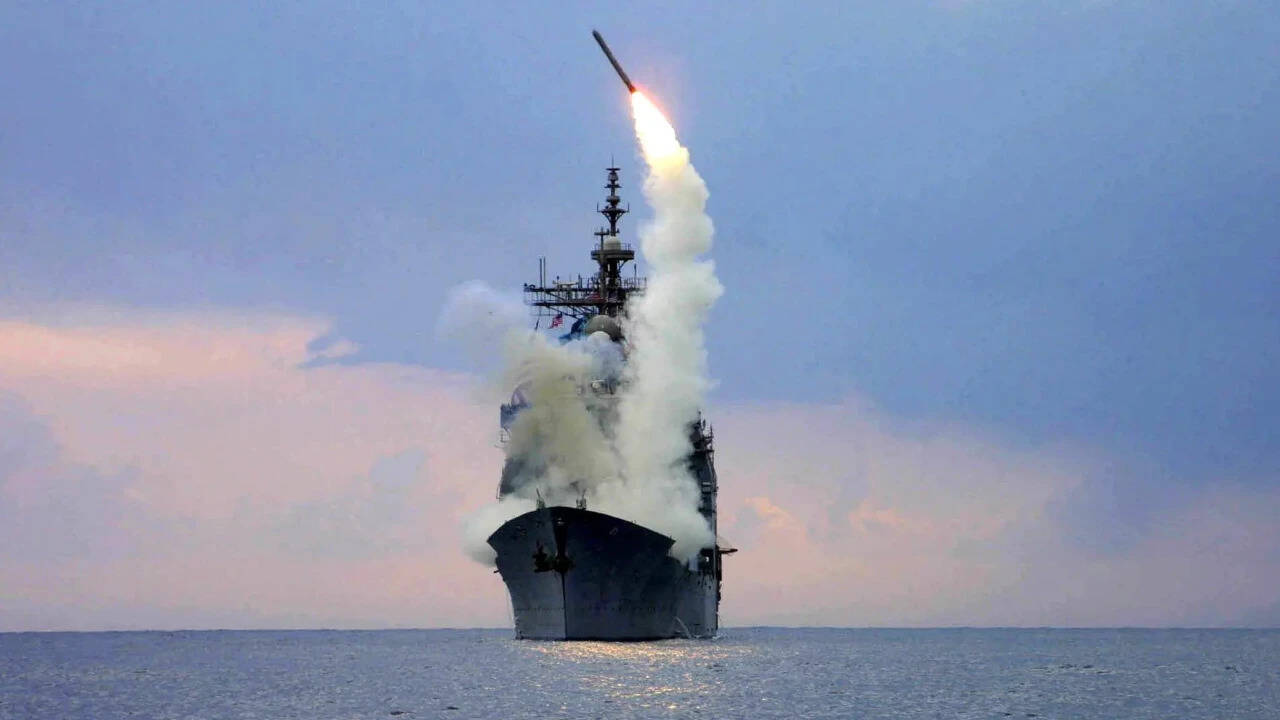
The coffee in the mug grows cold long before the watch ends. Out here, time is measured not by clocks, but by the rhythmic, mechanical heartbeat of the engine room and the vast, indifferent expanse of dark water.
Imagine standing on the massive steel deck of a container ship slicing through the Persian Gulf. (Note: this hypothetical scenario illustrates the daily reality of maritime crews navigating the region). You look out into the heavy salt air. To your left, invisible lines drawn on diplomatic maps dictate the limits of sovereignty. To your right, the jagged silhouettes of tanker masts fade into the evening haze. Everything feels normal. Until it does not.
A sudden flash. A metallic shriek that vibrates through the hull, rattling teeth and sending a jolt of pure adrenaline straight to the chest. Something hit the ship.
In the high-stakes waters of the Strait of Hormuz, a single explosion is never just an isolated accident. It is a spark dropped into a powder keg.
The Diverging Echoes of Diplomacy
While the crew of that stricken cargo vessel scrambled to assess the damage, thousands of miles away in quiet conference rooms and behind oak doors, another kind of collision was taking place. Words were crashing against one another. Stories were fracturing.
Washington insisted one thing. Tehran insisted another.
The U.S. government pointed to the strike as evidence of escalating threats, warning of hostile actions in critical international shipping lanes. Meanwhile, Iranian officials offered a completely different narrative, casting doubt on the timeline, the nature of the incident, or the very premise of the accusations, while simultaneously trading signals over stalled diplomatic talks regarding regional security and nuclear agreements.
Official statements rarely capture the smell of burning insulation or the white-knuckle grip of a captain holding a satellite phone. They are sanitized. Polished. Designed to project strength or deflect blame.
Consider what happens next in these high-stakes geopolitical standoffs. The public hears two conflicting versions of reality. One side speaks of unprovoked aggression. The other speaks of fabrication or exaggeration. And trapped right in the middle of the noise are the steel vessels, the cargo, and the human beings just trying to make it home to their families.
The Narrow Throat of Global Commerce
To understand why a single strike in the Strait of Hormuz sends shockwaves through stock exchanges and kitchen tables across the globe, you have to look at a map and appreciate just how tight the squeeze really is.
Think of the global economy as a massive, intricate vascular system. Energy and goods flow through it constantly. The Strait of Hormuz is the jugular vein.
Roughly a fifth of the world's petroleum supply passes through this narrow passage every single day. If the strait closes, prices at gas pumps spike in Chicago, Tokyo, and London within hours. Factories slow down. Grocery shelves empty out.
When a cargo ship is struck in these waters, it is not merely an attack on a floating piece of steel. It is an assault on the fragile artery that keeps modern civilization breathing.
Yet, for all its economic gravity, the strait often feels like a ghost zone to outsiders. You watch the news anchors talk about it with grave faces, gesturing at glowing maps. But the anchors are in air-conditioned studios. They have never felt the heavy, humid heat of the Persian Gulf stick to their skin. They have never stared into the dark horizon wondering if the blip on the radar is a friendly patrol or something far more dangerous.
The Human Cost Behind the Headlines
Let us step away from the abstract geopolitics for a moment. Look closer at the bridge of that cargo ship.
Meet Chief Engineer Marcus. He has spent thirty years at sea. He has missed birthdays, anniversaries, and the growing up of two daughters, all to ensure that boxes of electronics, machinery, and clothing move seamlessly across oceans. He is a pragmatic man. He does not care much for political speeches or diplomatic posturing.
When the ship was struck, Marcus did not think about international relations or diverging statements from foreign ministries. He thought about the fuel lines. He thought about the structural integrity of the bulkhead. He thought about his crewmates sleeping down in the quarters.
That is the hidden cost of these modern standoffs. They turn ordinary working people into collateral damage in a high-stakes chess match they never signed up to play.
When diplomats argue over whether talks are progressing or collapsing, Marcus and thousands of sailors like him are simply scanning the dark water for the next unseen threat. Every shadow looks like a warning. Every radio crackle sounds like an ultimatum.
Navigating the Fog of War and Words
The modern world suffers from an excess of information and a scarcity of truth.
When an incident occurs in a contested geopolitical flashpoint, the immediate aftermath is always shrouded in a thick fog. Intelligence agencies race to verify satellite imagery. Spokespeople draft press releases designed to win the narrative war before the facts are even fully established.
The U.S. claims one reality. Iran claims another.
And why do they diverge so sharply? Because in modern geopolitics, perception is power. Admitting vulnerability can be interpreted as weakness. Taking responsibility can invite retaliation. Denying involvement can buy time or shift the diplomatic momentum.
Meanwhile, the gap between what actually happened on the water and what is broadcasted to the world widens into a chasm.
We live in an era where trust is the rarest commodity on Earth. We distrust the headlines because we have seen them weaponized. We question the official statements because we know that political survival always trumps radical transparency.
The Quiet Resilience on the Water
Despite the danger, despite the political posturing, despite the terrifying reality of a world teetering on the edge of friction, the ships keep moving.
They have to.
If the cargo stops moving, the world stops turning. It is that simple.
Down in the galley, the cooks are still preparing meals. On the deck, crew members are still performing routine maintenance, painting over rust spots in the relentless salt spray. They carry a quiet, heavy courage that never makes the evening news. They do not get medals for simply surviving a transit through a hostile strait. They just get to keep their jobs, keep their distance from the chaos, and pray that the next watch is quiet.
The talks in foreign capitals will continue. Delegations will meet, shake hands, posture for the cameras, and walk away unsatisfied. Statements will diverge, hardening into fixed positions.
Out on the water, the night is still long. The radar screen sweeps in a steady, hypnotic circle. A lone light blinks in the distance, reminding everyone that even in the darkest, most contested waters on the planet, human beings are still out there, carrying the weight of the world across the sea.