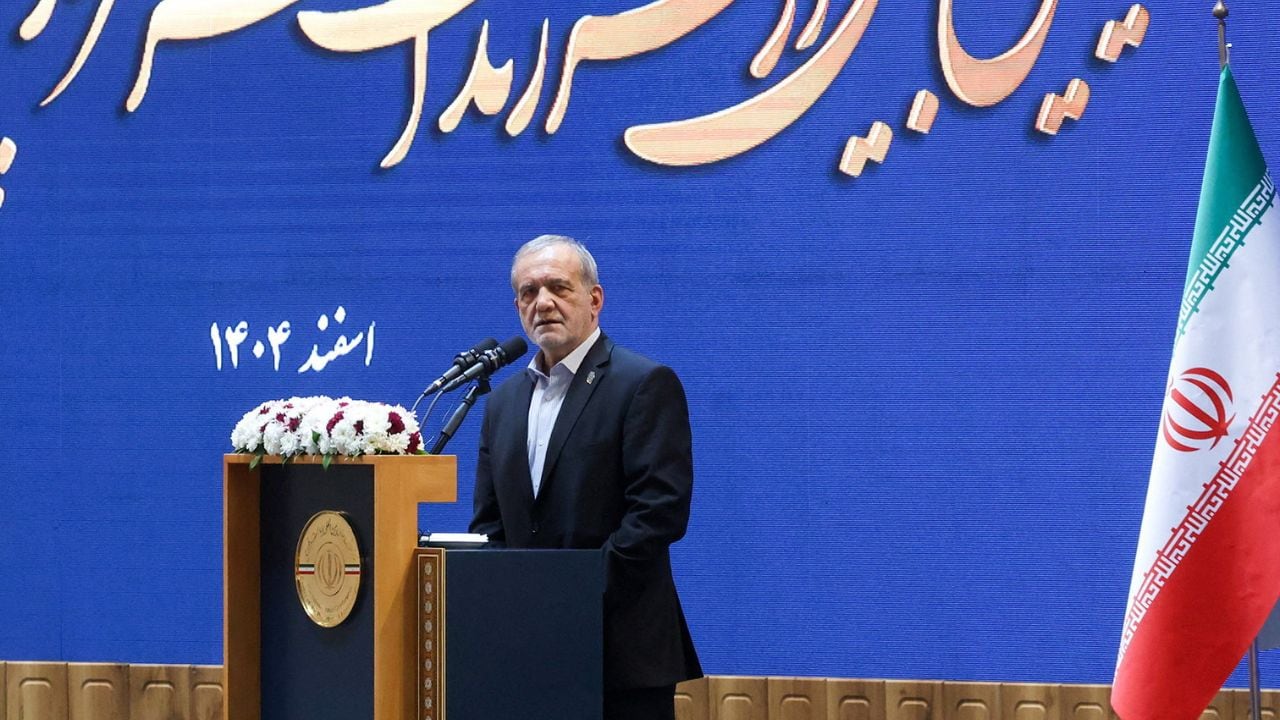
The air in Islamabad during a high-stakes diplomatic summit does not smell like peace. It smells like diesel exhaust, wet asphalt, and the sharp, metallic tang of anxiety. When the motorcade of the Iranian President swept through the gated avenues of Pakistan’s capital, the security cordons were so tight they choked the city’s breath. Snipers watched from rooftops. Streets usually chaotic with colorful Bedford trucks and weaving motorbikes stood unnaturally empty.
On paper, the meeting was a standard exercise in regional cooperation. The official press releases spoke of bilateral trade, counter-terrorism, and energy security. But official state media always speaks in a language designed to put minds to sleep. It uses heavy, dead words to hide the fact that the ground beneath these two nations is shifting violently.
To understand what was actually happening behind those heavy wooden doors in the Prime Minister’s secretariat, you have to look far away from the polished marble of Islamabad. You have to look at a small, dust-choked border town in Balochistan, where a smuggler named Tariq tries to feed his family.
The Line in the Dust
Tariq does not think about geopolitics. He thinks about plastic jerrycans. For years, his entire existence has depended on the porous nine-hundred-kilometer border that separates Pakistan from Iran. He drives a battered pickup truck across trackless wasteland, buying cheap Iranian fuel and selling it on the Pakistani side. To him, the border is not a sovereign legal boundary marked on a map. It is a living, dangerous entity that dictates whether his children eat meat or just dry bread.
Lately, that border has turned hostile.
A few months before the diplomatic handshakes in Islamabad, missile strikes crossed this line. Iran hit targets inside Pakistan; Pakistan retaliated with its own strikes inside Iran. It was a sudden, terrifying flare-up that shocked a region already teetering on the edge of chaos. The world watched with baited breath, wondering if two nuclear-adjacent neighbors were about to slip into an uncontrollable conflict.
Then, just as quickly, the guns went quiet. The diplomats took over. The Iranian President’s visit was the culmination of that frantic backchannel repair work.
But agreements signed in bright rooms do not instantly heal scars in the desert. When top leaders sit down to discuss "regional peace initiatives," they are trying to put a lid on a boiling pot. The tension is fueled by sectarian divides, insurgent groups operating in the badlands, and the crushing weight of economic sanctions that have left both populations desperate for economic oxygen.
The Ghost Pipeline
Consider the problem of the gas pipe.
For decades, an idea has existed to connect Iran’s massive natural gas fields with Pakistan’s energy-starved factories. They called it the Peace Pipeline. It sounds beautiful. It sounds logical. Pakistan faces chronic power blackouts that shut down textile mills and leave entire cities in the dark during the blistering summer months. Iran has more gas than it knows what to do with, largely because international sanctions prevent it from selling freely to the global market.
The solution seems obvious. Build the pipe.
Walk along the border area, and you will find miles of steel pipe rusting under the desert sun. Iran built its section years ago. Pakistan stopped construction on its side. Why? Because the shadow of Washington looms over every decision made in Islamabad. If Pakistan connects that pipe, it risks triggering American sanctions that could instantly collapse its fragile economy, which relies heavily on Western-backed International Monetary Fund loans to stay afloat.
During these recent meetings, the leaders spoke with renewed urgency about finishing the project. They talked about a target of five billion dollars in bilateral trade. But it is a delicate dance. Pakistan’s leadership is walking a razor-thin tightrope, trying to show solidarity with a neighbor while keeping its eyes fixed on the financial masters in Washington and the wealthy patrons in Riyadh.
It is a game of survival played with empty pockets.
The View from the Secret Rooms
The true friction between these states is not born of hatred, but of deep, mutual suspicion. Iran looks across its eastern border and sees a Pakistani state that it believes cannot, or will not, control the militant groups launching attacks into Iranian territory. Pakistan looks westward and worries about Iranian influence among its own sizable minority populations, alongside India’s historical footprint in Iranian ports like Chabahar.
When the leaders sat across from each other, the smiles were frozen. The handshakes lasted just long enough for the photographers to capture the flash.
Behind the closed doors, the conversation was likely blunt. Security chiefs from both sides had to look each other in the eye and answer for the blood spilled in the borderlands. They had to map out how to coordinate intelligence without revealing their own vulnerabilities. It is an impossible puzzle. How do you build trust with a neighbor when both of you are keeping knives hidden behind your backs?
The tragedy of this diplomacy is that it operates so far above the reality of the people it affects. While the politicians discuss grand strategies for regional connectivity, the currency values continue to plummet. Inflation eats away at the savings of ordinary citizens in Tehran and Lahore alike.
What the Clean Reports Omit
Standard news reports tell you who sat where, who signed which memorandum of understanding, and what time the plane departed. They offer a sterile version of history that feels predictable.
But history is rarely sterile. It is chaotic, driven by fear and the desperate need for security. The real story of the Iran-Pakistan meeting is one of two wounded nations trying to find a stable footing in a neighborhood that is rapidly changing. With Afghanistan unstable to the north, the Middle East on fire to the west, and India a permanent rival to the east, Pakistan cannot afford an active enemy on its western flank. Iran, isolated globally and facing internal dissent, desperately needs to prove it is not entirely alone.
They need each other. But they do not trust each other.
The summit concluded with the usual grand declarations. The motorcades spun back into action, whisking the dignitaries away to the airport under heavy escort. The security barriers were rolled back, and the chaotic, noisy reality of Islamabad rushed back into the streets to fill the void.
Back in the borderlands of Balochistan, the sun dipped below the horizon, painting the jagged hills in shades of bruised purple. Tariq loaded his truck in the dark, checking the horizon for patrols, waiting to see if the words spoken in the capital would make his journey tonight any safer, or infinitely more dangerous.


