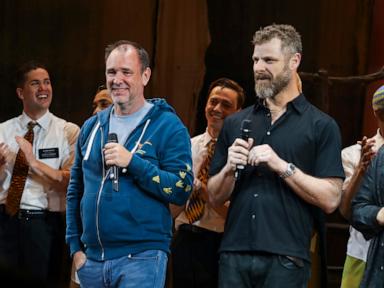
Trey Parker and Matt Stone do not sleep well before a premiere. Nobody who spends decades building a mirror out of cardboard and malice sleeps well.
Imagine sitting in a writers' room in Los Angeles, the coffee turning cold and thick in Styrofoam cups, watching a civilization sprint toward satire faster than any script can rewrite itself. You spend a year crafting a meticulous absurdity. You cast animated children as mouthpieces for existential dread. Then reality arrives, uninvited, wearing a red tie and screaming about geography. Meanwhile, you can explore related developments here: Stop Pretending The Emmy Race Is About Quality When It Is Just A Corporate Turf War.
So you do what any self-respecting satirist does when the world out-jokes the professionals. You change the map.
The Geography of Ridicule
When the news broke that South Park creators Trey Parker and Matt Stone had temporarily "renamed" their fictional Colorado mountain town to South America as a direct, teeth-baring jab at Donald Trump, the internet did what the internet always does. It chortled, shared the headline, and waited for the next distraction. To see the bigger picture, we recommend the recent article by GQ.
We treat these moments as punchlines. We scroll past them on our phones while waiting for a subway or burning toast, treating cultural resistance like a fleeting meme.
(Note: The renaming served as a pointed narrative and promotional flourish reflecting their ongoing, decades-long sparring match with political absurdity.)
Listen. A town is never just a town, especially not the one where Kenny dies every week. That snowy Colorado enclave is a psychological fallout shelter. It is where America goes to laugh at its own hypocrisies when it is too cowardly to look them in the eye. When Parker and Stone slap a new continental label over the iconic sign, they are not just making a quick pun about border rhetoric or geographical confusion. They are holding up a distorting mirror. They are asking a very uncomfortable question: If the lines we draw on maps are this arbitrary, what else are we making up as we go along?
The Heavy Cost of Laughter
Comedy is an act of aggression disguised as hospitality.
I remember watching the early seasons of the show in a basement in the late nineties, the television screen humming with fuzzy analog static. Back then, the targets felt safe. Cartoon Canadians farting at each other. Local authority figures losing their minds. It felt like rebellion. It felt like kids throwing snowballs at passing cars.
Over the years, the cars got bigger. The drivers got louder. The snowballs turned into concrete.
Parker and Stone realized something terrifying around the time the new millennium settled in: you cannot satirize a culture that treats its own destruction as entertainment. Politics stopped being a policy debate and turned into a reality television marathon. How do you mock a politician who uses your own medium's tactics better than you do? How do you caricature a moving target that changes its shape every time the wind shifts?
You don't. You change the rules of the game entirely. You take a hammer to the globe and spin it upside down until Colorado becomes a continent.
Consider the mechanics of how this hits. A casual viewer hears about the title shift and chuckles at the sheer audacity. But beneath the chuckle lies a dull ache of recognition. We live in an era where leaders casually throw around geography like poker chips, where entire regions are reduced to soundbites and fear-mongering tropes. By re-baptizing their fictional creation, the creators are mocking the casual, sloppy geography of populist rhetoric. They are saying: If we are going to throw around massive, sweeping regional names to score political points, let us lean all the way into the madness. Let us make it so stupid that even the people doing it have to blink.
When Reality Breaks the Script
There is a fatigue that comes with paying attention. Every morning brings a new headline that reads like a pitch meeting for a disaster film that didn't get greenlit for being too unbelievable.
Satire used to punch up. Now, satire punches into a void, hoping to hit something solid before the next news cycle erases yesterday's tragedy.
When Parker and Stone take aim at political figures, they are not acting out of partisan loyalty. They despise everyone equally, which is the only ethical stance left for a satirist standing in the wreckage of modern discourse. They look at the spectacle of presidential campaigns, rallies, and policy announcements, and they translate it into the language of fourth-graders on a playground. Because, at the end of the day, that is where we are. We are children fighting over a sandbox, convinced that whoever holds the plastic shovel owns the horizon.
Think about the sheer exhaustion required to keep up with that level of absurdity. Writing a standard sitcom is hard. Writing a show that responds to current events within days, animating entire episodes while the political dust is still settling in the air, is an act of institutional madness. It requires an almost pathological obsession with the flaws of human nature.
Yet they keep doing it. Not because they want to save the world, but because the world refuses to leave them alone.
The Unseen Map
We walk through life pretending that the boundaries we have established are eternal. We draw lines in the dirt, build walls of rhetoric, and swear that our side of the street is clean while the other side sinks into the mud.
Then two guys from Colorado take a red marker, cross out a mountain town, and write an entire hemisphere over it.
Suddenly, the illusion slips. The seams show. You realize that the entire structure—political, social, cultural—is held together by duct tape, ego, and the collective willingness to pretend that the joke makes sense.
The snow falls on the fictional streets of a town that doesn't exist, populated by children who never grow up, reacting to a world that keeps getting older and uglier by the hour. Parker and Stone step back from the drawing board, wipe the ink from their fingers, and watch the smoke rise from the wreckage they spent thirty years cataloging.
The screen fades to black. The music plays. And somewhere out there, the map keeps shifting beneath our feet.


