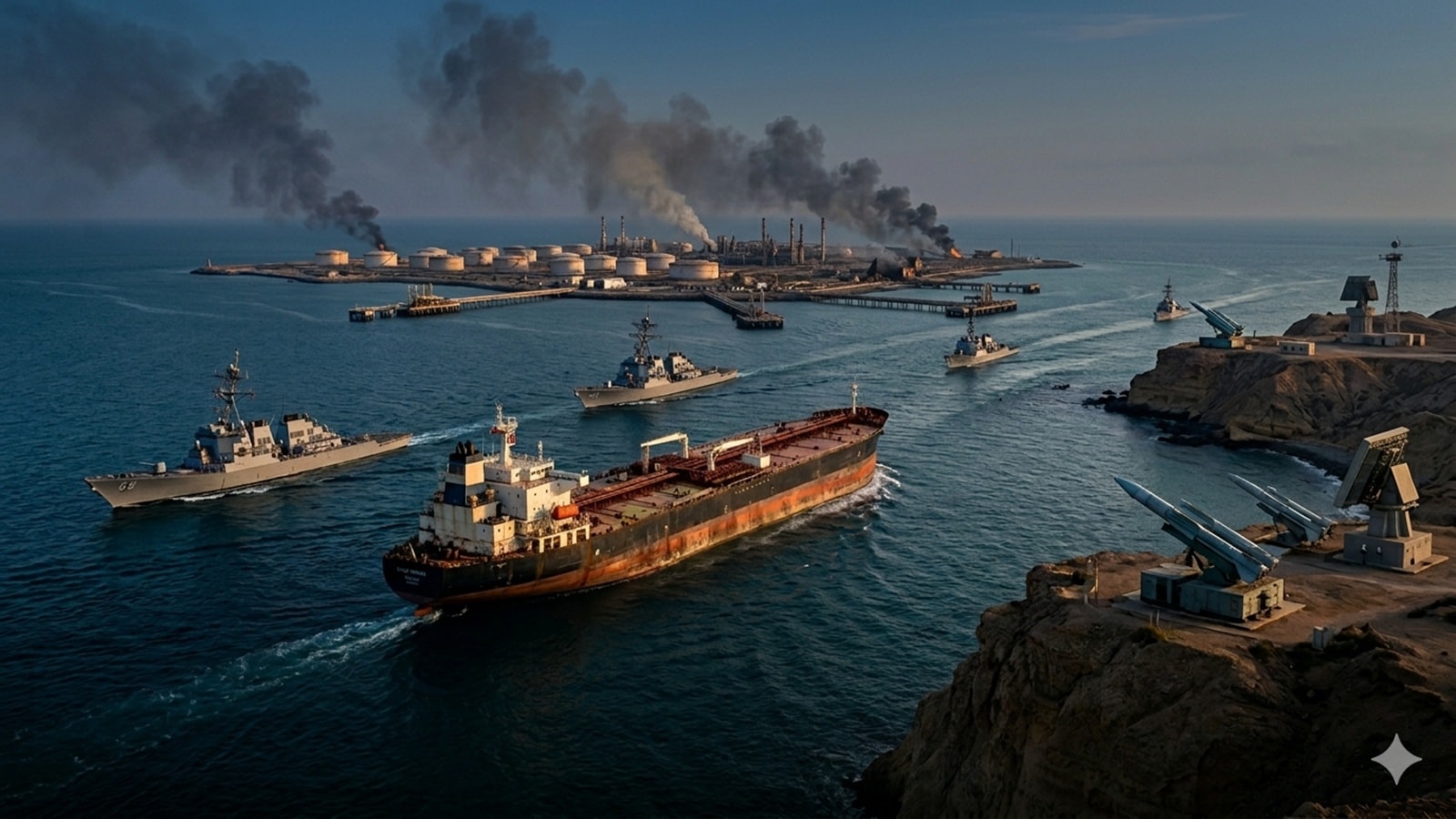
The maritime industry is obsessed with a fantasy.
Pick up any mainstream trade publication right now, and you will find a dozen variations of the same lazy headline: "When will shipping traffic return to pre-war levels?" Analysts stare at satellite data, draw neat little trend lines, and pray for a diplomatic breakthrough. They treat the current volatility in the Strait of Hormuz as a temporary supply chain hiccup—a geopolitical storm that will inevitably blow over once a few treaties are signed or an oil deal is struck.
It is a comforting narrative. It is also completely wrong.
The premise of the question itself is flawed. Asking when Hormuz shipping will return to "normal" assumes that the old baseline was stable. It was not. It was an anomaly. What we are witnessing right now is not a temporary disruption; it is a permanent structural realignment of global trade routes.
If you are waiting for a magic pen stroke in Geneva or Tehran to lower your insurance premiums and bring back the good old days of frictionless transit through the Persian Gulf, you are going to go bankrupt. Here is the brutal truth that the consensus thinkers are entirely missing.
The Illusion of the Diplomatic Reset
The conventional wisdom dictates that geopolitics behaves like a pendulum. Tensions rise, a deal is brokered, tensions fall, and the tankers start flowing again. Under this logic, a potential deal with Iran or a cooling of regional proxy conflicts will instantly restore confidence to the maritime sector.
This view completely ignores how risk assessment actually works in the modern boardroom.
I have spent years advising logistics executives and energy traders on maritime risk. Once a choke point has been successfully weaponized using low-cost, asymmetrical technology, the risk profile of that route changes forever. It does not matter if a treaty is signed tomorrow. The vulnerability has been exposed, and the playbook has been written.
The Math of Asymmetric Warfare
Let’s look at the actual economics of the disruption.
- The Aggressor's Cost: A few thousand dollars for a commercially available drone or a legacy anti-ship missile.
- The Defender's Cost: Millions of dollars per interceptor missile fired by naval escorts, combined with skyrocketing hull risk premiums.
This is not a military equation that can be balanced by a diplomatic handshake. A state or non-state actor can disrupt billions of dollars in trade with an operational budget that wouldn't cover the marketing spend of a mid-sized shipping line.
Asymmetric Disruption Ratio:
[High-Value Tanker + Premium Cargo] vs. [Low-Cost Drone Swarm]
Result = Permanent Risk Premium
Even if official sanctions are lifted and diplomatic relations thaw, the underlying threat matrix remains identical. Underwriters at Lloyd’s of London do not price insurance policies based on the optimistic rhetoric of diplomats; they price them on weapon proliferation and physical vulnerability. The structural risk is now baked into the system.
The Diversion Infrastructure is Already Built
The second massive blind spot in the "return to normal" argument is the assumption that global trade is passively waiting around for the Strait of Hormuz to open up safely. It isn't. The world's largest energy exporters and consumers have already spent billions building workarounds. They are not going to dismantle that infrastructure just because a news cycle improves.
Consider the reality of land-based alternatives and structural bypasses:
1. The East-West Pipeline Expansion
Saudi Arabia has consistently upgraded its East-West Crude Pipeline, allowing it to move millions of barrels of oil per day directly to the Red Sea, completely bypassing the Strait of Hormuz.
2. The UAE's Habshan-Fujairah Pipeline
The United Arab Emirates can route a massive percentage of its daily production directly to the Gulf of Oman. The oil emerges past the choke point before it ever touches a ship.
3. Redesigned Supply Chains
Major Asian buyers—specifically China and India—have spent the last three years aggressively diversifying their energy portfolios. They have locked in long-term overland pipeline deals with Russia and Central Asia. They have invested heavily in domestic strategic reserves.
When a supply chain manager spends three years re-engineering a multi-billion-dollar logistics network to avoid a specific geographic hazard, they do not flip a switch and go back to the old way the moment a temporary truce is declared. The capital expenditure has been deployed. The new trade routes are the new baseline.
The Failure of "People Also Ask" Logic
If you look at the questions driving industry forums, you see a terrifying lack of strategic depth. The industry is asking the wrong questions, which means they are getting disastrously wrong answers.
Flawed Question: How much will shipping rates drop once the Hormuz crisis is resolved?
The Brutal Reality: They won't drop significantly. The cost of operating a vessel has fundamentally increased due to permanent changes in maritime labor costs, mandatory crew bonuses for hazardous zones, and long-term re-insurance adjustments. The "crisis rate" is just the new rate.
Flawed Question: Will naval escorts completely secure the Strait for commercial tankers?
The Brutal Reality: No. Naval power is designed for state-on-state conventional conflict. It is not designed—nor is it economically sustainable—to provide a permanent, vessel-by-vessel shield against hundreds of distributed, low-tech threats along a narrow 21-mile wide shipping lane indefinitely.
Stop Waiting for Peace. Manage the Friction.
If you are running a business that touches maritime logistics, you need to abandon the hope of a grand return to pre-war equilibrium. Stop looking at the calendar waiting for an end date to this volatility. The volatility is the environment.
Instead of waiting for the Strait of Hormuz to become safe again, you must optimize your business to thrive in a permanently fragmented maritime landscape.
Accept the Premium
Stop treating War Risk insurance premiums as an extraordinary, one-time expense that will disappear next quarter. Factor them into your baseline operational expenditures for the next decade. If your margins cannot survive a permanent insurance premium hike, your business model is already dead.
Build Redundancy, Not Efficiency
For decades, the shipping industry chased the holy grail of "just-in-time" efficiency. That era is over. The future belongs to the resilient, not the lean. Increase your safety stocks. Build buffer periods into your delivery windows.
Own the Data, Not the Guesswork
Do not base your routing decisions on political punditry. Monitor the actual moving pieces: vessel tracking data, dark fixtures, and localized freight rate spikes. The market tells the truth long before politicians do.
The shipping companies that are currently sitting on their hands, waiting for traffic levels to climb back to where they were five years ago, are dinosaur organizations masquerading as strategic giants. They are betting their survival on a return to a world that no longer exists.
The Strait of Hormuz is not going back to the way it was. The gate has changed shape, the rules have changed, and the old map is useless. Adapt your business to a world of permanent friction, or watch your fleet become irrelevant while you wait for a peace deal that changes absolutely nothing.