Stage lights do not merely illuminate; they expose.
When you stand before fifty thousand people waiting for a sound, the air has weight. It presses against your ribs. It demands something honest from a person holding a piece of wood and six steel strings. For months, that stage had been a place of quiet retreat, a sanctuary away from the deafening noise of an industry caught in sudden, fierce crosscurrents. Around the globe, festival grounds had become testing grounds for loyalty and conscience. Acts pulled out in sudden succession. Posters were reprinted with jagged white boxes pasted over missing names. Schedules fractured. When a lineup collapses under the pressure of political and social friction, the silence left behind is heavy.
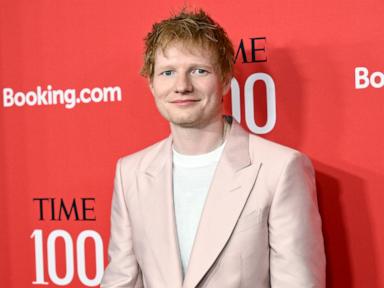
And into that silence, Ed Sheeran steps back.
To understand what it means to return after a wave of withdrawals—including the high-profile removal and departure of artists like Macklemore from shared festival orbits—you have to understand the peculiar psychology of the touring musician. Fans see the finished product: the soaring chorus, the looping pedal clicked down with a worn sneaker, the sea of phone screens glowing like fireflies in a dark bowl. They do not see the empty dressing rooms. They do not hear the whispered conversations between managers and promoters calculating the cost of a cancelled performance, the shattered logistics, the tickets refunded, the momentum lost.
Consider what happens when a stage becomes a battleground.
Music has always aspired to transcend politics, yet it is stubbornly tethered to the reality of the humans making it and the audiences consuming it. When tensions boil over, artists are forced to choose between the physical act of performing and the moral weight of association. Some step away, choosing solidarity over a paycheck. Others stand their ground, wondering if their songs can still offer a brief, fragile truce in a divided room.
When Macklemore and other artists vanished from festival bills amid mounting controversies and ideological clashes, the entire touring ecosystem shuddered. Promoters held their breath. Security teams braced for friction. The unspoken contract between artist and audience—the mutual agreement to escape into melody for two hours—felt frayed at the edges. In that climate, stepping up to a microphone is not just a job. It is an act of exposure.
Yet, music has a stubborn persistence.
Think back to the early days, long before stadium tours and multi-million-dollar production riders, when a guitar case was just a suitcase and a street corner was a stage. Stripped of the pyrotechnics and the festival politics, the core of live performance remains stubbornly simple. It is one person trying to reach another across a chasm of noise.
Sheeran has always cultivated an image of the ordinary bloke who somehow stumbled into extraordinary circumstances. He wears a plain hoodie where others wear couture. He relies on a loop pedal rather than a backing track or a twenty-piece orchestra. That aesthetic of accessibility becomes intensely magnified when the surrounding environment is volatile. When the headlines are dominated by cancellations, boycotts, and fractured lineups, audiences look for anchors. They look for something familiar.
The return is never just about the music. It is about testing whether the connection remains unbroken.
Backstage, the atmosphere before a comeback show is famously quiet. Crew members move with measured efficiency, checking cable connections and tuning acoustic guitars with quiet precision. There is no bravado. Everyone in the room knows that the cultural landscape outside those arena doors has shifted. The air is charged with an unpredictable static. Will the crowd bring the tension of the news cycle inside with them? Will the chants between songs carry an edge that has nothing to do with the setlist?
When he finally walks out from the wings, the roar of the crowd hits like physical pressure. It is a wall of sound designed to wash away the months of uncertainty. For a moment, the empty spaces on the festival posters, the dropped acts, and the industry anxiety vanish behind the blinding white glare of the spotlights.
He steps up to the microphone. He taps the pedal.
The first loop begins to build, layer upon fragile layer, rising from a simple acoustic pluck into a rhythmic heartbeat that echoes through the steel rafters. The crowd leans in. For these few hours, the outside world is locked outside, and the only thing that matters is the space between the singer and the listener.
The stage is bright again. But the shadows cast by the empty slots on the bill do not disappear entirely; they simply wait in the wings, a reminder that in modern music, harmony is something you have to fight for every single night.