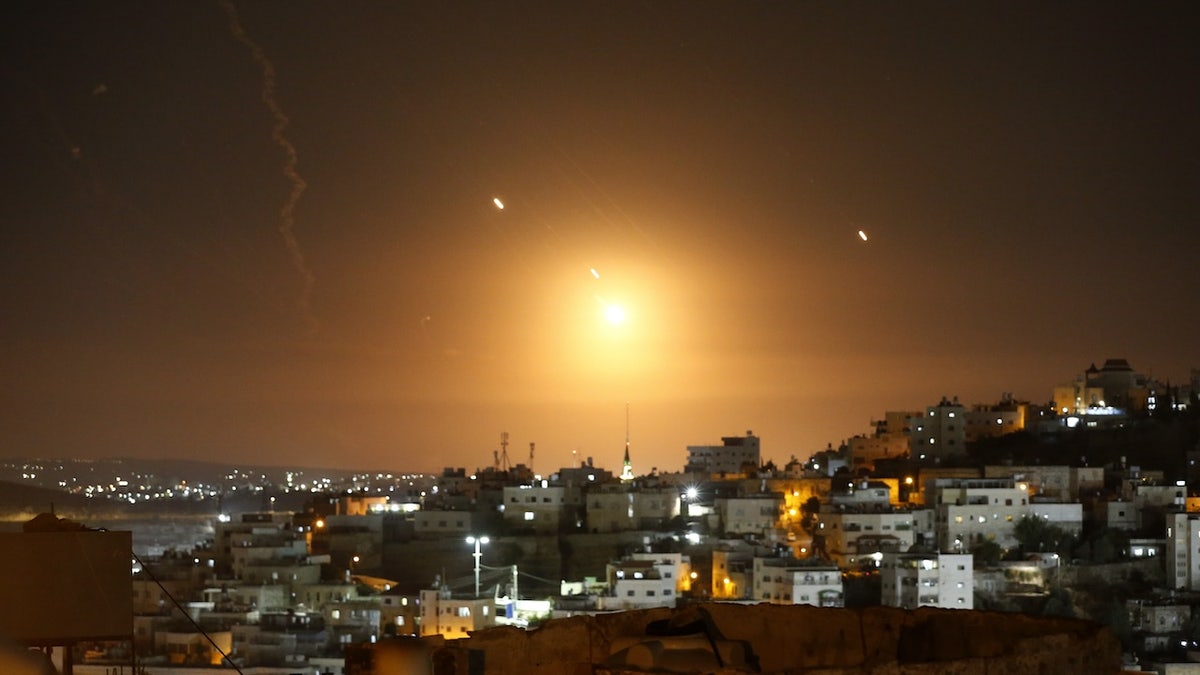
The desert does not forgive. It waits. It is a landscape of heat and shifting silica where the only thing more constant than the sun is the mechanical hum of human ambition trying to cross it. On a Tuesday that began like any other in Qatar, that hum simply cut out.
Gravity is a patient creditor. When a multi-million-dollar piece of aerospace engineering decides to stop defying the laws of physics, the transition from flight to tragedy happens in a heartbeat. Six people were on board that helicopter. Six lives defined by specialized training, family ties, and the routine nature of a flight that should have been forgettable.
They weren't just names on a manifest. They were fathers, sons, and colleagues. When the Qatari Ministry of Defence eventually released the brief, clinical statement confirming the crash and the loss of life, the words "technical malfunction" were used to bridge the gap between a functioning aircraft and a smoking wreckage. But those two words are a thin veil for a much more visceral reality.
The Anatomy of a Failure
Modern helicopters are marvels of redundant systems. They are designed to stay in the air even when things go wrong. Pilots train for "autorotation," a maneuver where the rushing air turns the blades like a windmill to cushion a descent even if the engines quit entirely. It is a terrifying, high-stakes dance with the wind.
But sometimes, the malfunction is not a single point of failure. It is a cascading betrayal of metal and logic.
Imagine a gearbox, a complex arrangement of gears bathed in oil, spinning at thousands of revolutions per minute. It is the heart of the machine. If a single bearing fails, or if a microscopic crack in a housing gives way, the harmony of the flight transforms into a violent discord. The vibration starts in the floorboards. It moves up through the pilot’s seat. In those final seconds, the cockpit is not a place of control, but a witness stand to a mechanical rebellion.
The Ministry’s report was sparse. It had to be. In the immediate aftermath of an aviation disaster, the data is often as shattered as the airframe. Investigators must sift through scorched earth and twisted titanium to find the "black box" or the flight data recorder that holds the final digital screams of the aircraft’s sensors.
The Invisible Stakes of the Gulf
In the Middle East, helicopters are the workhorses of both the military and the energy sector. They ferrying personnel to offshore rigs, conduct coastal patrols, and move high-ranking officials across the dunes. We often view these flights as we do a car ride to the grocery store. We check our phones. We look out the window at the turquoise water of the Arabian Gulf.
We forget that every flight is a temporary truce with the atmosphere.
This specific crash ripples through the community in Doha and beyond because it shatters that sense of routine safety. Qatar has invested billions in state-of-the-art hardware. Their fleets are often some of the newest in the world. When a "technical malfunction" claims six lives in a top-tier fleet, it sends a cold shiver through every hangar in the region.
It forces a grim question: If the best maintenance and the newest technology couldn't prevent this, what can?
The Human Cost of Data Points
The official statement mentioned that the crash occurred during a "training mission." In the civilian world, "training" sounds like a classroom. In the military and defense world, training is the most dangerous job you can have outside of active combat. It involves pushing machines to their limits to ensure that when the real crisis hits, the response is muscle memory.
These six individuals were likely in the prime of their careers.
Think of the homes they left that morning. A half-eaten breakfast. A car parked in a driveway that will now have to be moved by someone else. The "human element" in news reporting is often reduced to a count of the fallen, but the reality is a jagged hole left in a dozen different families. The Ministry expressed its condolences, a standard protocol, but no press release can capture the sound of a phone ringing in a quiet house, carrying news that changes a family's history forever.
The Mechanics of Uncertainty
Why do we focus so much on the "technical" side? Because humans hate mystery. We want to point to a specific bolt, a faulty sensor, or a software glitch. We want to fix it so we can tell ourselves it won't happen again.
Investigation teams will now spend months in a sterile lab. They will use electron microscopes to look at the grain structure of broken metal. They will simulate the weather conditions—the humidity of the Gulf, the fine dust that acts like sandpaper on turbine blades—to see if the environment played a silent role.
Dust is the silent killer of machinery in the desert. It is pervasive. It finds its way into the smallest seals. Even with advanced filtration, the environment of Qatar is a constant assault on mechanical integrity.
But while the technicians look at the metal, the rest of the world looks at the loss. The search for a cause is really a search for meaning. If we find the "why," the tragedy feels slightly less chaotic.
Beyond the Official Statement
The news cycle moves on quickly. A headline about a crash in Qatar is replaced by a stock market update or a sports score within hours. But for the aviation community, this event lingers. It becomes a case study. It becomes a cautionary tale whispered in cockpits and maintenance bays.
Safety is not a destination; it is a grueling, never-ending climb. Every time an aircraft goes down due to a malfunction, the industry has to look in the mirror. Was a warning light ignored? Was a replacement part delayed by a supply chain hiccup? Or was it truly an "act of God"—a failure so rare and unpredictable that no amount of foresight could have caught it?
The six souls lost in the Qatari desert deserve more than a footnote in a ministry ledger. They represent the risk inherent in progress. We fly because we must. We push into the sky because it is the only way to manage the vastness of our world. But every so often, the sky reminds us of the price of entry.
The investigation will eventually yield a report. It will be hundreds of pages of graphs and technical jargon. It will likely recommend new inspection intervals or a redesign of a specific component. These are the bricks we use to build a safer future. But those bricks are laid on a foundation of profound sacrifice.
As the sun sets over the dunes near the crash site, the desert returns to its natural state. The sirens are gone. The investigators have packed their samples. All that remains is the wind, whistling through the scrub brush, a haunting reminder of the day the hum stopped and the silence took over.
The true legacy of this event won't be found in the headlines, but in the next flight that takes off from Doha. It will be found in the extra thirty seconds a mechanic spends inspecting a rotor hub, or the way a pilot double-checks a hydraulic pressure gauge. We honor the dead by being more careful with the living.
The sand eventually covers everything, but the lessons carved from tragedy are the only things that stay above the surface.
Would you like me to look into the specific safety records of the aircraft models commonly used by the Qatari Ministry of Defence?