The coffee machine at the local cafe in Sydney’s inner west hums with its usual rhythmic violence, but the chatter in the queue has shifted. It is quieter now. Less triumphant. For the last seven years, standing in this exact spot meant listening to a relentless broadcast of digital wealth. Neighbors traded property gains like schoolboys trading football cards. A terrace house bought for a million; sold three years later for two. Paper millionaires minted between the espresso and the croissant.
Today, a man in a rumpled corporate suit stares at his phone, his thumb frozen over a real estate app. He is looking at a price guide that just dropped by seventy thousand dollars in a single week. He does not order his second macchiato. He just pockets his phone and walks out into the cool morning air.
Something fundamental is shifting beneath the concrete of Australia’s capital cities. The great engine of Australian wealth—the brick-and-mortar obsession that defined a generation—is beginning to shudder.
For decades, the narrative was simple. Buy property. Borrow to the absolute hilt. Wait for the inevitable tide of capital growth to lift your boat above the rocks of inflation and wage stagnation. It felt like a law of physics. Gravity pulled things down; Australian property values went up.
Except now, they are falling.
The Weight of the Digital Number
To understand a housing slump, you have to look past the spreadsheets. Economists talk in abstractions. They throw around terms like macroprudential tightening, cash rate targets, and supply-side constraints. These words are bloodless. They obscure the actual human drama taking place inside semi-detached brick homes in Melbourne or suburban blocks in Brisbane.
Consider a hypothetical couple. Let us call them Sarah and David.
They are not reckless speculators. They are a schoolteacher and a mid-level logistics manager in their early thirties. They spent five years eating supermarket-brand pasta, skipping holidays, and watching their friends weekend in Europe while they stayed home saving for a deposit. Six months ago, they finally bought a three-bedroom home on the fringes of Melbourne. They signed the paperwork with trembling hands and a profound sense of relief. They had finally made it onto the ladder.
Now, economists predict that national home prices could slide by 10% over the next twelve months. Some analysts whisper that the downturn could drag on for a year or longer.
For Sarah and David, that 10% prediction is not a statistic. It is a ghost that sits with them at the dinner table. If their $800,000 home loses 10% of its value, $80,000 evaporates into thin air. That is more than Sarah’s entire annual take-home pay. The money they scraped together, dollar by painful dollar, is dissolving while they sleep, leaving them with a mortgage that outweighs the actual market value of the roof over their heads.
This is the psychological trapdoor of negative equity. The walls of the house look exactly the same. The plumbing still rattles in the morning. The garden still needs weeding. But the emotional relationship with the home changes entirely. It transforms from a sanctuary into a debt anchor.
Why the Old Rules Broke
How did we arrive at this collective breath-holding moment? The answer lies in a profound misunderstanding of what actually drives property markets.
We like to tell ourselves stories about bricks, mortar, and land scarcity. We look at the map of Sydney, hemmed in by the Pacific Ocean and the Blue Mountains, and we tell ourselves that prices must rise because they aren’t making any more land. It is a comforting, intuitive argument.
It is also wrong.
The property market is not a reflection of land value. It is a reflection of borrowing capacity. A house is worth exactly what the bank is willing to lend someone to buy it.
For years, the Reserve Bank of Australia kept interest rates at historic, emergency lows. Money was practically free. When money is free, buyers can borrow astronomical sums. They enter auctions armed with millions of dollars of cheap credit, bidding against other buyers who are similarly loaded with cheap credit. The result was an artificial, dizzying spiral upward.
But the economic weather changed. Inflation, the dormant beast of the global economy, woke up. To tame it, the central bank had to do the one thing property owners dreaded most: raise interest rates.
Think of the borrowing market like an oxygen supply. When rates were low, the oxygen was pumping at maximum pressure. Buyers felt invincible. Now, with every consecutive rate hike, the valve is being turned down. The air inside the auction room is growing thin.
A buyer who could comfortably secure a million-dollar loan a year ago might now only qualify for $750,000. It does not matter how much that buyer loves the polished floorboards or the north-facing backyard. Their financial ceiling has been lowered by the brutal math of interest rates. When every single buyer in the market suddenly has less money to spend, prices have no choice but to fall.
The Illusion of the Seller's Market
Walk down any suburban street on a Saturday morning and you can see the friction of this transition playing out in real-time.
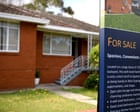
A 'For Sale' sign stands on a manicured lawn. A crowd of twenty people has gathered on the pavement. The auctioneer stands on the front steps, his voice booming through a portable megaphone, attempting to conjure excitement out of thin air. He asks for an opening bid.
Silence.
People look at their shoes. They check their watches. They murmur to their partners. The auctioneer tries a joke; it falls flat. He makes a vendor bid, trying to kickstart the engine, but the crowd remains unmoved. The property is passed in. The crowd disperses quietly, leaving the real estate agent standing on the driveway alone, staring at his tablet.
This is the standoff phase of a property slump.
Sellers are still anchored to the prices of last year. They remember what their neighbor's house sold for at the peak of the frenzy, and they refuse to accept that their own home is worth a penny less. Buyers, conversely, are acutely aware that their borrowing power has shrunk and that prices are trending downward. They are terrified of buying today only to find they overpaid by fifty thousand dollars by Christmas.
So, nothing happens. The market grinds to a halt. Volume drops. The frantic, gold-rush energy of the weekend auction circuit turns into a slow, grinding war of attrition between expectation and reality.
Eventually, reality always wins. Sellers who must move—due to divorce, a new job, or the sheer financial pressure of rising mortgage repayments—are forced to lower their expectations. They accept the lower offer. The new, lower price point is recorded in the data. The suburb's baseline drops. And the slide continues.
The Hidden Fracture in the Suburbs
The true pain of a housing downturn is rarely evenly distributed. It does not hit the blue-ribbon, leafy inner suburbs where wealth is generational and mortgages are small or non-existent. The elite enclaves will soften, but their inhabitants will not lose sleep.
The real fracture lines appear on the urban fringes.
In the master-planned communities thirty, forty, or fifty kilometers outside the city centers, the streets are lined with nearly identical double-story homes. These are the corridors of aspiration. This is where young families bought into the dream of homeownership at the absolute peak of the market. They maximized their borrowing capacity just as the music stopped playing.
In these neighborhoods, the pressure is visceral. It manifests in small, quiet ways. The local Facebook community groups change their tone; instead of recommendations for cafes, they are flooded with listings for secondhand furniture, lawnmowers, and children's clothes. People are looking for liquidity.
The local shopping centers feel different. The premium supermarkets see less foot traffic, while the discount grocers have queues stretching down the aisles. The weekly family dinner out becomes a monthly event, then a memory.
The stress is not just financial; it is systemic. When a family spends an extra seven hundred dollars a month on their mortgage payments due to rising interest rates, that is seven hundred dollars pulled directly out of the local economy. It is money not spent at the boutique, the hardware store, or the family-run restaurant. The property slump ripples outward, quietly suffocating small businesses that rely on the discretionary spending of homeowners who suddenly feel poor.
The Great Cultural Unlearning
Australia is undergoing a forced cultural unlearning. For nearly three decades, the nation avoided a prolonged, severe property crash. An entire generation entered adulthood believing that real estate was a one-way bet. It became our national religion, our favorite parlor game, and our primary vehicle for retirement planning.
We built a society where wealth was determined less by what you did for a living and more by when and where you bought your first piece of land. A brilliant researcher or a dedicated nurse could work a lifetime and never accumulate a fraction of the wealth acquired by someone who happened to buy a fixer-upper in a trendy suburb in 2012.
That distortion did something strange to the national psyche. It bred a toxic mix of arrogance among those who owned, and bitter despair among those locked out.
Now, the myth of the infallible asset is cracking. We are being reminded of a basic economic truth that was forgotten during the boom years: property is a cyclical asset class. It can go down. It can stagnate for years. It can trap you.
This realization is terrifying for those who are overexposed. But for the young, the renters, and the people who had begun to look at the property market with a sense of quiet alienation, the slump represents something else entirely. It represents the faint, distant return of possibility.
It is a strange paradox. A falling housing market is reported in the business pages as a disaster, a crisis, a looming economic winter. But for a twenty-five-year-old nurse who has been living in a sharehouse, watching the dream of independence drift further out of reach every year, a 10% drop in prices feels like a reprieve. It feels like the world might finally be stopping to let them catch up.
The sun begins to set over a quiet suburban street. The 'For Sale' sign that stood proudly at the beginning of the month has been modified. A small, neat sticker has been placed across the bottom corner. It does not say 'SOLD.'
It says 'PRICE REDUCED.'
A young couple walks past, pushing a stroller. They stop for a moment, looking at the new figure printed on the card. The husband looks at his wife. She doesn't smile, but her shoulders drop just a fraction, releasing a tension she has carried for years. They don't make an offer. They don't call the agent. They just keep walking, their footsteps echoing in the quiet twilight of a market that is finally learning how to breathe out.


