The kitchen was quiet. Too quiet. In the microscopic spaces of a modern home, silence is rarely peaceful; usually, it is the holding of breath before a structural collapse.
On a cold January evening in Duxbury, Massachusetts, Lindsay Clancy moved through her house. To the outside world, she was a mother, a nurse, a wife—a person defined by the gentle architecture of caregiving. But inside her skull, a war was raging. It was not a metaphor. It was an acute, chemical catastrophe. Her thoughts were not her own. They were barbed wire. They were smoke. They were an overwhelming, suffocating command.
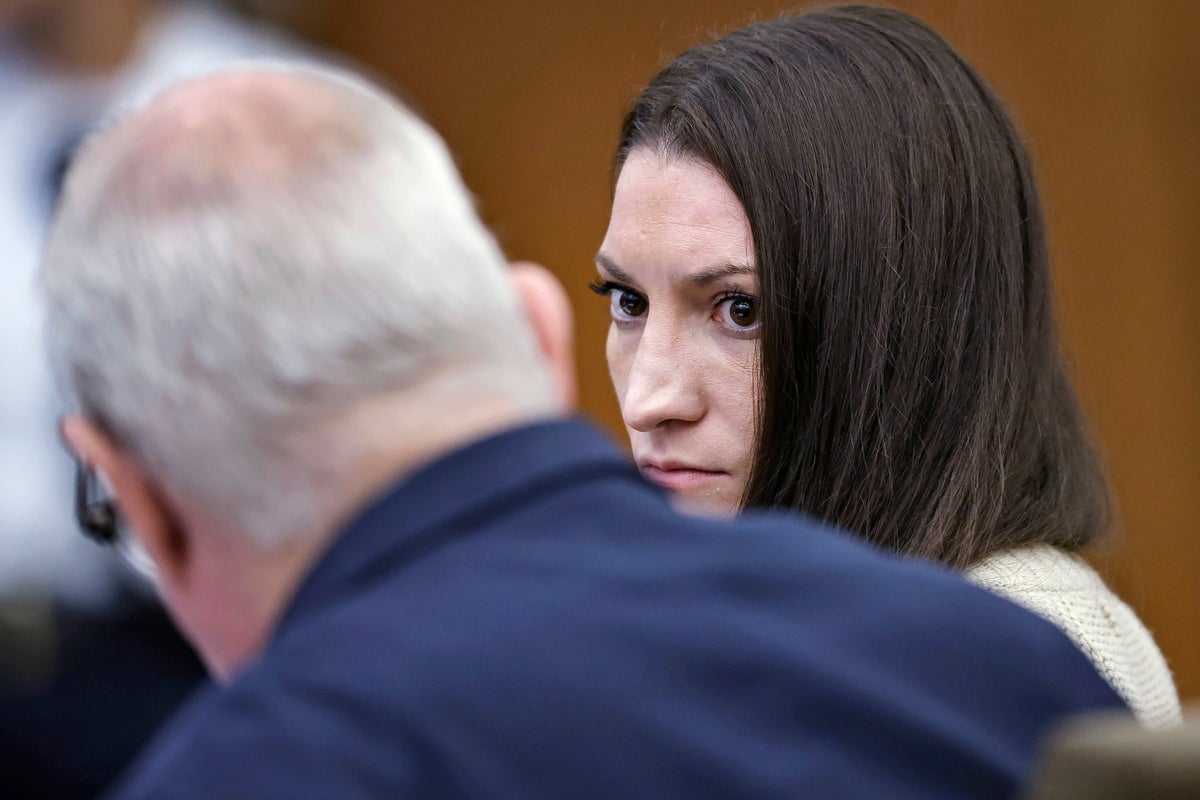
Months later, a courtroom would try to pack this chaos into tidy legal boxes. They would debate mens rea. They would parse the definitions of sanity and premeditation. They would ask a jury of ordinary citizens to look at a medical chart and decide where a human being ends and a criminal begins.
They would miss the point entirely.
The Anatomy of an Unseen Collapse
To understand what happened in that Duxbury home, we have to strip away the language of true crime drama and look at the brutal mechanics of postpartum psychiatric illness. We do not like to talk about the dark side of motherhood. We prefer the pastel version. We want the newborn smiles, the nursery mobiles, the quiet competence of a mother holding an infant against her chest.
Postpartum psychosis shatters that picture with a hammer.
Imagine waking up inside a house where every surface feels electric, where your own children—whom you love more than your own heartbeat—appear to you not as cherished dependents, but as doomed souls suffering in a hostile universe. Imagine believing, with the absolute, unshakeable certainty of a paranoid delusion, that the only way to save them from an unspeakable horror is to take their lives, and then your own, to cross some horrific threshold into safety.
This is not malice. This is a brain malfunction of monumental proportions. It is a neurological short circuit.
Yet, when the dust settles and the sirens fade, our legal system demands a binary answer. Was she sane or insane? Did she know right from wrong? These questions sound profound, but in the face of profound neurological hijacking, they are blunt instruments trying to perform neurosurgery.
The Trial That Rested on a Single Fracture
During the legal proceedings, the core question narrowed until it became a microscopic point of contention: Did Lindsay Clancy plan the murders of her three children—Cora, Dawson, and Callan—or was she so utterly consumed by postpartum psychosis that she had lost all capacity to conform her conduct to the law?
The prosecution pointed to the logistics. The timing. The brief window while her husband was out picking up dinner. She looked up a restaurant. She asked him to run an errand. In the cold light of a courtroom, prosecutors argued these actions proved calculation. They argued for agency. They argued that a person who can coordinate takeout and a grocery trip retains enough cognitive function to know the difference between right and wrong.
The defense pointed to the human wreckage. They pointed to the desperate pleas for help in the weeks preceding the tragedy. They pointed to a woman who had visited multiple psychiatric facilities, who had been prescribed a dizzying cocktail of medications—SSRIs, antipsychotics, mood stabilizers—in numbers and combinations that left her system reeling. They presented a picture of a mind chemically and structurally battered, a person stumbling through a fog of severe depression and psychotic features.
Consider what happens when a human being is prescribed a dozen psychiatric medications in a matter of weeks. The brain does not simply adjust; it trembles. Akathisia—a severe inner restlessness often caused by psychiatric drugs—can drive people to absolute despair. Patients describe it as wanting to crawl out of their own skin, a torment so exquisite that death feels like the only available exit strategy.
And still, the trial boiled down to a courtroom drama. Witnesses testified. Medical experts clashed over clinical definitions. Juries sat in rigid discomfort, listening to details that defied comprehension.
The Institutional Failure Before the Tragedy
Long before the first police cruiser pulled up to the Clancy residence, another kind of failure was taking place in quiet offices and sterile clinics.
Our healthcare system treats the postpartum period as a minor hurdle rather than a high-risk medical vulnerability. We discharge mothers with a pamphlet, a pat on the back, and a follow-up appointment six weeks later. By then, the storm has often already broken.
Lindsay Clancy’s medical history was a flashing red light that went largely unheeded by a system stretched past its limits. She sought help. She told providers she was struggling. She went to inpatient treatment. She asked for safety.
Yet, the institutional machinery moved with bureaucratic slowness while her internal world raced toward a cliff. When we look at maternal mental health care, we see a patchwork of underfunded clinics, overburdened providers, and a pervasive societal shame that keeps women from admitting the sheer terror of their intrusive thoughts.
Every mother knows the whisper of an intrusive thought. Most of us experience fleeting, bizarre flashes—what if I drop the keys down the drain, what if the car swerves? For 99 percent of people, those thoughts pass like wind through a screen. But for women experiencing postpartum psychosis, those thoughts hook into the brain's circuitry, multiplying and metastasizing until they block out all reality.
If we look only at the defendant in the dock, we absolve the system that failed to catch her when she fell.
The Verdict of a Broken Mirror
When the legal decisions finally came down, there was no victory. There could be no victory. Three children were gone. A father was left to wander through a house haunted by echoes. A mother was confined to a secure facility, her body broken from her attempted suicide, her mind a landscape of permanent grief.
We want trials to offer closure. We want the gavel to fall like a guillotine, separating the bad from the good, the guilty from the innocent, the monster from the victim.
This case refused to cooperate.
Lindsay Clancy was both desperately ill and the agent of unspeakable destruction. Both truths exist simultaneously, refusing to cancel each other out. To deny her mental illness is to ignore clinical reality. To deny the devastation she caused is to abandon the children who never grew up.
We are left standing in the wreckage of our own simplistic assumptions about mental health, criminal responsibility, and caregiving. We built a world where mothers are expected to be martyrs of patience, carrying the invisible weight of domestic labor, childcare, and professional life without cracking. And when they do crack, we act surprised. We act as though madness is an alien visitor rather than a potential shadow lurking behind every stressed, unsupported, chemically overwhelmed human brain.
The courtroom lights have dimmed. The transcripts are filed away in heavy cardboard boxes. But in the quiet hours, long after the legal arguments are forgotten, the deeper question remains hanging in the air, unanswered and unresolved.
What kind of world do we inhabit when the people we charge with nurturing the future are left to fight their darkest battles entirely alone?