The air in the Strait of Hormuz doesn't just hold heat; it holds weight. You feel it pressing against your skin, a humid, thick reminder that this narrow ribbon of salt water is the jugular vein of the global economy. Beneath the surface, the current pulls relentlessly, but above it, the tension is strictly man-made.
I remember standing on the bridge of a tanker years ago, staring out into that blue expanse. The horizon wasn't just a line where the sky met the sea. It was a barrier. You watch the radar, you listen to the rhythmic hum of the machinery, and you wait. You wait for the moment the radio crackles with a voice that changes everything.
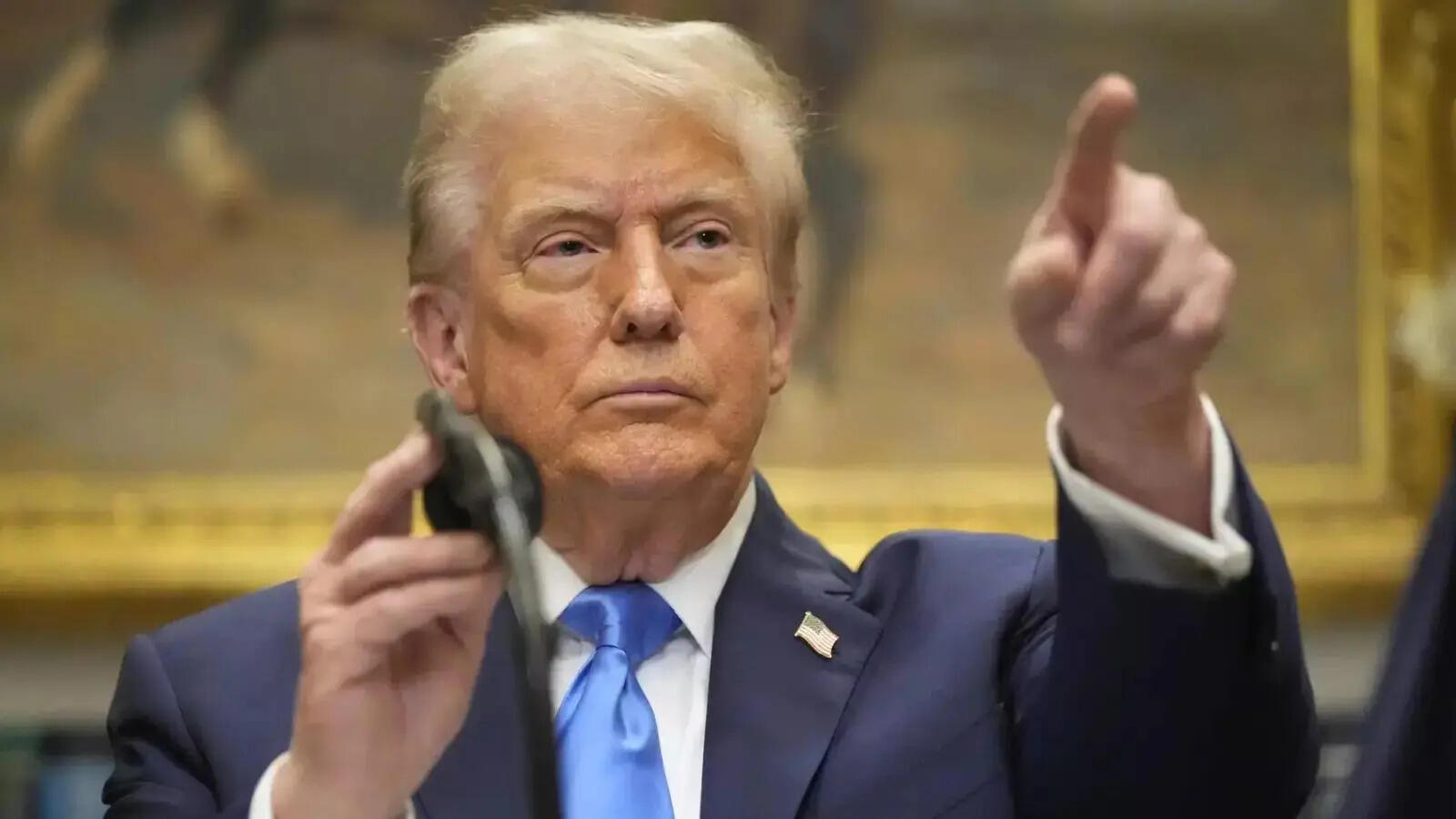
When news broke that Donald Trump claimed the United States had seized an Iranian vessel, the Touska, the report arrived with the sterile detachment of a press release. They spoke of engine room breaches and strategic maneuvers. They talked about the vessel as if it were a game piece on a board, a static object moved by invisible hands. But ships aren't just steel hulls and cargo manifests. They are micro-societies, worlds unto themselves, carrying the anxieties, the routines, and the fragile hopes of dozens of human beings.
Think of the Touska not as a headline, but as a living organism. Somewhere in that engine room, a grease-stained engineer was likely monitoring a pressure gauge, his mind drifting toward a payday that would eventually find its way to a family waiting in a distant port. The sudden violence of a seizure—the intrusion of armed forces, the abrupt halt of a steady heading—is not a calculated geopolitical move to those inside. It is a terrifying, chaotic interruption of life.
The geopolitical weight of this moment is undeniable. The Strait of Hormuz is where the world’s energy supply catches its breath. When a vessel is pulled from its course, the ripple effect doesn't stop at the water's edge. It travels through the supply chain, reaching gas pumps in suburban neighborhoods, fueling the anxiety of markets that thrive on predictability.
We often view these events through the lens of political rhetoric. We dissect the intent of the statement, the timing of the announcement, and the echoes of past policies. But there is a deeper, more unsettling reality here. It is the realization that the peace we take for granted is held together by remarkably thin threads.
Consider the engineer on the Touska again. He has no say in the alliances of nations. He has no vote in the grand strategies played out in boardrooms in Washington or Tehran. He is merely trying to keep his vessel moving, trying to navigate the complex currents of a profession that demands endurance and silence. When the ship is seized, his reality collapses. The bridge becomes a site of confrontation. The engine room, once his sanctuary of controlled mechanical order, becomes a place of violation.
This is the hidden cost of the high-stakes theater of modern diplomacy. We measure these moments in sanctions, in warnings, and in bold proclamations. We forget the silence that follows the shout.
The claim of a "hole in the engine room" serves as a brutal metaphor for the current state of international relations. It implies a targeted, violent puncture, a calculated decision to render the vessel—and by extension, the status quo—unable to function as intended. It is an act that screams for attention, a signal fire lit in the middle of a dark, crowded sea.
I spent enough time at sea to know that once a ship loses its way, the recovery is never simple. You don't just steer back onto the original course. You spend hours, sometimes days, fighting the drift. You account for the fuel lost, the time eroded, and the psychological toll on a crew that has suddenly realized how fragile their protection really is.
Perhaps the most terrifying aspect of the Touska incident is the uncertainty it invites. We rely on narratives to make sense of a world that feels increasingly unmoored. When we are told a ship has been taken, we look for the villains and the heroes. We look for a clear moral. But the reality of the Strait is far more gray. It is a place where small, human lives are routinely caught in the gears of massive, faceless machines.
Every time a vessel is stopped, a story is halted. Behind the legal arguments and the strategic posturing, there are people staring at a radar screen, wondering what happens when the next signal comes in. They are wondering if the sea will ever return to being just a path, rather than a battlefield.
We focus on the names of leaders and the designations of ships because it is easier than acknowledging the vulnerability of the entire system. It is easier to talk about "seizures" and "strategic assets" than it is to talk about the terrifying fragility of the global heartbeat.
The engine room of the Touska is dark now, silent, left to the mercy of the current. But the tension in the Strait continues to hum, a low-frequency vibration that never fully fades. It is a warning that we ignore at our own peril.
Out there, under the relentless sun of the Middle East, the water remains indifferent to the maps we draw over it. It keeps moving. It keeps hiding what happens beneath the surface, waiting for the next moment when the world will turn its gaze toward the horizon and hold its breath, waiting to see what happens when the next voice breaks the silence.