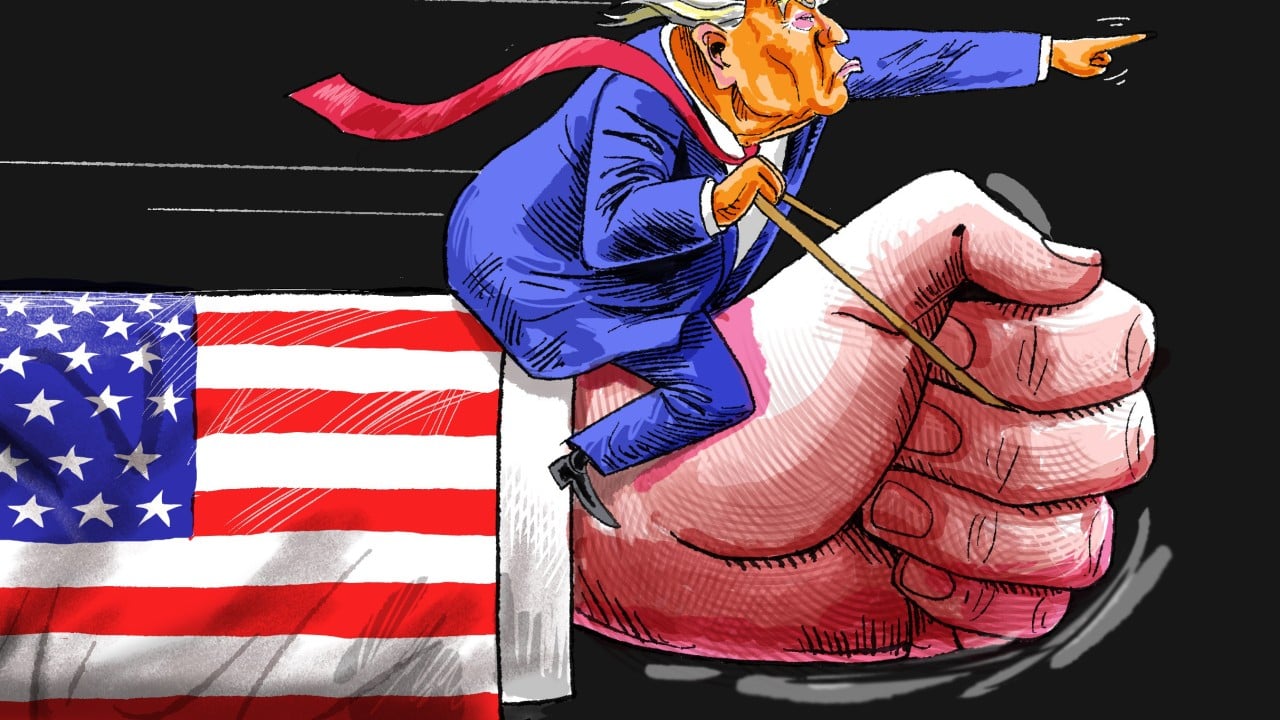
The United States is executing a quiet, multi-decade strategy to secure global energy dominance and undermine China’s control over supply chains. While public attention focuses on trade tariffs and diplomatic spats, a more profound shift is occurring below the surface. Washington is using regulatory overhauls, infrastructure financing, and strategic alliances to reshape how the world produces and distributes power. This plan moves beyond crude oil production. It focuses on the raw materials, processing networks, and technology that will dictate global industrial power for the next fifty years. The strategy aims to displace Beijing from its current position as the world's primary energy gatekeeper.
The Fiction of the Free Market
For years, Western policymakers operated under the assumption that open markets would naturally dictate energy distribution. That was a mistake. Beijing recognized early on that controlling the infrastructure of energy transition was a matter of national security, not just commerce. Meanwhile, you can read related events here: The Mechanics of Institutional Leverage Demystifying the OIC Response to UN Conflict Report Formats.
While American companies focused on short-term quarterly returns for shale oil, Chinese state-backed entities quietly bought up processing facilities for lithium, cobalt, and rare earth elements. They built a near-monopoly on the midstream refining capacity required for modern industrial manufacturing.
Washington has finally woken up to this vulnerability. The response is not a return to standard free-market capitalism, but rather a coordinated form of state-directed industrial policy that the U.S. has not utilized since the Cold War. To understand the full picture, we recommend the recent analysis by The Guardian.
The strategy operates on three distinct fronts:
- Domestic Manufacturing Insulation: Subsidies designed to force companies to build factories inside North America.
- Geographic Alternative Development: Financing infrastructure projects in developing nations to bypass Chinese state-owned enterprises.
- Export Restrictions: Blocking the transfer of advanced technology required to optimize next-generation energy grids.
This is a structural overhaul of global commerce. It relies on using state power to tilt the playing field back toward American interests.
Redefining Supply Chain Sovereignty
The core of the American strategy rests on the concept of supply chain sovereignty. For decades, global supply chains prioritized low costs above all else. This system worked well for corporate bottom lines but created extreme geopolitical vulnerabilities. If one nation controls 80 percent of the processing capacity for a critical mineral, that nation holds an effective veto over global industrial production.
Washington's new approach uses legislative carrots and sticks to force a decoupling. The goal is to create an alternative supply chain that completely circumvents Chinese territory and state-controlled corporations.
+-------------------------------------------------------------+
|               THE NEW ENERGY GEOGRAPHY                      |
|                                                             |
|  [Extraction]  -->  [Midstream Refining]  -->  [End Market] |
|   Australia/         Canada/US/Vietnam          US/Europe   |
|   South America                                             |
|                                                             |
|  (Target: Eliminate reliance on Chinese processing nodes)   |
+-------------------------------------------------------------+
This shift is incredibly difficult to execute. Building a processing plant in North America takes years and costs billions of dollars more than utilizing existing facilities in Asia. Environmental regulations, labor costs, and bureaucratic red tape present major hurdles.
To counter this, the U.S. government is increasingly stepping in to act as an investor of last resort. Federal agencies are providing direct loans and loan guarantees to mining and processing firms that would otherwise fail to secure private Wall Street funding.
The Battle for Midstream Assets
Extraction is only the first step in the process. The real bottleneck lies in the midstream sector, where raw materials are converted into industrial-grade components.
Consider a hypothetical example: a mining company extracts high-grade lithium from a deposit in Western Australia. Under the old economic model, that raw material was loaded onto a cargo ship bound for a port in China, where it was refined into battery-grade chemical compounds. The U.S. strategy aims to intercept that flow. By financing new refining capacity in allied nations like Canada or Australia, Washington hopes to break the bottleneck before the material ever reaches the South China Sea.
This creates a high-stakes bidding war. Chinese firms are offering premium prices to secure long-term supply agreements, while American diplomats travel the world offering sovereign guarantees and market access to keep those same minerals out of Beijing's orbit.
The Geopolitical Chessboard of the Global South
The energy struggle is not confined to domestic factories. It is playing out across Africa, South America, and Southeast Asia, where vast deposits of unmined resources sit untapped.
For the past decade, Beijing’s Belt and Road Initiative offered infrastructure loans to developing nations in exchange for long-term access to their natural resources. It was a highly effective strategy that left many nations heavily indebted to Chinese state banks.
Now, the U.S. is deploying its own financial weapons. Through revamped development finance corporations, Washington is offering alternative funding packages to governments looking to reduce their dependence on Beijing. These packages are presented as transparent, market-driven alternatives, but their geopolitical objective is clear: deny China exclusive access to the next generation of energy inputs.
Resource Nationalism as a Wildcard
This strategy faces a major complication: the rise of resource nationalism. Developing nations are no longer content to simply export raw commodities to wealthier empires. They want to capture the economic value of processing and manufacturing within their own borders.
- Export Bans: Nations are banning the export of unprocessed ores to force foreign companies to build local refineries.
- State-Owned Monopolies: Governments are seizing control of strategic deposits to maximize state revenues.
- Tax Overhauls: Drastic increases in royalties and corporate taxes on foreign mining entities.
Washington must navigate these shifting rules carefully. If the U.S. pushes too hard for cheap resource extraction, it risks alienating the very nations it tries to woo away from Beijing. If it complies with every demand for local investment, the costs of the energy transition could skyrocket to unsustainable levels.
The Technological Veto
The final component of the American long game focuses on technology blockades. True energy dominance requires control over the software, semiconductors, and advanced engineering that run modern electrical infrastructure.
By restricting the export of advanced microchips and precision manufacturing equipment, the U.S. is systematically limiting China’s capacity to optimize its own domestic energy grid. This is a subtle form of economic containment. It does not stop China from building solar panels or wind turbines, but it hampers their ability to integrate those assets into a highly efficient, automated national power network.
This tech blockade forces Beijing to spend billions of dollars trying to replicate proprietary Western engineering. It buys Washington time to scale up its own domestic industries and establish new international standards that favor American design architectures.
The Dangerous Illusion of Total Independence
A major risk in this strategy is the temptation to believe that complete economic isolation is possible or even desirable. The global economy is far too interconnected for a total severance of ties.
Many Western companies still rely heavily on Chinese components for their supply chains. Attempting to build an entirely parallel industrial ecosystem overnight could trigger massive inflation and severe supply shortages.
Global Processing Market Share (Approximate)
+------------------------+-------------------+
| Region                 | Market Share (%)  |
+------------------------+-------------------+
| China                  | 75%               |
| United States & Allies | 15%               |
| Rest of World          | 10%               |
+------------------------+-------------------+
The realistic goal of American policy is not total isolation, but rather the creation of a credible alternative. Washington wants enough domestic and allied production capacity to ensure that if a geopolitical crisis occurs, the domestic economy cannot be brought to a halt by a sudden export embargo from Beijing. It is a strategy of deterrence through industrial resilience.
The Cost of the Long Game
This state-directed approach comes with a massive price tag. Taxpayers are footing the bill for hundreds of billions of dollars in subsidies, tax credits, and infrastructure loans. Critics argue that the government is picking winners and losers in the market, a strategy that historically leads to massive inefficiencies and wasted capital.
There is also the risk of regulatory capture, where politically connected corporations secure massive government handouts for projects that make little economic sense. If these subsidized factories cannot eventually compete on price without state aid, the entire strategy will collapse once political winds shift and the subsidies dry up.
The transition also requires a massive workforce expansion in specialized engineering and manufacturing sectors that have been hollowed out by decades of outsourcing. Training a new generation of industrial workers takes years, and labor shortages are already delaying major infrastructure projects across North America.
Capital Allocation Tells the Real Story
The true measure of this strategy's success is found in corporate boardrooms and capital allocation trends, rather than political rhetoric. Private equity firms and major multinational corporations are shifting their long-term investment strategies to align with Washington's geopolitical priorities.
Capital is moving out of vulnerable offshore jurisdictions and into regions that offer protection under the American security umbrella. This movement of private money, driven by risk mitigation and government incentives, is quietly altering the global economic balance of power.
The struggle for energy dominance will not be decided by a single breakthrough or a dramatic trade deal. It is a grueling war of attrition fought over permitting reform, port capacities, and mineral processing rights. The United States has committed to a long-term industrial policy that reverses decades of economic orthodoxy. The success of this policy depends on Washington's ability to maintain political focus and financial commitment over multiple administrations, long after the current news cycle has moved on.