Silence.
In political strategy rooms across Washington, that is the sound that terrifies veterans the most. Not the roar of an opposition rally, and certainly not the predictable outrage of cable news panels, but the quiet, hesitant pause of a lifelong voter standing over a kitchen table with a ballot in one hand and an unpaid utility bill in the other.
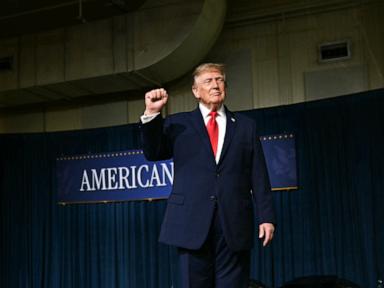
You can smell the stale coffee in those rooms by late autumn. I have spent two decades watching campaign operatives stare at county-by-county spreadsheets until their eyes bloodshot, convinced that math alone can outrun human nature. It rarely does. When Donald Trump recently issued sharp, pointed warnings to fellow Republicans regarding the precarious state of play in Texas and Michigan ahead of the midterm elections, the standard news cycle treated it like just another routine rally soundbite. Another headline. Another flash of rhetorical thunder meant to rally the base.
Look closer, though. Strip away the familiar cadence of his speeches and look at the map he is staring at. Putting Texas and Michigan in the same breath of concern is not a throwaway line. It is an admission that the political ground beneath the modern Republican coalition is shifting along two entirely different fault lines at the exact same time.
One state represents the rusting industrial heartland where every percentage point is fought for in inches. The other represents the massive, sun-baked anchor of conservative power that Republicans have treated like an automatic bank deposit for thirty years. If either one slips—or even wobbles violently enough to drain national campaign coffers—the entire architecture of congressional power collapses.
The Illusion of the Safe Fortress
Consider a hypothetical voter we will call Elena, a forty-two-year-old logistics coordinator living in the sprawling suburban ring north of Dallas, Texas. Elena is not a political activist. She does not watch cable news for entertainment, nor does she spend her evenings arguing with strangers online. Ten years ago, her neighborhood was reliably, effortlessly red. Today, her street looks like a demographic crossroads—young families priced out of Austin, tech transplants from California and the Midwest, and second-generation Hispanic homeowners who care far more about property tax assessments and reliable power grids than partisan tribalism.
For decades, national Republicans treated Texas the way a reckless homeowner treats a foundation that has never flooded: they stopped checking for cracks. They assumed the sheer weight of rural conservative turnout would always drown out the booming urban centers of Houston, Dallas, Austin, and San Antonio.
That math is aging badly.
While Texas remains tilted toward the GOP on a statewide level, the margins in rapid-growth suburban counties have narrowed dramatically over the last several cycles. Every time an election in Texas requires an emergency infusion of millions of dollars just to hold a congressional seat that used to be won on a shoestring budget, that money has to be stolen from somewhere else. It is pulled away from a razor-thin race in Pennsylvania, an open seat in Arizona, or a critical Senate battleground in the Great Lakes.
Trump understands this arithmetic instinctively, even when party leaders in Washington pretend otherwise. A political coalition is not a static monument carved in granite; it is more like a suspension bridge anchored at both ends. If the anchor in Texas begins to drag under the weight of demographic change and suburban fatigue, the cables holding up the entire national party lose their tension. When Trump warns Republicans not to take Texas for granted, he is not predicting an overnight blue wave. He is warning against the fatal arrogance of assuming yesterday’s victories guarantee tomorrow’s survival.
The Fragile Bargain of the Rust Belt
Now shift your gaze twelve hundred miles north, to the gray, wind-whipped mornings of Macomb County, Michigan.
Imagine another hypothetical voter—let’s call him Marcus, a fifty-six-year-old tool-and-die maker outside Detroit whose family voted straight-ticket Democrat for three generations until 2016. Marcus did not switch allegiances because he suddenly fell in love with conservative think-tank orthodoxy. He switched because he felt invisible to the people running the country, and Donald Trump spoke directly to his anger about shuttered factories, trade deals, and the quiet humiliation of watching a once-proud town hollow out.
Michigan is the exact inverse of Texas. Nothing there is taken for granted, because nothing there is safe.
In Michigan, elections are decided by margins so thin they could fit inside a lunchbox. The state’s political soul is a constant tug-of-war between the dense, reliable Democratic strongholds of Detroit and Ann Arbor, the shifting, college-educated suburbs of Oakland County, and the blue-collar towns stretching from Saginaw down to Monroe. And right now, the air in those blue-collar towns feels heavy with a different kind of anxiety.
Midterm elections are notoriously cruel to the party holding power, largely because of a simple psychological asymmetry: anger motivates people to stand in the rain at a polling place far more reliably than contentment does. Worse still for Republicans, the very voters who powered Trump’s populist surge in presidential years—infrequent, working-class voters who distrust institutions—are historically the hardest people in America to coax to the polls when Trump’s own name is not physically printed on the ballot.
You can feel the frustration in local GOP offices across Michigan when you talk to precinct captains. They know the passion is real when a stadium rally rolls into town, when the music blares and the flags wave against the autumn sky. Yet they also know the quiet dread of Tuesday morning in November, when the rally buses are gone, the cameras have packed up, and someone has to convince Marcus to leave his shift early just to vote for a state representative or a congressional candidate he barely knows.
Why Midterms Break Conventional Wisdom
To understand why these warnings carry such urgency, we have to confront a reality that political insiders often whisper about behind closed doors but rarely admit in public: modern political realignment has made the Republican coalition both broader and much harder to manage.
Historically, Republicans relied on high-propensity voters—affluent, older, suburban citizens who treated voting like brushing their teeth. Whether it was a presidential race, a midterm, or a sleepy local school board election in April, those voters showed up. Democrats, by contrast, frequently struggled with midterm drop-off among younger and working-class voters.
Over the last decade, those polarities have flipped.
Today, the Democratic base is heavily concentrated among college-educated suburbanites who devour political news and vote in every single election without fail. Meanwhile, the Republican base has become increasingly working-class, populist, and irregular in its voting habits. What works brilliantly in a high-turnout presidential year can sputter badly in a lower-turnout midterm environment.
This is the invisible trap sitting right in front of the GOP. When a party trades reliable suburban voters in places like Collin County, Texas, or Kent County, Michigan, for sporadic populist voters in rural and industrial counties, it gains raw passion—but it loses structural predictability. It is like trading a steady, boring paycheck for a commission-only job where the highs are exhilarating and the dry spells can bankrupt you.
I remember standing outside a polling location in suburban Michigan during a past midterm cycle, watching the steady, quiet stream of voters arriving at seven in the morning. There were no hats, no slogans, no bumper stickers on the immaculate crossovers pulling into the parking lot. Just people in fleece jackets walking briskly past the campaign volunteers, checking a box, and driving off to work. By noon, veteran organizers on the ground already knew what the night would bring. You could see it in the slump of their shoulders. The energy was elsewhere; the turnout was right there in front of them.
The Twin Perils of Complacency and Division
There is another layer to Trump’s warning that cuts closer to the bone: internal party discipline.
In both Texas and Michigan, Republican prospects have repeatedly been complicated not merely by Democratic strength, but by bruising, expensive, and deeply personal primary battles that leave the eventual nominee bruised, broke, and alienated from half their own coalition.
In Texas, fierce ideological warfare between establishment conservatives and hardline populist factions often forces candidates to spend millions of dollars attacking one another before they ever face a Democrat. By the time the general election arrives, suburban swing voters like our hypothetical Elena have spent months watching television ads portraying Republican candidates as either corrupt insiders or reckless extremists. Neither label helps win over an independent mother worried about local schools and grocery prices.
In Michigan, the challenge has often been organizational—fractured state party leadership, fundraising droughts, and candidate recruitment battles that leave general election contenders scrambling to build basic voter-turnout infrastructure while their opponents have been knocking on doors for a year.
Politics, at its core, is not magic. It is logistics, trust, and human connection. You cannot meme your way past a missing ground game in Wayne County, and you cannot coast on historical nostalgia in the rapidly diversifying suburbs of Houston and Fort Worth.
What Really Decides the Night
When people ask what will ultimately determine whether Republicans hold their ground or suffer a painful reckoning in the midterms, they usually expect an answer involving a specific piece of legislation, a clever television ad, or a last-minute debate gaffe.
Those things are mostly noise.
What actually decides elections in places like Texas and Michigan happens quietly, weeks before election night, in the space between expectation and reality. It comes down to whether a party listens to the subtle warning signs while there is still time to act, or whether it convinces itself that the warning lights on the dashboard are just a faulty sensor.
Think about what happens if Republicans take the warning seriously. In Texas, it means treating fast-growing suburban corridors not as lost causes or guaranteed wins, but as neighborhoods full of pragmatic families who want clear, grounded answers on cost of living, border security, and economic stability. It means investing early in voter registration and local community outreach rather than panicking in October.
In Michigan, it means building an unglamorous, relentless turnout machine capable of reaching the working-class voters who rarely participate in non-presidential years—giving them a tangible reason to believe that a midterm ballot carries the exact same stakes for their paycheck and their community as a presidential one.
I do not pretend to know how the final tallies will read when the polls close. Anyone who claims absolute certainty in modern American politics is either selling something or hasn't been paying attention for the last ten years. The electorate is too volatile, economic anxieties shift too quickly, and local dynamics can overturn national narratives overnight.
Yet anyone who has ever watched a political wave build from afar recognizes the early tremors. They never start as a roar. They start as a quiet warning from someone who knows how fragile victory really is—a reminder that in the vast distance between a factory floor outside Detroit and a booming cul-de-sac outside Dallas, no seat is ever truly owned. It is only rented, one nervous voter at a time.