The morning air in Belgorod tasted of frost and old coal smoke. It was a Tuesday that refused to feel different from any other Tuesday, until the sky tore open.
Distance numbs us. When a city name appears on a screen—a distant coordinate in a conflict that has ground on for years—it is easy to reduce human lives to a running tally. Six dead. A dozen wounded. Statistics neatly arranged in a morning news brief. But statistics do not bleed. They do not leave behind half-drunk cups of tea on kitchen tables, or winter coats hanging in quiet hallways, waiting for owners who will never return. For a different perspective, see: this related article.
To understand what happened when a Ukrainian missile strike hit the regional capital of Belgorod, one must step away from the abstract chessboard of geopolitics and walk down a residential street where the asphalt is fractured and the air smells of cordite.
The Anatomy of an Ordinary Morning
Imagine the sound of glass shattering across an entire neighborhood. Not just a single window, but thousands of panes fragmenting simultaneously, cascading onto frozen pavement like diamond dust. Related reporting on the subject has been shared by Al Jazeera.
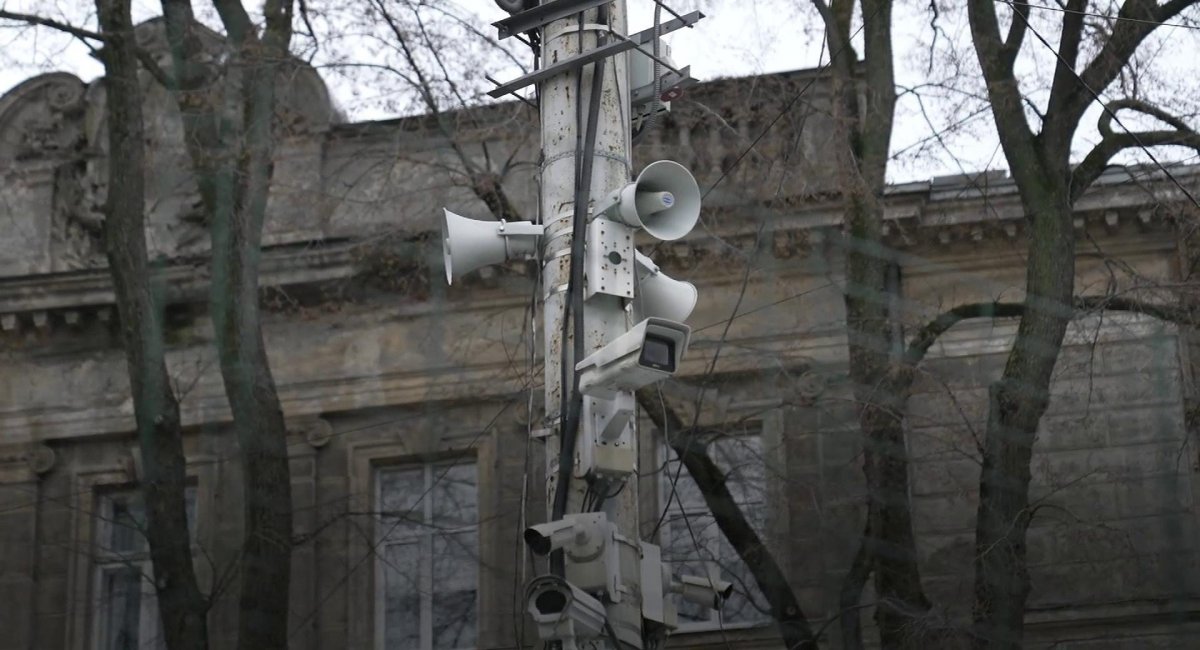
For the residents of Belgorod, located just miles from the Ukrainian border, the proximity to the front lines has eroded the boundary between the battlefield and the home front. This is a city caught in the dreadful geography of modern artillery range. Air raid sirens, once terrifying novelties, have settled into the background rhythm of daily survival—until they fail to provide enough warning.
According to verified local reports and regional authorities, the strike delivered a devastating blow to civilian infrastructure. At least six lives were snuffed out in an instant. Among them were individuals who had simply stepped out to buy bread, or who were waiting for a bus to take them to work.
War does not ask for credentials. It does not check passports or political affiliations before it strikes a residential courtyard. It simply arrives with the velocity of a falling star and leaves a crater where a life used to be.
The Weight of Retaliation
Every explosion has a history. Every projectile traces an invisible arc of cause and effect stretching back months, years, centuries of grievances, broken treaties, and escalating violence.
When missiles cross international borders, they carry the accumulated momentum of every previous escalation. Belgorod has found itself repeatedly in the crosshairs, a recurring target for incoming munitions as the conflict expands outward from the trenches of the Donbas and the ruins of eastern Ukraine. For months, residents here have lived with the unsettling realization that the war has come home to them. They watch the skies. They listen to the dull thud of air defense systems intercepting incoming threats, praying that this time, the shrapnel stays in the clouds.
This time, it did not.
The human cost of war is cumulative. Each strike hardens hearts, deepens divides, and makes the prospect of peace feel increasingly like a distant myth. When civilians die in their own streets, the narrative shifts from tactical objectives to raw grief. Funerals replace routine chores. Mourning becomes a communal burden.
The Echo in the Ruins
Consider what happens after the smoke clears and the television cameras move on to the next breaking news alert.
The rescue workers leave. The rubble is pushed aside to clear the road. But the silence that settles over the neighborhood is heavier than before. It is the silence of absence. Neighbors look at one another across broken fences, bound together by a shared trauma that defies easy explanation. How do you process a Tuesday morning that changed everything?
We often speak of modern warfare in terms of technology: hypersonic speeds, guidance systems, interception rates, radar signatures. We debate the ethics of long-range strikes and the strategic necessity of military targets. Yet, beneath the strategic calculus lies a simple, brutal truth. War is fundamentally an industrial process of human destruction.
When a missile hits Belgorod, it is not just brick and mortar that give way. It is the fragile social fabric of ordinary neighborhoods—places where children played in courtyards, where neighbors argued over garden fences, and where people simply wanted to live their lives in peace.
The sirens will sound again. The counters will tick upward. But somewhere in Belgorod, a kettle remains cold, and a door remains unlocked for someone who is never coming home.


