The metal barriers at a political rally are supposed to be more than just galvanized steel. They are intended to be a physical manifestation of an invisible promise. When you stand behind them, you are surrendering a portion of your autonomy to a system designed to keep the chaos of the world at bay. We trust the perimeter. We trust the men in suits with earpieces. We trust that the gap between the protected and the public is a chasm that cannot be crossed by a whim.
But trust is a fragile architecture.
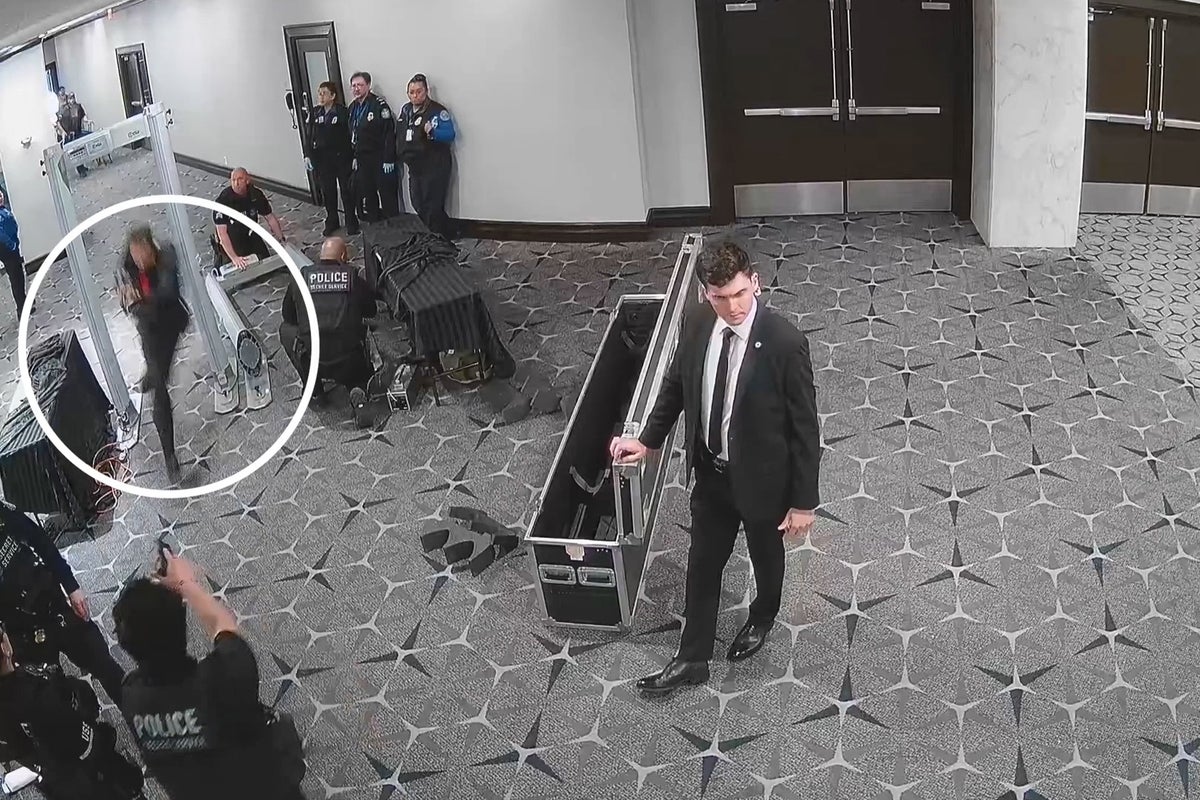
New closed-circuit footage from a nondescript security checkpoint has stripped away the comfort of that illusion. It doesn’t show a sophisticated tactical breach or a coordinated assault. It shows something far more unsettling: how quickly a human being can decide that the rules no longer apply, and how easily a thin line of defense can buckle under the weight of a single, determined step.
Thomas Crooks didn’t need a master plan to bypass the first layer of the dinner's security perimeter. He needed six seconds.
The Illusion of the Perimeter
Security is often a performance. We see the uniforms and the checkpoints, and we feel a sense of "safety theater" that lulls us into a collective trance. On that afternoon, the atmosphere was thick with the heat of a Pennsylvania summer and the charged energy of a high-stakes campaign event. People were focused on the stage, the speeches, and the spectacle.
The security personnel at the outer checkpoint were doing what human beings do during long shifts in the sun. They were scanning. They were nodding. They were existing in the space between vigilance and routine.
Then came the movement.
The footage captures a figure in a grey shirt. He doesn't look like a threat from a movie. He looks like a shadow. There is no hesitation in his gait. While the crowd flows in the direction of the metal detectors, he pivots. He moves toward a gate that should have been a hard stop.
In the world of professional protection, there is a concept known as the "OODA loop": Observe, Orient, Decide, Act. To stop a threat, security must cycle through those four stages faster than the person intending harm. In those six seconds caught on grainy CCTV, the loop was broken. The observers were looking, but they weren't seeing. By the time the orientation shifted toward the anomaly, the action was already complete.
He was through.
The Weight of a Small Mistake
Imagine for a moment you are one of the officers on the ground. Your training tells you that the perimeter is a chain. You are one link. If you look away for a heartbeat to wipe sweat from your brow or to answer a mundane question from a staffer, the link doesn't just stretch. It vanishes.
The new footage isn't just a piece of evidence for a congressional hearing. It is a haunting study in human fallibility. We often think of security failures as massive, systemic collapses—walls falling down, gates being rammed. But the reality is much smaller. It is the size of a gap between two temporary fences. It is the length of time it takes to blink.
When the gunman slipped through that checkpoint, he wasn't just entering a restricted area. He was entering the history books. He was carrying with him a rifle and a singular focus that the entire apparatus of the United States government was paid billions of dollars to prevent.
The stakes were invisible until the first shot rang out. But they were born right there, on the asphalt, next to a security bollard that no one thought to double-check.
The Psychology of the Breach
Why did no one stop him? It wasn't a lack of bravery. It was a lack of imagination.
Security teams are trained to look for "indicators." A bulge in a jacket. Nervous eyes. Aggressive posturing. But the footage shows a young man who looked like he belonged exactly where he was, right up until the moment he didn't. He moved with the casual confidence of someone who had walked the perimeter in his mind a thousand times before his feet ever touched the ground.
This is the "insider-outsider" paradox. If you act like you are supposed to be there, the human brain—even a trained one—is wired to find reasons to believe you. We are social animals. We look for patterns of normalcy. The gunman exploited the most basic human instinct: the desire to avoid unnecessary conflict.
He didn't run. He didn't shout. He simply chose a path that was unguarded for a sliver of time and walked it.
The Ripple Effect of Seconds
When we watch the video now, knowing what happens later on that roof, the seconds feel heavy. Each frame is a missed opportunity that weighs tons. We want to reach into the screen and shout. We want to point a finger.
But the footage serves a grimmer purpose than just assigning blame. It forces us to confront the terrifying reality of our own vulnerability. We live in a society built on the assumption that most people will follow the signs. We assume the "No Entry" sticker is a physical wall.
The gunman proved it is just ink.
This breach was the first domino. Once he was past that initial checkpoint, the layers of security behind it became reactive rather than proactive. The Secret Service and local law enforcement were now playing a game of catch-up on a field where the opponent had already scored a head start.
The dinner continued. The plates clinked. The speeches escalated. And somewhere in the periphery, a shadow was moving toward a ladder, unbothered by the barriers that were supposed to be his ending point.
The Cost of the Silent Gap
There is a specific kind of silence that follows a failure like this. It is the silence of a debriefing room where the tape is played over and over again. It is the silence of a nation wondering how the most protected person in the country could be a target for someone who walked through the front door of the outer ring.
We analyze the technicalities. We talk about line-of-sight. We talk about radio frequencies and inter-agency communication. Those things matter. But they are the "how." The "why" is found in the six seconds of the CCTV footage.
The "why" is that we have become a culture that prioritizes the appearance of safety over the grueling, boring, and constant work of actual security. We want the perimeter to be a given. We want to believe that the men in suits are infallible gods of vigilance.
The video tells us they are just men. And men get tired. Men get distracted. Men assume that because the last ten thousand people walked through the gate correctly, the ten thousand and first will do the same.
The gunman didn't break through security with a bomb or a battering ram. He broke through with the knowledge that if you wait for the right breath, the world will leave a door cracked open for you.
Beyond the Grainy Frames
We look at the footage and we see a blur. A grey shirt. A movement. A disappearance.
But if you look closer, you see the death of an era of certainty. You see the moment when the "bubble"—that mythical space where the President or a former President is untouchable—was popped by a simple lack of presence.
It reminds us that the most important part of any defense isn't the technology or the weapons. It is the human eye. It is the person who decides to look left when everyone else is looking right. It is the person who realizes that a fence is only a fence if someone is watching it.
The gunman reached his destination not because he was a genius, but because he was a shark who found a hole in the net. He swam through it without a sound.
The footage ends. The screen goes black. But the questions it raises continue to echo in every hallway of power and every town square where people gather.
We are left staring at a gate. It is made of metal. It is standing tall. It looks, for all the world, like it is doing its job. But we know better now. We have seen the six seconds. We know that the gate is a ghost, and the only thing that ever really keeps us safe is the terrifyingly thin line of human attention that can fail in less time than it takes to draw a single breath.
The shadow in the grey shirt is gone from the frame, but the hole he left in our collective sense of safety remains wide open.


