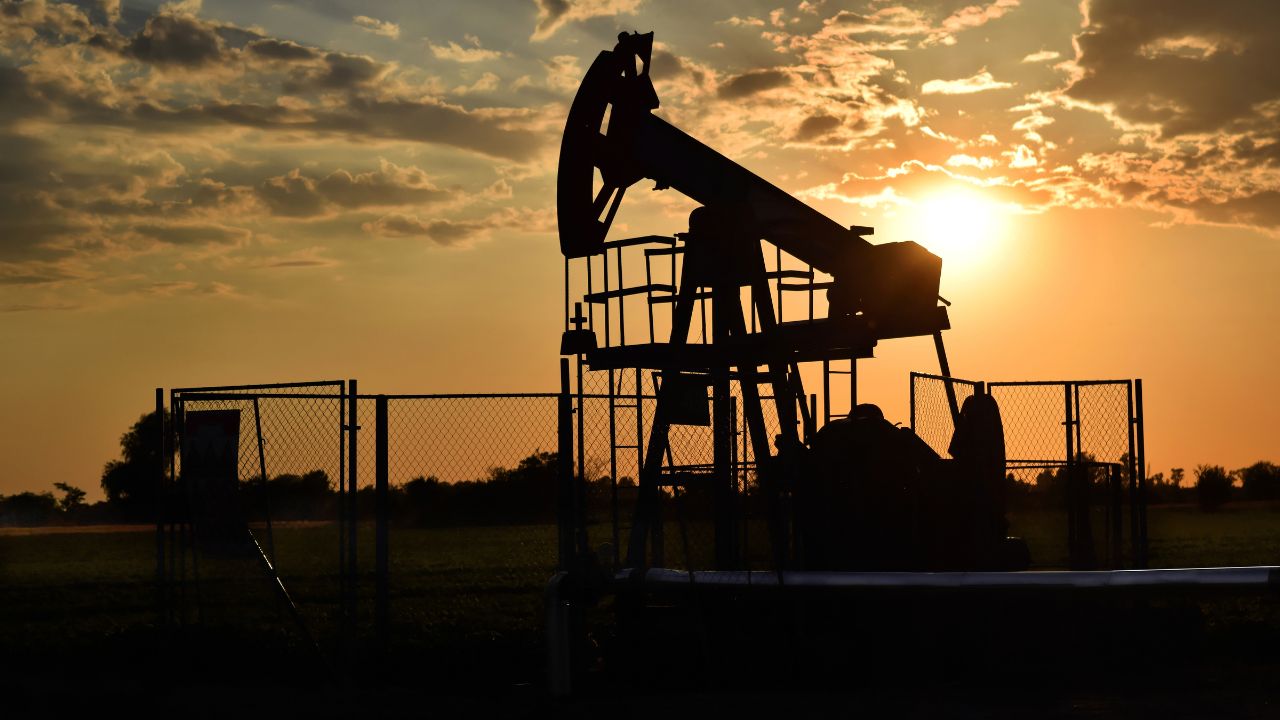
The air at the Bandar Abbas refinery doesn't just smell of sulfur and salt; it tastes like a deadline. For the engineers walking the steel catwalks, the heat radiating from the distillation units is more than a byproduct of chemistry. It is the physical weight of a nation’s expectation.
When the news broke that Iran intended to restore the majority of its refining capacity within a mere two months, the international markets processed it as a series of digits on a Bloomberg terminal. But for the men and women on the ground, those sixty days represent a frantic, high-stakes sprint to fix the mechanical heart of a country under siege by both time and circumstance.
Oil is the lifeblood, sure. That’s the cliché. But refined fuel? That is the breath. Without it, the trucks that carry grain from the ports to the mountain villages stop moving. The generators in hospitals flicker. The very movement of life slows to a crawl.
The Ghost in the Machine
To understand the scale of this undertaking, you have to look past the official press releases issued by the oil ministry. You have to look at a single, corroded valve.
Imagine a veteran technician—we will call him Reza—who has spent thirty years listening to the hum of these plants. He can tell by the slight, metallic vibration of a pump whether it will last the week or fail by morning. For Reza, the "capacity restoration" isn't a policy goal. It is a grueling battle against the entropy of aging infrastructure.
Decades of sanctions have turned Iranian refineries into a masterclass in improvisation. When you cannot buy the specific German-made seal or the American-designed sensor, you don't just shut down. You adapt. You machine parts from scratch. You cannibalize older units to keep the new ones screaming. This isn't just engineering; it is a form of industrial survivalism.
The official word is that the majority of the damaged or dormant capacity will be back online in eight weeks. To a casual observer, two months sounds like a long time. In the world of petro-refining, where a single scheduled maintenance "turnaround" can take half a year of planning, sixty days is a heartbeat. It is an aggressive, almost defiant timeline.
The Math of Survival
The numbers are staggering. We aren't talking about a few thousand barrels. We are talking about the restoration of a system that processes millions of barrels of crude into the gasoline and diesel that keep a modern economy from fracturing.
Consider the physics involved. A refinery is a delicate balance of extreme pressures and volatile temperatures. You cannot simply flip a switch. It is a slow, methodical awakening. You have to purge the lines. You have to test the catalysts. You have to pray that the welds hold when the internal pressure crosses the threshold of $2,000$ pounds per square inch.
If the pressure deviates by even a small percentage, the results aren't just a missed quota—they are catastrophic. This is the invisible tension that sits in the room during every ministry meeting. The push for speed is constantly warring with the laws of thermodynamics.
But the pressure isn't just inside the pipes.
The Iranian economy has been gasping for air. Every day a refinery sits idle is a day the government has to spend precious foreign currency to import fuel from abroad. It is a drain they can no longer afford. The two-month window isn't a random choice; it is a calculated risk based on how long the remaining reserves can hold out before the tanks run dry.
A Masterclass in Scarcity
There is a specific kind of brilliance that grows in the soil of scarcity. Because Iran has been cut off from much of the global supply chain, their engineers have developed a parallel universe of technology.
They have become experts in "reverse engineering," taking apart complex control systems to understand the logic buried in the silicon. While a refinery in Texas might wait three weeks for a specialized part to arrive by freight, a team in Abadan is likely figuring out how to 3D-print a temporary fix or modify a local substitute.
This ingenuity is the "human element" that data analysts often miss. They see the age of the plants and the lack of official partnerships and conclude that restoration is impossible. They forget the sheer, stubborn will of a workforce that has been told "no" by the world for forty years.
Yet, even brilliance has its limits.
The struggle is often found in the mundane. It’s the lack of high-grade lubricants. It’s the difficulty of sourcing the specific precious metals needed for the catalysts that strip impurities from the crude. You can have the best minds in the world, but if you don't have the chemical reagents to clean the fuel, you are left with a product that gums up engines and chokes the air with smog.
The Weight of the Clock
As the first month wanes, the atmosphere shifts. The initial adrenaline of the "all-hands" call-to-action begins to fade into a bone-deep exhaustion.
Reza and his crew are likely working twelve-hour shifts, sleeping in trailers near the site because the commute takes too long. They are far from their families, living in a world of grey steel and orange flames. The stakes are personal. If they succeed, the lights stay on. If they fail, the blame won't fall on the bureaucrats in Tehran; it will fall on the men with the wrenches.
There is a psychological toll to working against a ticking clock in a high-hazard environment. Every shortcut taken to save an hour carries a silent threat. You tighten a bolt just a little more than the manual suggests because you don't have the exact gasket you need. You bypass a non-essential sensor because the replacement is stuck in a port three hundred miles away.
These are the quiet gambles made in the dark.
The oil ministry official who gave the statement to the press spoke with the confidence of a man who knows the importance of optics. In the global theater, projecting strength and self-sufficiency is just as important as the actual production of oil. If the world believes Iran is crippled, the vultures circle. If the world believes Iran is resilient, the leverage shifts.
The Invisible Bridge
But beyond the geopolitics, there is a fundamental human truth at play: the desire to rebuild.
There is something deeply ingrained in the human psyche about fixing what is broken. Whether it is a toy, a house, or a multi-billion-dollar refinery, the act of restoration is an act of hope. It is a statement that the future is worth the sweat and the danger.
The sixty-day goal is an bridge. On one side is a state of vulnerability and reliance on outsiders. On the other is a return to a semblance of control. For a country that defines itself by its independence, that bridge is worth any price.
The tankers waiting in the Persian Gulf are the silent witnesses to this race. They sit low in the water, their steel hulls reflecting the shimmering heat of the horizon. They are waiting for the pipes to start humming again, for the black smoke to turn to the white steam of a healthy, functioning plant.
When the two months are up, there won't be a parade. There likely won't even be a significant ceremony. Success will be measured in the lack of a crisis. It will be found in the steady flow of fuel at a neighborhood petrol station, in the hum of a factory's power grid, and in the quiet sigh of a technician who can finally go home and sleep without the sound of a vibrating pump ringing in his ears.
The race isn't just about oil. It’s about the refusal to let the machines go silent. It’s about the engineers who find a way when every manual says there isn't one. It’s about the fact that even in a world of high-altitude politics and cold statistics, the survival of a nation still rests on the calloused hands of the people who know how to make the fire burn.
The fire is burning. The clock is ticking. And in the heat of Bandar Abbas, the sixty days are already half-gone.