The clock on the wall doesn't care about geopolitics. It ticks with a rhythmic, indifferent thud, counting down the seconds of a Tuesday night while millions of people go about the sacred, mundane rituals of existence. In Tehran, a young woman might be studying for a chemistry exam, the steam from a cup of black tea fogging her glasses. In a suburb of Tel Aviv, a father checks the locks on his front door before heading to bed. In Washington, the lights of the West Wing burn with a clinical, fluorescent intensity that suggests sleep is a luxury for a different century.
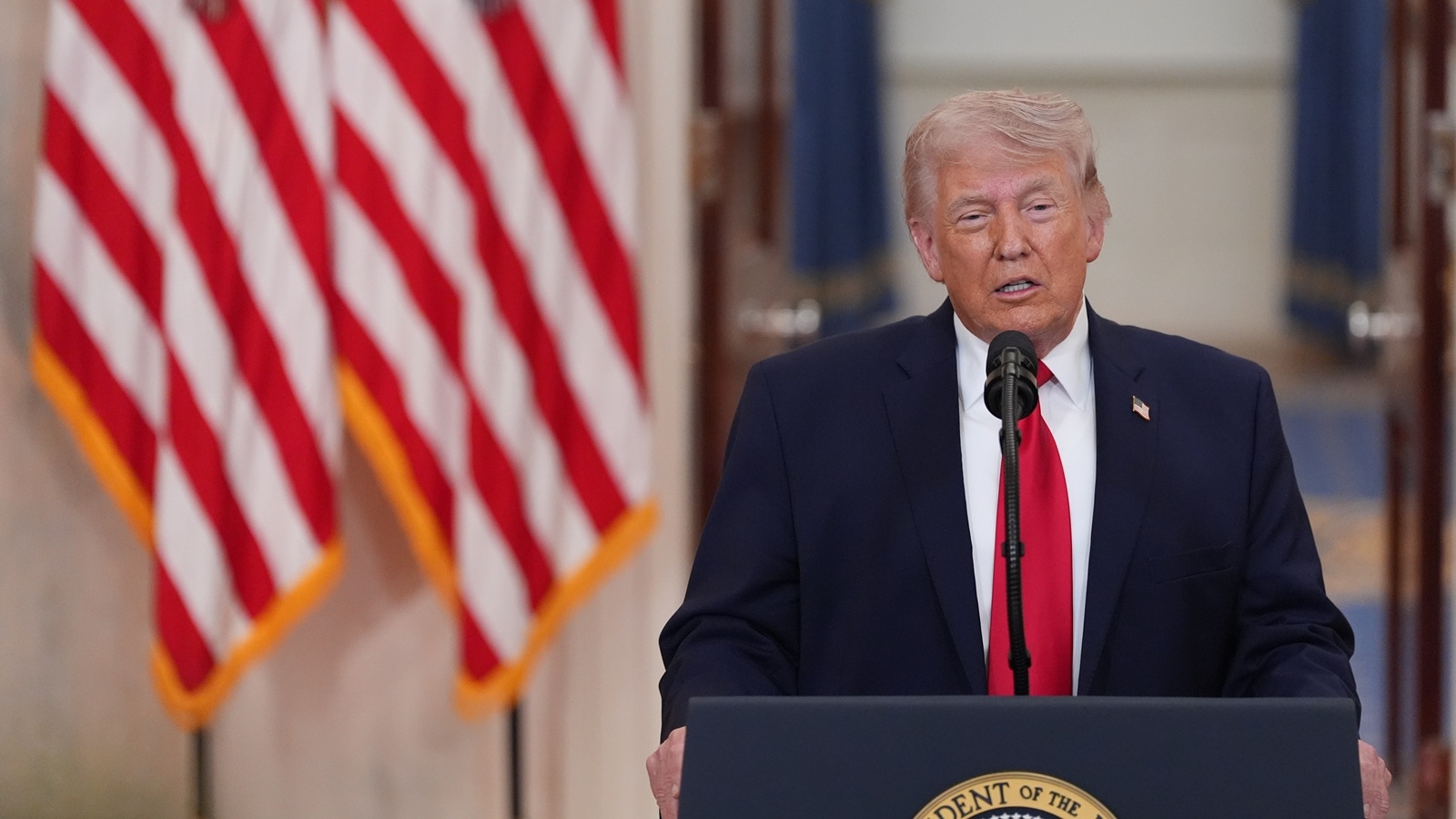
When Donald Trump stood before a crowd and suggested that a nation of eighty-five million people could be "taken out in one night," he wasn't just talking about military logistics. He was dangling the concept of the "sixty-minute solution" over the collective consciousness of the globe.
It is a seductive idea.
The notion that the world’s most tangled, blood-soaked knots can be sliced through with a single, decisive stroke appeals to something primal in us. We are exhausted by the "forever" nature of modern conflict. We are tired of the gray areas, the sanctions that never seem to pinch the right people, and the diplomatic cables that read like riddles. We want the Tuesday night that changes everything.
But history is a graveyard of "one-night" certainties.
The Geometry of the Strike
To understand the weight of the former president’s rhetoric, you have to look past the bravado and into the cold, hard physics of modern warfare. Iran is not a singular target. It is a sprawling, mountainous geography roughly the size of Alaska, honeycombed with hardened facilities buried deep beneath layers of reinforced concrete and granite.
Consider the hypothetical pilot. Let’s call him Elias.
Elias is sitting in a cockpit, the glow of the instruments reflecting in his visor. For him, "taking out" a target isn't a soundbite. It is a series of thousand-mile-per-hour calculations. It is the management of fuel, the evasion of Russian-made air defense systems, and the heavy, physical toll of G-forces pressing his lungs against his ribs. When a leader speaks of a single night, Elias is the one who has to navigate the hours of that night.
A strike on Iran’s nuclear infrastructure—specifically sites like Natanz or the buried bunkers of Fordow—is not a simple "off" switch. It is a surgical procedure performed with a sledgehammer. Military experts suggest that to truly "take out" Iran’s capabilities, you would need hundreds of sorties. You would need to suppress air defenses, destroy command-and-control nodes, and neutralize retaliatory assets across the Persian Gulf.
One night? Perhaps. But it would be a night of such concentrated violence that the atmosphere of the Middle East would be altered for generations.
The Invisible Stakes of a Tuesday Night
The choice of "Tuesday" is almost poetic in its casualness. Tuesday is the day we buy groceries. It’s the day we catch up on emails. By framing a cataclysmic military engagement as something that could happen on a random weeknight, the rhetoric strips the event of its gravity.
It turns a tragedy into a schedule.
When we talk about "taking out" a country, we often forget the infrastructure of the human soul. Iran is not just a collection of centrifuges and missile silos. It is the Grand Bazaar of Tehran, where the air smells of saffron and toasted nuts. It is the students at Sharif University who dream of Silicon Valley. It is the elderly men playing backgammon in the parks of Isfahan.
If the "one night" scenario were to play out, the immediate aftermath wouldn't be a neat victory. It would be a shattered global economy.
The Strait of Hormuz is the jugular vein of the world’s energy supply. One fifth of the world’s oil passes through that narrow choke point. If that vein is severed, the "Tuesday night" strike hits every gas station in Ohio by Wednesday morning. It hits the manufacturing plants in Guangdong. It hits the heating bills of families in Berlin. The ripples of a sixty-minute promise extend far beyond the blast radius.
The Ghost of 1981 and the Limits of Memory
Proponents of the quick-strike theory often point to the 1981 Israeli raid on Iraq’s Osirak reactor. It was a masterpiece of precision. In less than two minutes, the threat of an Iraqi nuclear weapon was delayed by years. It was clean. It was decisive. It was the "one night" dream realized.
But Iran is not 1981 Iraq.
The Iranian program is decentralized. It is redundant. It is built by people who watched the Osirak films and learned how to hide. You can blow up a building, but you cannot blow up the knowledge inside the heads of the scientists. You cannot bomb a physics degree.
When Trump speaks of the "one night" capability, he is leaning on the undisputed might of the American military machine. He is right that the United States possesses the firepower to level almost any target on earth. But power and control are two very different things. We have spent the last two decades learning that you can win every battle on a Tuesday and still lose the decade by Friday.
The Psychology of the Ultimatum
There is a psychological component to this rhetoric that goes deeper than policy. It is about the projection of absolute strength. In a world where many feel the United States is losing its grip on its "hegemon" status, the promise of a one-night victory is a form of cultural adrenaline.
It says: We are still the giants. We can still blink and make our enemies vanish.
This narrative bypasses the messy reality of the "Gray Zone"—the space where Iran operates through proxies like Hezbollah and the Houthis. A strike on the mainland might "take out" the center, but the nervous system of the Iranian influence network is spread across Lebanon, Syria, Iraq, and Yemen.
Imagine the "hypothetical" aftermath.
The sun rises on Wednesday morning. The smoke is still clearing over the mountains of the Zagros. The American president declares a mission accomplished. But in the shadows of a dozen different countries, the retaliatory gears begin to turn. Asymmetric warfare doesn't require a "one night" window. It operates on the timeline of years. It uses cyberattacks to darken cities. It uses small-boat swarms to harass tankers. It uses the slow, grinding pressure of instability to wear down the resolve of a superpower.
The Language of the Unthinkable
We have become dangerously comfortable with the language of annihilation. When military options are discussed as though they are items on a fast-food menu, we lose the ability to see the human faces on the other side of the ledger.
I remember talking to a veteran of the Gulf War who told me that the hardest part wasn't the combat. It was the "quiet" that followed. He said that once the bombs stop falling, the silence is heavier than any explosion. It’s the silence of a disrupted civilization.
The "Tuesday night" comment isn't just a political jab; it’s a reflection of a world that has grown impatient with the slow, agonizing work of diplomacy. We want the movie ending. We want the credits to roll after the big explosion, leaving us to walk out of the theater and back into our normal lives.
But there are no credits in the real world.
There is only the "Wednesday morning" reality.
If you take out a nation in one night, you own the ruins the next morning. You own the refugees. You own the radicalization of the survivors. You own the void left behind.
The true strength of a nation isn't found in its ability to destroy everything in sixty minutes. It’s found in the wisdom to know that some fires, once lit, can never be extinguished. It’s found in the restraint of the hand that holds the match.
As the political cycle churns and the rhetoric grows louder, the clock continues to tick. Tuesday will come and go, as it always does. The woman in Tehran will finish her exam. The father in Tel Aviv will wake up and make coffee. And for now, the world remains held together by the thin, fragile threads of people choosing not to set it on fire.
We live in the space between the promise of the strike and the reality of the sunrise. It is a narrow, precious space. We should be very careful about who we let crowd into it with us.
The tea in Tehran is still hot. The door in Tel Aviv is still locked. The lights in the West Wing are still on.
And the world is still here. For one more night.