The air inside a motorhome on a long stretch of highway carries a specific, intoxicating scent. It is a mix of stale coffee, sun-warmed upholstery, and the electric hum of the open road. When you are behind the wheel of several tons of fiberglass and steel, you aren't just driving; you are piloting a living room at eighty kilometers per hour. There is a false sense of security that comes with having a kitchen and a queen-sized bed trailing just behind your shoulders. You feel settled. You feel home.
That feeling is a lie.
On a nondescript stretch of Highway 1 in Abbotsford, British Columbia, a group of travelers decided to test the physics of that lie. The facts of the police report are dry, almost clinical. They describe a moving motorhome, a reckless decision, and a series of charges involving "stunting" and driving without due care and attention. But the dry ink of a citation cannot capture the sheer, bone-chilling absurdity of what occurred inside that cabin.
Imagine the interior of that vehicle. The engine is a steady vibration beneath the floorboards. The wind whistles against the oversized side mirrors. For the person in the driver’s seat, the task is simple: maintain the lane, watch the mirrors, keep the momentum. But boredom is a dangerous passenger. It whispers that the road is straight, the cruise control is steady, and the laws of motion are merely suggestions.
Someone suggested a swap.
The Physics of a Ghost Ship
In the mind of a thrill-seeker, a "seat swap" while a vehicle is in motion feels like a choreographed dance. You slide out, they slide in. It takes three seconds. Maybe five. But in the world of Newtonian physics, those seconds are an eternity of abandonment.
When the driver unbuckles and stands up, the motorhome becomes a ghost ship. For a terrifying interval, no human mind is connected to the wheels. There is no one to react to a sudden gust of wind, a pothole, or a silver sedan merging haphazardly from an on-ramp. A five-ton vehicle traveling at highway speeds covers roughly twenty-two meters every single second. In the time it takes to shimmy past a companion and grab the steering wheel, the motorhome has traveled the length of a hockey rink blindly.
Abbotsford police officers witnessed this choreography of errors. They didn't see a clever trick; they saw a catastrophe in a state of suspended animation.
The Invisible Stakes of the Highway
We treat the highway like a backdrop, a loading screen between point A and point B. We forget that the asphalt is a high-stakes arena where the margin for error is measured in millimeters.
Consider the hypothetical family in the lane beside that motorhome. A mother is humming along to the radio, her children are asleep in the back, tucked into car seats designed to withstand a calculated impact. They are doing everything right. They have placed their lives in the hands of the collective social contract: I will stay in my lane if you stay in yours.
When two people decide to play musical chairs at highway speeds, they aren't just risking their own necks. They are tearing up that contract. They are gambling with the lives of every stranger within a half-mile radius. The weight of a motorhome makes it a battering ram. If it drifts, it doesn't just bump; it crushes.
The charges leveled in Abbotsford—stunting and driving without reasonable consideration for others—carry significant financial weight. Fines, points on a license, and the immediate impoundment of the vehicle for seven days. But the true cost is the sudden, jarring realization that the "home" on wheels is actually a weapon when handled with such profound disrespect.
The Psychology of the Cabin
Why do we do it? Why does a rational adult think it’s a good idea to leave a pilot’s seat while the vessel is moving?
It stems from a phenomenon known as "environmental decoupling." Inside a motorhome, the environment tells your brain you are in a stationary house. You see a sink. You see a dinette. You see a carpeted floor. Your lizard brain struggles to reconcile the stationary domesticity of the interior with the lethal velocity of the exterior. It is easy to forget that the walls around you are hurtling through space.
This disconnect is what leads to people making sandwiches while moving, or using the restroom, or, in this extreme case, attempting a mid-flight transition of the cockpit. We have become too comfortable with our machines. We have mistaken ease of use for a lack of danger.
Modern driver assistance systems have only deepened this delusion. Lane-keep assist and adaptive cruise control can make a driver feel like a spectator. They offer a seductive promise: Go ahead, relax. The machine has this. But the machine does not have a soul. It does not have intuition. It cannot see the deer about to leap from the ditch or the piece of debris that requires a split-second swerve.
The Echo of the Impound Lot
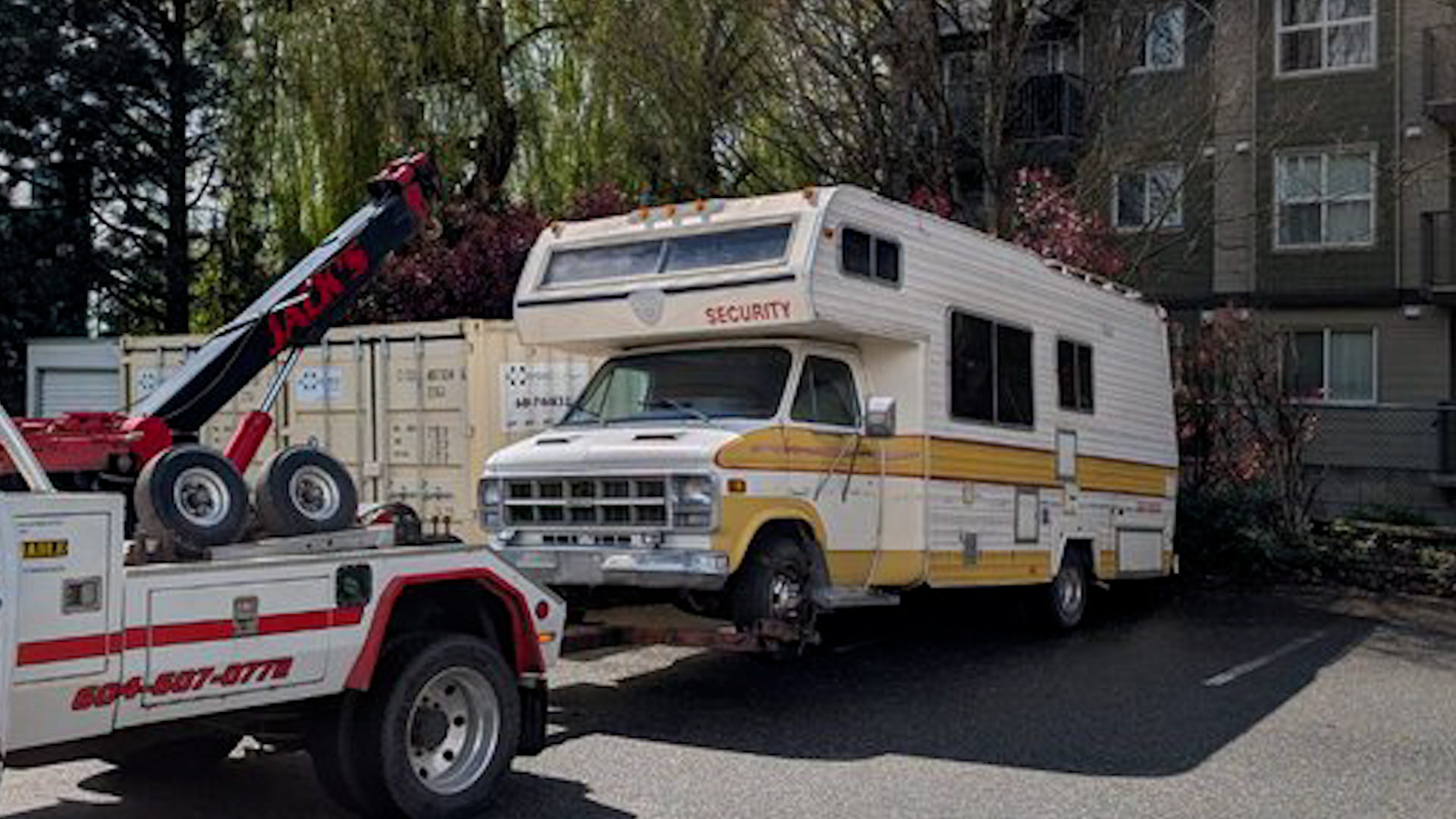
The motorhome in Abbotsford ended its journey on the hook of a tow truck. There is a particular kind of silence that follows a police stop of this magnitude. The adrenaline fades, replaced by the cold, biting reality of a ruined vacation and a looming court date.
The passengers likely stood on the side of the road, watching their mobile sanctuary being hauled away. All the snacks in the fridge, the sleeping bags on the bunks, and the maps to future destinations were suddenly behind a chain-link fence.
This wasn't just a "seat swap." It was a betrayal of the craft of driving. Whether you are behind the wheel of a compact car or a forty-foot Class A diesel pusher, you are an operator. You are the thin line between a successful trip and a headline in the local news.
We live in an age where "content" and "dares" often outweigh common sense. We chase the story, the laugh, or the shortcut, forgetting that the most important part of any journey is the mundane act of arriving. The Abbotsford incident serves as a grim reminder that the road does not care about your sense of adventure. It does not care about your convenience.
The road only respects the hands on the wheel.
The moment those hands are removed, the story is no longer yours to write. The laws of motion take over the narrative, and they are the most heartless editors in existence. One second of vacancy is enough to turn a summer memory into a permanent scar on the landscape.