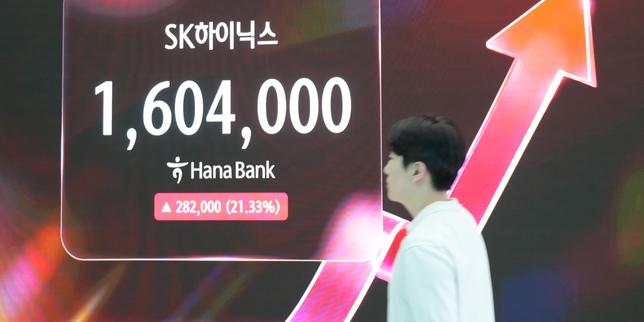
The financial press is hyperventilating over SK Hynix throwing a staggering 24.9 billion euros at share buybacks. Headlines read like corporate romance novels, praising the South Korean memory titan for rewarding shareholders and displaying supreme capital confidence.
It is financial theatre at its finest, and almost everyone is falling for it. In other news, read about: The Economics of Last Mile Drone Logistics and Amazon Scaling Realities.
I have watched executives burn through corporate cash reserves during market peaks for two decades. When a cyclical hardware manufacturer suddenly decides that buying its own equity is a better return on investment than heavy capital expenditure, you are not witnessing strength. You are watching a company that has run out of ideas on how to build the future.
Let us strip away the PR gloss and look at the brutal mechanical reality of the memory market. Gizmodo has analyzed this critical topic in great detail.
The Lazy Consensus on Share Buybacks
The mainstream narrative goes like this: SK Hynix is printing cash thanks to the artificial intelligence hardware boom, specifically their dominance in high-bandwidth memory, known as HBM. Because they are swimming in won and dollars, returning capital to shareholders through massive equity repurchases proves they are financially bulletproof.
This argument relies on kindergarten economics.
A buyback makes sense when a stock is genuinely undervalued by a short-sighted market and the company has zero better uses for its free cash flow. Neither condition applies here. SK Hynix sits at the epicenter of a historic semiconductor super-cycle. If their leadership genuinely believed their technological moat would expand indefinitely over the next ten years, every single cent of that 24.9 billion euros would be earmarked for advanced lithography, next-generation packaging lines, and fundamental material science research.
Instead, they are inflating their earnings per share to appease short-term institutional investors who panic the moment cyclical pricing dips by a single percentage point. It financializes a hardware engineering firm.
The Memory Trap No One Wants to Discuss
To understand why this buyback is defensive rather than offensive, you have to look at the structural nature of DRAM and NAND manufacturing.
Memory is a commodity. No matter how much marketing departments talk about proprietary architecture, a memory chip is ultimately a standardized component bound by the cruel laws of supply, demand, and manufacturing yield. When margins expand, every competitor—from Samsung to Micron—floods the zone with capital expenditures to build new fabs.
Fab construction takes years. By the time those massive factories come online, demand inevitably cools, causing oversupply, inventory gluts, and a catastrophic price collapse.
SK Hynix management knows this rhythm better than anyone. They have lived through the boom-and-bust cycles for decades. By executing a massive share buyback right now, they are signaling something terrifying to anyone paying attention: they do not believe they can sustain these margins long enough to justify reinvesting the entire cash pile into more physical production capacity.
They are hoarding cash for shareholders because they know the down-cycle is coming, and they want to juice their valuation multiples before the music stops.
The High Bandwidth Memory Illusion
Defenders of the current strategy love to point to high-bandwidth memory as the permanent shield protecting SK Hynix from historical volatility. They argue that because Nvidia hooks up SK Hynix chips to its AI accelerators, the old rules of the memory market no longer apply.
This is wishful thinking dressed up as industry analysis.
High-bandwidth memory is notoriously difficult to manufacture because it requires stacking dynamic random-access memory dies vertically using through-silicon vias. It is an engineering marvel. But manufacturing complexity does not repeal commoditization; it merely delays it.
Competitors are pouring billions into solving the exact same yield problems. Samsung is aggressively catching up, and Micron is quietly capturing high-margin sockets of its own. Once supply catches up to demand—and it always does—high-bandwidth memory will face the exact same pricing erosion that standard DRAM experienced in previous decades.
When your primary competitive advantage relies on being the sole qualified supplier to a single dominant customer like Nvidia, you do not have a moat. You have a dependency. Spending tens of billions on stock buybacks instead of aggressively diversifying your manufacturing footprint while margins are high is an operational failure.
What They Should Be Doing With That Cash
Imagine a scenario where SK Hynix leadership acted like long-term industrialists instead of Wall Street traders.
Instead of artificially manipulating share prices, they could use that mountain of capital to radically decentralize their supply chain, lock in exclusive long-term raw material contracts, or fund breakthrough research into photonic computing and alternative non-volatile memory architectures that could render current silicon limits obsolete.
By prioritizing equity math over hard engineering, they are admitting defeat on long-term technological dominance. They are choosing financial engineering because engineering physics is getting too hard and too expensive.
Next time you read a breathless report about a historic corporate capital return, ask yourself a simple question. Are they rewarding you because they have won the future, or are they paying you off because they are terrified of what happens when the current cycle breaks?
Stop buying the narrative. Look at the balance sheet.