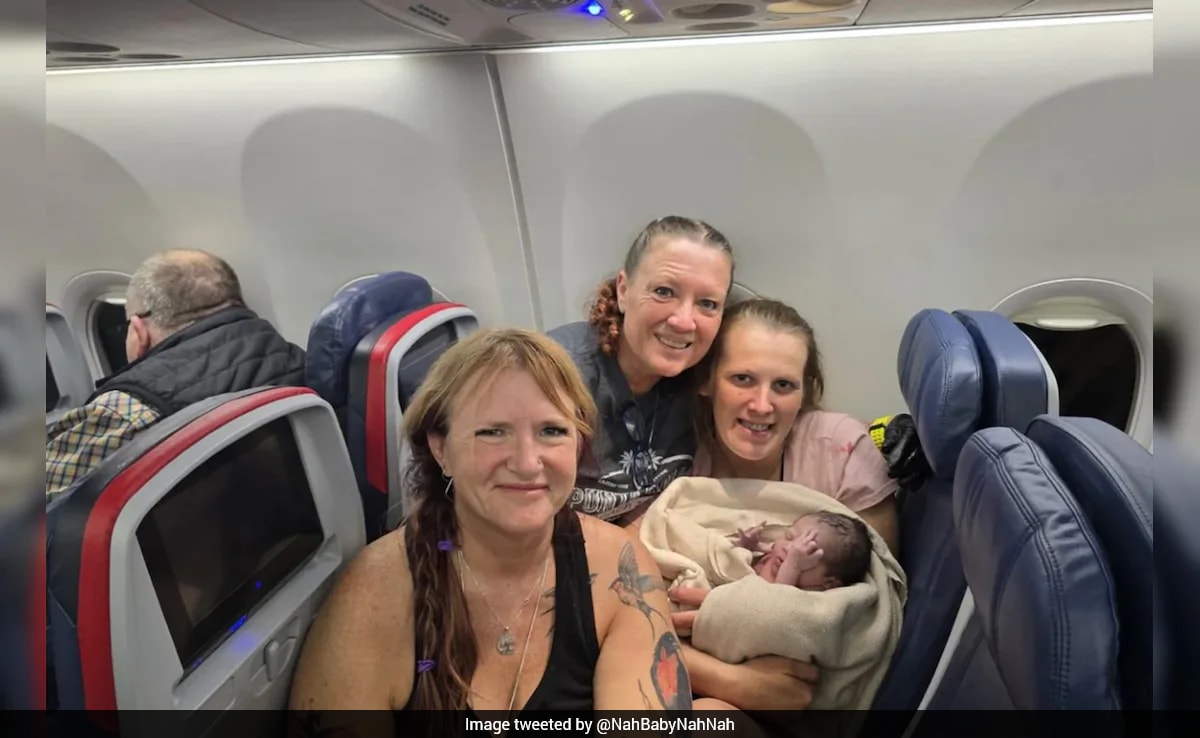
Laci and Seth didn't plan on adding a third passenger to their row halfway through a flight to Hawaii. They were just looking for a vacation. Instead, they got a "wild" story that involves a makeshift delivery room at 30,000 feet and a cabin full of strangers holding their breath. A baby born on a Delta flight is the kind of news that stops your scroll, mainly because it taps into a primal fear and a sense of wonder all at once. It’s chaotic. It’s messy. And honestly, it’s a logistical nightmare that turned into a miracle.
Most people think airlines have a secret "Doctor on Board" button they press during emergencies. They don't. When the pilot came over the intercom asking for medical assistance, the situation was already critical. The mother-to-be was only 29 weeks pregnant. That's a terrifying window for a delivery, especially when the nearest hospital is thousands of feet below and miles away.
The Reality of Mid Air Medical Emergencies
Giving birth in a pressurized metal tube isn't like the movies. There’s no hot water. There are no clean towels. There’s barely enough room to turn around in the aisle, let alone perform a delivery. When Laci went into labor on that Delta flight, the crew had to pivot instantly. They aren't surgeons, but they are trained for basic first aid. Luckily, this flight had more than just luck on its side; it had a group of medical professionals who happened to be traveling.
Three neonatal intensive care unit (NICU) nurses from North Kansas City Hospital and a family medicine physician were on board. That is an incredible stroke of fortune. Imagine the odds. If those specific people hadn't been there, the story of this Delta flight baby might have a very different, much darker tone. They used shoelaces to tie the umbilical cord. They used a smartwatch to monitor the baby's heart rate. They improvised because they had to.
It’s easy to focus on the "wild" factor, but the medical reality of a 29-weeker born in the air is intense. These babies usually need immediate respiratory support. The cabin altitude—even though it's pressurized—isn't the same as being at sea level. The air is thinner. Oxygen levels are lower. For a premature infant whose lungs aren't fully developed, every minute before landing is a gamble.
How Airlines Actually Handle Births
Airlines generally prefer you don't give birth on their planes. Most carriers, including Delta, have policies about how late in a pregnancy you can fly. Usually, the cutoff is around 36 weeks for domestic flights, but international rules vary. Even then, they don't require a doctor's note unless you're showing signs of active labor.
When things go south, the pilot has a massive decision to make. Do they push through to the destination or divert? In this case, the flight was headed to Hawaii, but they made an emergency landing in Honolulu shortly after the birth. Diversion is expensive. It costs tens of thousands of dollars in fuel, landing fees, and passenger compensation. But when a life is on the line, the math doesn't matter.
What Happens to the Plane
After a birth, the aircraft is essentially a biohazard zone. It requires a deep clean that goes way beyond the standard seat-pocket-wipe-down. The crew has to document every second of the event for the Federal Aviation Administration (FAA). It’s a massive administrative headache that follows the initial adrenaline rush.
The Question of Citizenship
Everyone wants to know what's on the birth certificate. Does the kid get free flights for life? Usually, no. That’s an urban legend. As for citizenship, it depends on several factors:
- The country where the aircraft is registered.
- The airspace the plane was in at the moment of birth.
- The citizenship of the parents.
If you're born over U.S. soil on a U.S. carrier, you're a U.S. citizen. If you're over the ocean, it gets complicated. Most countries follow jus sanguinis (right of blood), meaning the baby takes the parents' nationality regardless of where the plane was.
Why Flying While Pregnant Requires Better Planning
You shouldn't let stories like this scare you out of traveling, but you should let them make you smarter. Most people treat air travel like a bus ride. It isn't. Your body reacts differently to the environment. Dehydration happens faster. Blood clots are a bigger risk (Deep Vein Thrombosis is no joke for pregnant women).
If you're planning to fly while expecting, don't just check the airline's website. Talk to your OB-GYN about your specific risks. Ask for a copy of your medical records to keep on your phone. If Laci hadn't had expert nurses on her flight, having her medical history handy would have been the only thing the crew could rely on.
Pack a Medical Kit
Don't rely on the plane's first aid kit. It's often basic. Carry your own essentials:
- Compression socks to keep blood moving.
- Aspirin (if your doctor clears it).
- A physical copy of your due date and blood type.
- Emergency contact numbers that aren't just your spouse who might be sitting right next to you.
The Aftermath for the Delta Family
The baby, named Raymond, spent weeks in the NICU in Hawaii. That’s the part the "viral" headlines often skip. The family was stuck in a state they didn't live in, facing astronomical medical bills and the stress of a premature infant in a specialized facility. It wasn't just a "wild" moment; it was a life-altering event that lasted long after the plane landed.
The community stepped up, though. The nurses who helped deliver him visited him in the hospital. There’s a bond there that transcends a simple flight. It’s a reminder that even in a world where we're all glued to our screens and annoyed by legroom, humans can still show up for each other when the stakes are high.
What to Do if a Medical Emergency Happens Near You
If you're on a flight and someone starts having a crisis, the best thing you can do is stay out of the way. Don't be the person filming on your phone. Don't crowd the aisle. If you have medical training, identify yourself to the flight attendants clearly and concisely. State your credentials immediately. "I'm a registered nurse" or "I'm an EMT" is what they need to hear.
Listen to the crew. They're trained to manage the cabin, and their primary goal is keeping the plane stable while the medical situation is handled. If they ask you to move seats to give a patient more room, do it without complaining.
If you're the one in distress, be honest with the crew the moment you feel something is wrong. Don't wait. A "twinge" at 30,000 feet can become a full-blown emergency in twenty minutes. Early intervention gives the pilot more time to find a suitable diversion airport.
Check your travel insurance policy before you head to the airport. Most standard policies don't cover pregnancy-related issues if you're past a certain week. If you're traveling late in your second trimester or early in your third, look for "cancel for any reason" insurance or specific medical supplements. You don't want to be the person trying to crowdfund a six-figure NICU bill because your insurance decided your "wild" story was a "pre-existing condition."