Brake lights stretch red and blurry into the dusk. Four lanes of steel and glass are frozen in place over a highway overpass while rain ticks a steady rhythm against the roof. Inside a cabin smelling faintly of damp wool and cold coffee, a driver taps a thumb against a steering wheel that hasn't moved ten feet in twenty minutes.
I have sat in enough gridlock to know what impatience feels like in the bones. Your shoulders creep toward your ears. Your jaw tightens. Every minute lost on asphalt feels like a small piece of an evening, a child's bedtime, or a quiet Sunday morning slipping through your fingers with nothing to show for it. If you liked this piece, you might want to read: this related article.
Now set that scene against a bold claim coming out of China's electric mobility push: executives at XPENG's flying car arm, XPENG AEROHT, have argued that Chinese flying cars—electric vertical takeoff and landing aircraft, or eVTOLs—are more commercially viable than Tesla's long-awaited next-generation Roadster.
Wait a second. Read that claim again. For another look on this story, see the latest update from The Next Web.
A flying car—something that sounds like a comic-book fantasy, noisy and terrifying to many of us—more commercially viable than a sleek, high-speed electric sports car from Tesla? At first glance, it sounds backward. A sports car runs on roads we already have. A flying machine needs airspace rules, charging or landing pads, public trust, and engineering miracles.
I have to admit, my own instinct flinches at the idea of neighbors buzzing overhead like giant drones. Air safety is not a minor detail. Neither is battery weight, noise, or price. If we pretend flying cars are as simple as buying a hatchback, we are fooling ourselves.
Yet when an executive at a major Chinese electric automaker makes that argument, it is not just bravado for a headline. It points to a real shift in how two different visions of future transportation are being tested against reality.
Two Dreams Racing Different Clocks
To understand why someone at XPENG would make such a sharp comparison, it helps to look at what each machine actually represents right now.
The next-generation Tesla Roadster has been sold to the public as an extreme symbol of speed and thrill—a halo car designed to shatter performance benchmarks and capture the imagination of driving purists. Halo cars matter. In auto history, dramatic models often pull attention toward a brand and showcase extreme engineering. Still, an ultra-fast two-seat sports car is built around a narrow kind of desire: acceleration, prestige, and open-road drama. When traffic clogs the arteries into major cities, even a blistering zero-to-sixty time cannot teleport you over a stalled semi-truck.
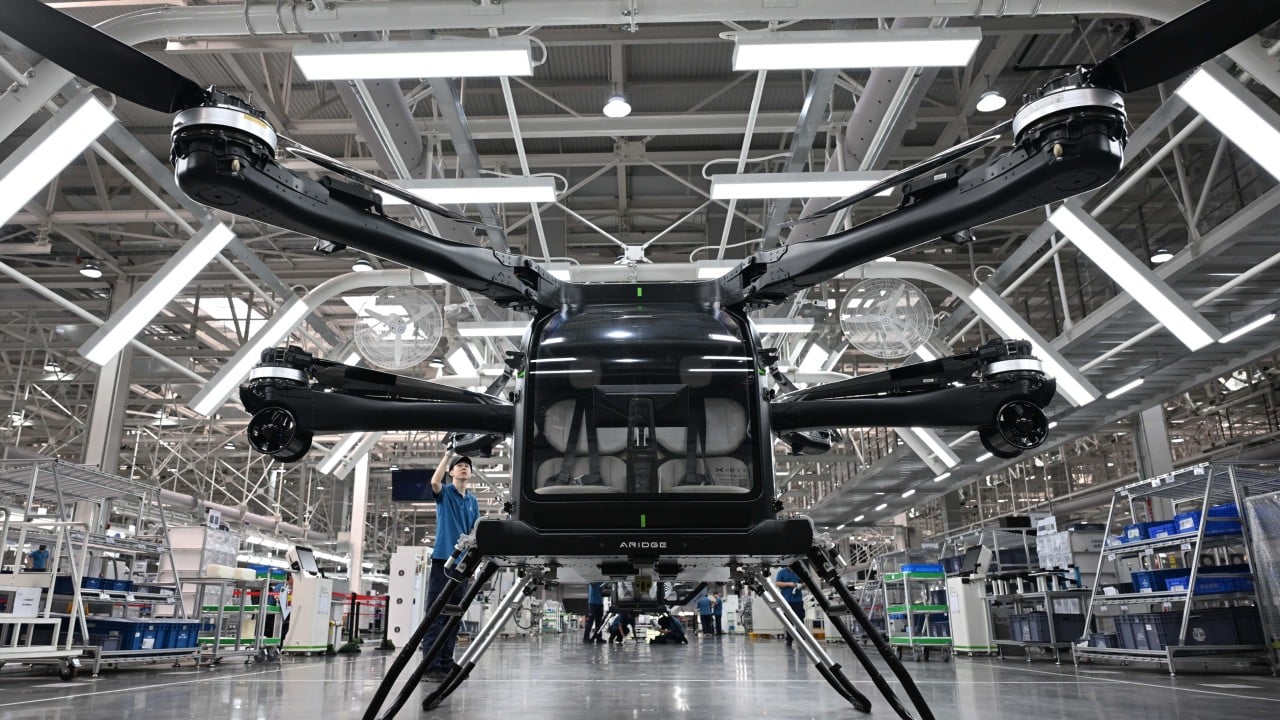
Now consider what XPENG and its aviation affiliate have been chasing with their modular and electric flying vehicles, such as the Land Aircraft Carrier concept—where a multi-rotor flying craft pairs with a ground mothership vehicle—and earlier crewed multi-rotor prototypes like the X2. Instead of chasing track records on a highway, they are betting on short-hop aerial mobility, scenic tourism, campus or resort transfers, and controlled air corridors where lifting off vertically bypasses surface congestion.
Think of it like comparing a custom racing yacht to a rugged utility ferry. The yacht turns heads in a calm harbor and makes pulses race. The ferry looks less glamorous up close, yet it moves people across water when the bridge is out.
In a hypothetical scenario, picture a coastal resort town forty miles from a bustling city center. A ground trip during peak weekend hours might crawl along two-lane roads for two hours. A short vertical flight over the shoreline could cut travel time to a fraction of that, provided weather, noise limits, and flight approvals line up. That hypothetical example is not a promise of tomorrow's commute for everyone, but it shows why commercial viability hinges on usefulness under real constraints, not just raw speed.
What "Commercially Viable" Actually Means on the Ground
People often hear "commercially viable" and picture a flying car sitting in every suburban driveway by next spring. That is not what serious engineers or executives mean.
Commercial viability simply asks: Can enough people or operators pay enough money for this thing to survive, scale, and make sense in the real world without living forever on hype?
For a flying car, viability has steep hurdles. Battery energy density is unforgiving in the air; extra weight that a road car shrugs off can ground an aircraft. Noise matters hugely over neighborhoods. Certification, pilot or autonomous flight rules, insurance, and emergency landing protocols are non-negotiable. A single high-profile failure in the sky sets public trust back years.
So why would a flying vehicle look more commercially viable than a halo sports car?
Look at the economics of niche, high-value demand versus delayed delivery timelines. A sports car like the next Roadster sits in a fiercely competitive luxury and performance space, where buyers already have fast electric cars, exotic gas rivals, and high expectations—and where repeated delays test patience. Meanwhile, a specialized eVTOL or modular flying car doesn't need to replace every family sedan on day one to find paying customers. Sightseeing operators, private estates, emergency or medical scouting, and wealthy early adopters willing to fly in designated zones can form an initial beachhead.
Consider what happens next when a country builds an entire supply chain around electric motors, batteries, lightweight composites, and flight controllers under one roof. China's broader electric vehicle ecosystem has moved fast on battery manufacturing, power electronics, and supply-chain scale. When the same core ingredients—cells, inverters, sensors, and electric drive units—feed both ground EVs and electric aircraft, unit costs have a path to come down faster than they would for a one-off boutique project.
That is a logical deduction grounded in industrial history, not magic. Whenever industries share components and manufacturing scale, early costs drop sooner than skeptics expect.
The Human Stakes Behind the Hype
Why should an ordinary person care whether an executive in Guangzhou thinks flying cars beat a Tesla Roadster in commercial viability?
Because transportation shapes how we spend our finite lives.
Let's bring in two hypothetical characters—clearly imagined, not real people—to make the stakes tangible.
First, meet Maya, a physical therapist who works at two clinics on opposite sides of a growing metro area. Her days are stitched together by thirty-five-minute drives that regularly stretch to seventy when a fender-bender locks up the ring road. By Friday night, she is exhausted before her own weekend even starts.
Second, meet Kenji, a retired machinist who loves classic engineering and still watches launch videos with a grin. He likes the idea of a breathtaking electric Roadster tearing down a desert highway, yet he worries about skies full of whirring blades and software glitches.
Maya and Kenji represent the tension at the heart of modern mobility. Maya wants time back and less friction. Kenji wants excitement without recklessness.
If flying cars ever become genuinely viable at scale, they won't arrive because sci-fi fans demanded them. They will arrive if they solve real bottlenecks safely, quietly, and affordably enough for real operators—and if regulators and everyday citizens trust the guardrails. And if they stall, it won't be because nobody dreamed hard enough. Physics is a strict landlord. Every pound of battery, every decibel of rotor wash, and every regulatory sign-off has to be earned.
There is also a deeper question beneath XPENG's claim: Where is the real frontier of electric mobility? Is it squeezing more speed and drama out of four rubber tires on asphalt, or is it taking electric propulsion into a third dimension where traffic jams don't exist?
Neither path is guaranteed. A Roadster doesn't need air traffic control to hit a test track; it just needs to be built and delivered. A flying car doesn't need empty highways; it needs sky corridors, safety margins, and public acceptance.
Stories We Tell Ourselves About the Future
History is littered with transportation promises that arrived late, arrived differently, or arrived only for a sliver of society. Think back to the early days of commercial aviation, or the first wave of modern electric cars when critics scoffed at range and charging times. Skepticism was often earned. Sometimes the dream took decades longer than the pitch deck promised.
Yet dismissing an idea outright just because it sounds strange has its own blind spot. Yesterday's novelty sometimes becomes tomorrow's specialized tool—first in narrow corners like tour flights, cargo links, or campus hops, and only much later, if ever, in broader daily life.
When I think about that rainy overpass and the red brake lights stretching into the dark, I don't feel a surge of blind faith in flying cars. I feel curiosity mixed with caution. I want machines that respect human limits, protect safety above spectacle, and give people back hours they will never get back.
Whether a Chinese flying car proves more commercially viable in practice than Tesla's next Roadster will be settled not by boardroom quotes, but by flight hours, safety records, prices, and real customers paying real money.
Above the stalled highway, the clouds drift quiet and unhurried, untouched by brake lights, waiting to see which machine actually earns the sky.