Slovakia is currently walking a legal tightrope that threatens to snap under the weight of European Union law. By attempting to implement a dual-pricing system for diesel—charging foreign drivers significantly more than locals—Bratislava has triggered a high-stakes standoff with the European Commission. This move, framed by Slovak officials as a shield against "fuel tourism" and rising domestic inflation, flies directly into the face of the EU’s Single Market principles. Specifically, it violates the core prohibition against discrimination based on nationality. Brussels has made its position clear: the plan is illegal and must be scrapped or the country faces crippling fines.
The conflict isn't just about a few cents at the pump. It represents a fundamental fracture in how member states balance national protectionism against the collective rules of a borderless economy. If Slovakia succeeds, the precedent could dismantle decades of integrated trade. If they fail, the domestic political fallout for a government promising "Slovakia first" could be severe. For another view, check out: this related article.
The Mechanics of Discrimination at the Pump
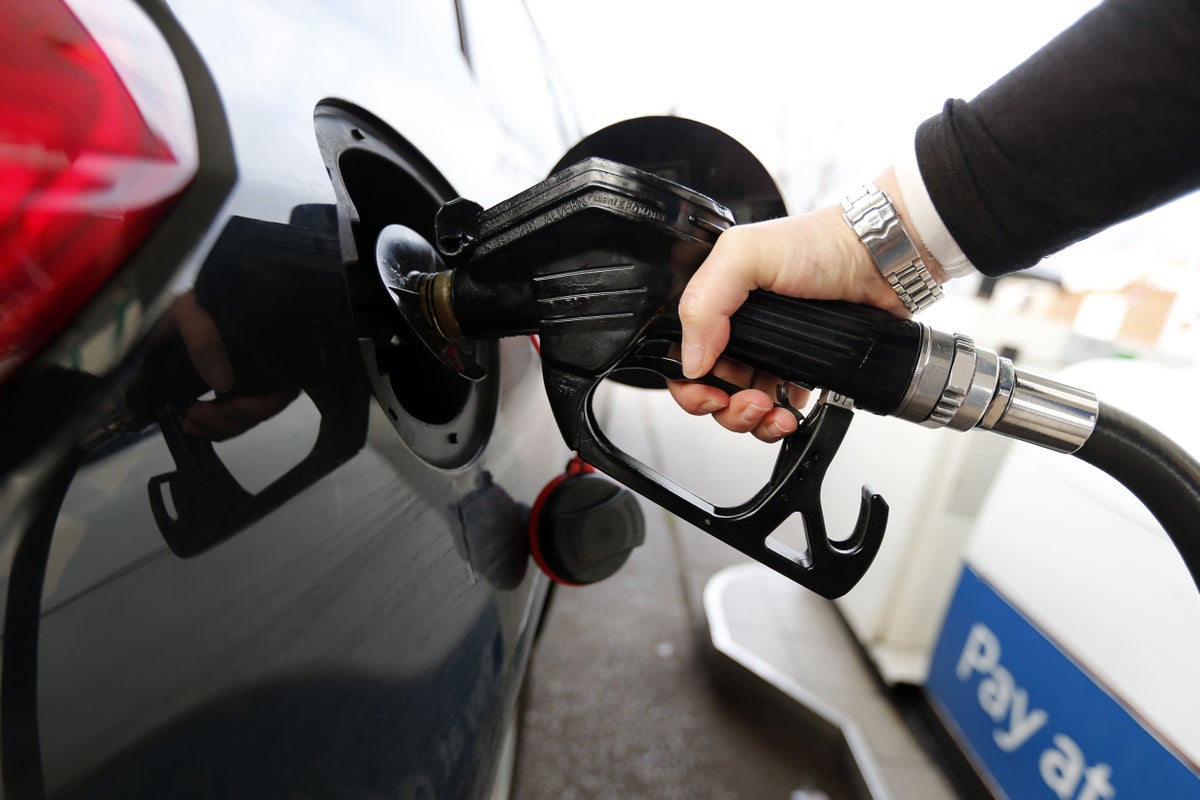
The proposed Slovakian policy functions through a tiered pricing mechanism. Under this system, vehicles with Slovak registration plates would be eligible for a subsidized or "standard" rate, while any vehicle with foreign plates—be it a Polish hauler, an Austrian tourist, or a Hungarian commuter—is hit with a surcharge.
This isn't the first time a member state has tried this gamble. Hungary attempted a near-identical "dual pricing" scheme in 2022, only to be dragged before the European Court of Justice (ECJ). The legal logic is uncompromising. Article 18 of the Treaty on the Functioning of the European Union (TFEU) explicitly forbids any discrimination on grounds of nationality. When a German truck driver pulls into a station in Bratislava, they are legally entitled to the same commercial conditions as a Slovak driver. Similar insight regarding this has been shared by Business Insider.
To the bureaucrats in Brussels, this is a "slam dunk" violation. The Single Market relies on the friction-less movement of goods, services, and people. Once you start checking license plates to determine a price, you have effectively erected a digital border. It disrupts the level playing field that allows the Eurozone to function as a singular entity.
The Fuel Tourism Crisis
Why would a government knowingly invite a legal war with its largest benefactor? The answer lies in the volatile economics of Central Europe. Slovakia sits at a crossroads of major European transit corridors. When neighboring countries experience price spikes, "fuel tourism" becomes a drain on national reserves.
Local politicians argue that their primary duty is to protect the purchasing power of their own citizens. They see the EU’s rigid adherence to non-discrimination as a luxury they cannot afford during an energy crisis. By keeping prices low for locals and high for outsiders, they hope to prevent "raids" on their fuel stations that could lead to domestic shortages.
However, this logic is economically flawed in the long run. Fuel markets are deeply interconnected. When a country artificially suppresses prices for a specific demographic, it creates a "gray market." It also discourages private wholesalers from importing fuel because they cannot turn a profit under the price cap, eventually leading to the very shortages the government claims to be preventing.
Precedent and the Hungarian Shadow
The ghost of Budapest hangs heavy over this dispute. In 2022, Viktor Orbán’s government introduced a similar measure. The European Commission moved with unusual speed, issuing formal notices and eventually referring the case to the ECJ. Hungary was forced to backtrack, but not before causing significant diplomatic friction.
Slovakia appears to be testing whether the EU’s resolve has softened or if the current geopolitical climate allows for more "flexibility." It hasn't. The Commission views these price-gouging tactics against foreigners as a "contagion" risk. If Slovakia is allowed to discriminate on diesel, what stops another country from doing it with electricity, or medicine, or food?
The legal process is a slow-motion car crash for Bratislava. It begins with a "Letter of Formal Notice," giving the state two months to respond. If the explanation is deemed insufficient—which it almost certainly will be, given the clarity of the law—the Commission issues a "Reasoned Opinion." This is the final warning before the matter moves to the court in Luxembourg.
Economic Consequences of Regulatory Defiance
For a country like Slovakia, heavily dependent on the automotive manufacturing industry and cross-border logistics, picking a fight over fuel prices is a high-risk strategy. The real cost isn't the court fees; it is the loss of institutional trust.
Foreign investors look for stability and adherence to the rule of law. When a government signals that it is willing to ignore treaty obligations for a short-term populist win, it raises the "risk premium" for doing business in that country. If a freight company cannot predict its fuel costs because of discriminatory pricing, it will simply reroute its logistics hubs to neighboring Czechia or Austria.
Furthermore, the EU has increasingly tied the distribution of "Cohesion Funds" and "Recovery and Resilience" money to the respect for the rule of law. While fuel pricing might seem like a minor administrative issue, it falls under the broader umbrella of treaty compliance. Bratislava is playing with fire by risking billions in development aid to save a few million at the gas station.
The Inflation Mirage
Slovak officials claim that higher prices for foreigners help curb domestic inflation. This is a mirage. Inflation is driven by global crude prices, refining margins, and currency fluctuations. A dual-pricing scheme might provide a temporary psychological boost to voters, but it does nothing to address the structural energy dependencies of the region.
In fact, the policy can be inflationary in its own right. If transport companies—most of which operate with international fleets—are forced to pay higher fuel prices, they will pass those costs on to the consumer. The bread in a Slovak grocery store is often delivered by a truck that might not be registered locally. By taxing the transport, the government inadvertently taxes the goods on the shelves.
Structural Solutions Over Populist Fixes
If Slovakia truly wants to protect its citizens from energy volatility, the path lies through regional cooperation rather than isolation. Diversifying supply chains and increasing domestic storage capacity are the "hard" solutions that provide long-term stability. Price discrimination is a "soft" fix—a band-aid that eventually causes an infection.
The European Commission has suggested that member states use targeted social support to help low-income households with energy costs. This is legal under EU law. You can give a tax credit to a Slovak citizen to help them pay for fuel. What you cannot do is change the price at the meter based on the color of a license plate. One is a social policy; the other is a trade barrier.
The Looming Deadline
Bratislava is running out of time. The Commission’s patience is thin, and the legal precedents are stacked against them. Every week the policy remains in discussion or implementation, the potential fines accrue. These fines are often calculated daily and can reach hundreds of thousands of euros.
The Slovak government is essentially gambling with taxpayer money. They are betting that they can stall the legal process long enough to gain some domestic political advantage before being forced to pivot. It is a cynical calculation that ignores the long-term health of the national economy and its standing within the European community.
The reality of the Single Market is that it is an all-or-nothing deal. You cannot enjoy the benefits of free-flowing capital and exports while simultaneously reintroducing protectionist barriers when things get difficult. Slovakia must decide if it wants to be a core member of the European economic project or a peripheral state defined by its defiance of the very rules that made it prosperous.
Contact your local trade representative to track the official infringement proceedings as they move toward the European Court of Justice.