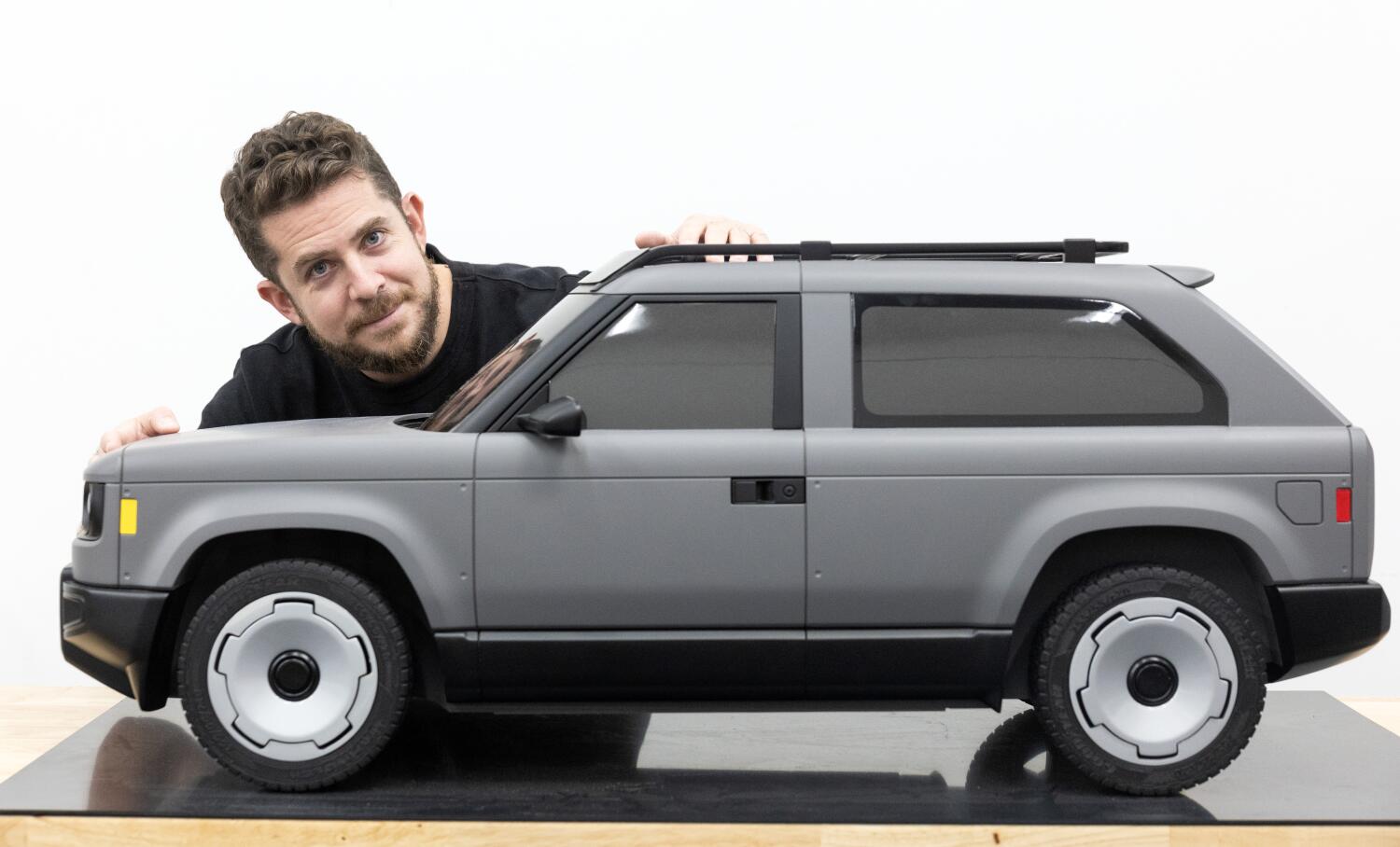
Elon Musk promised a $40,000 Cybertruck and gave us a $100,000 polygon. Ford's F-150 Lightning started as an "accessible" workhorse but quickly saw its price tag spiral toward luxury territory. If you want a battery-powered pickup that doesn't require a second mortgage, the American market currently offers you exactly zero options. That's why the industry is looking at a nondescript studio in Long Beach, California.
Telo Trucks isn't trying to build a spaceship or a status symbol. They're trying to build a tool. While the "Big Three" are obsessed with making EVs bigger, heavier, and more intimidating, Telo is moving in the opposite direction. They've designed a truck that has the footprint of a Mini Cooper but the bed capacity of a standard Toyota Tacoma. It's a radical rethink of vehicle geometry that prioritizes utility over ego.
Most people don't need a three-ton behemoth to haul a few 2x4s or a mountain bike. They need something that fits in a standard garage and doesn't bankrupt them at the dealership. By stripping away the bloat and rethinking the chassis from the ground up, this Long Beach team is aiming for a $30,000 starting price. That isn't just cheap for an EV. It's competitive with gas-powered mid-sized trucks.
The Death of the Gigantic Hood
The dirty secret of electric vehicle design is that most manufacturers are still building cars as if there's a massive internal combustion engine under the hood. They're clinging to the "long nose" aesthetic because that's what consumers associate with power. Telo threw that blueprint in the trash.
Since electric motors are compact, you don't need five feet of steel in front of the driver. Telo's design pushes the cabin all the way forward. The driver essentially sits over the front wheels. This "cab-forward" layout was popular in the 60s with vans like the Volkswagen Bus, but it fell out of favor due to safety concerns. Telo is using modern composites and advanced crumple zone engineering to bring it back safely.
This shift changes everything. You get a five-foot bed and a crew cab that seats five adults, all within a vehicle length of just 152 inches. For context, a Ford F-150 is about 230 inches long. You can park the Telo in spots that a Rivian driver wouldn't even attempt. It's urban-friendly without sacrificing the "truck" part of the equation.
Why Specs Matter More Than Hype
Silicon Valley loves to talk about "disruption," but the construction site and the farm don't care about software updates. They care about payload and range. Telo is targeting 350 miles of range on a single charge. That’s an ambitious number for a small vehicle, but they’re achieving it through efficiency rather than just stuffing in a bigger battery.
Weight is the enemy of range. Massive electric trucks like the Hummer EV carry batteries that weigh as much as a Honda Civic. It's an absurd, self-defeating cycle. Telo is focused on a lightweight signature. Less weight means they can use a smaller battery to get the same distance, which keeps the cost down. It's basic math that the rest of the industry seems to be ignoring in favor of "ludicrous" speed modes.
The truck is slated to deliver 500 horsepower. It’ll hit 0-60 in about four seconds. Is that necessary for a work truck? Probably not. But in the current market, performance is a requirement for survival. The real winner is the 106 kWh battery pack that charges from 20% to 80% in twenty minutes. If you're using this for a fleet or a small business, that fast-charging capability is what keeps the business moving.
The Long Beach Advantage
California is the epicenter of the EV world, but Long Beach offers something different than the polished glass towers of Palo Alto. It’s a city defined by logistics, shipping, and hard labor. It’s a fitting home for a company trying to build a truck for people who actually work for a living.
The team behind Telo isn't a group of interns. Co-founder Jason Marks led the ADAS (Advanced Driver Assistance Systems) team at Akka Technologies, and Forrest North was an early member of the Tesla Roadster team. They’ve seen how the sausage is made at the highest levels of the industry. They know that the biggest hurdle isn't designing a cool car—it's manufacturing it at scale without the wheels falling off the company.
Instead of building a multi-billion dollar "Gigafactory" from scratch, Telo is looking at contract manufacturing. It’s the iPhone model. You design the hardware and software, then you partner with experts who already know how to bolt things together efficiently. This keeps overhead low and allows them to focus on the engineering.
Challenging the Bigger is Better Fallacy
American car culture is currently obsessed with size. Every year, the grills on pickup trucks get taller and more aggressive. It’s a trend that’s literally killing people; pedestrian visibility in modern full-sized trucks is abysmal. Telo’s design fixes this by default. Because the driver is perched right at the front with a massive windshield, the visibility is unparalleled.
It’s a safer design for cities, but it’s also a more logical design for the environment. We can’t solve the climate crisis by replacing every gas-guzzling SUV with a four-ton electric SUV. We need smaller, more efficient tools. Telo is betting that there's a silent majority of buyers who are tired of the "arms race" of truck sizes and just want something that works.
Real World Utility Over Interior Fluff
Step inside a high-end EV today and you’re greeted by a giant iPad and vegan leather. Telo is leaning toward a more utilitarian aesthetic. The bed features a "mid-gate" system. If you need to carry something longer than five feet, like a surfboard or a ladder, the back of the cab folds down. This expands the storage space into the interior, effectively giving you the hauling capacity of a much larger vehicle when you need it.
There’s also a hidden storage compartment under the bed, similar to what you’d find in a Honda Ridgeline. It’s a spot for tools, muddy boots, or groceries that you don't want sliding around the cab. These are the kinds of features that show the designers actually spent time thinking about how people use trucks. It's not about the "wow" factor at a car show; it's about not having your gear fly out on the highway.
The Price Barrier and the Path Forward
The biggest question mark is the $30,000 price point. Can they actually hit it? The history of EV startups is littered with companies that promised a cheap car and delivered a luxury one—or nothing at all. To stay at that price, Telo has to be ruthless about part sharing and avoiding "feature creep."
They’re currently taking pre-orders for a $135 deposit. It’s a low-risk way for them to gauge interest and a low-risk way for you to get in line. If they can deliver even 80% of what they’ve promised, they will own the mid-size market. The competition isn't just other EVs; it's the used truck market. If a contractor can buy a brand-new electric Telo for the price of a five-year-old gas Tacoma, the math starts to look very good for the Long Beach startup.
If you’re tired of waiting for the big manufacturers to care about affordability, keep an eye on this project. The era of the bloated, overpriced EV might be peaking, and the era of the practical, compact workhorse is just starting.
Check your local state incentives for EV purchases. In many cases, federal and state tax credits could drop the effective price of a Telo Truck into the low $20,000 range. That’s a number that changes the entire conversation around electric mobility for the average American. Find the Telo pre-order page and look at the dimensions. Measure your garage. You might realize you don't need that massive hood after all.