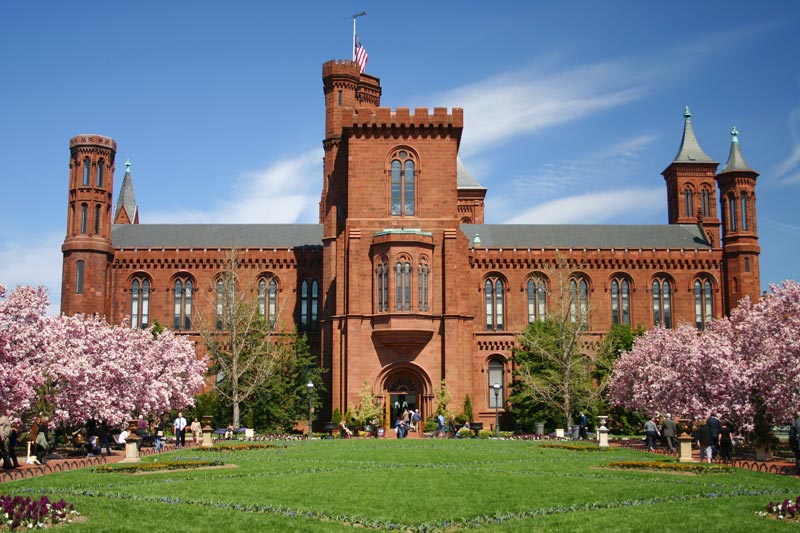
Lonnie Bunch III spent four decades inside the sprawling machinery of the Smithsonian Institution, ultimately becoming its first Black secretary. When he announced his impending departure at the end of the year, official statements pointed toward retirement and the desire to spend time with grandchildren. Yet his exit arrives at the end of a bruising, months-long siege led by the White House over how the nation's museums display the grim realities of slavery, racism, and historical trauma. The departure of Bunch is not merely a personnel change at a cultural trust; it marks a dangerous escalation in the political battle over who controls the national memory.
The friction between federal executive power and cultural institutions is nothing new, but the current administration has weaponized federal funding streams and administrative threats in an unprecedented manner. Since returning to office, President Donald Trump targeted the Smithsonian complex, declaring that exhibits focused too heavily on how bad slavery was and promoted a worldview that was overly critical of American values. White House directives demanded internal reviews aimed at stripping out what officials labeled as divisive narratives, pushing instead for an uncritical celebration of American exceptionalism. For an institution that oversees millions of artifacts across multiple museums on the National Mall, this pressure campaign represents a direct existential threat to scholarly independence.
The core mechanism of this pressure relies on budgetary leverage. While the Smithsonian operates with a degree of structural autonomy and relies on private endowments alongside federal appropriations, its reliance on congressional funding makes it deeply vulnerable to executive branch coercion. Threats to choke off appropriations or initiate sweeping ideological purges create an environment where institutional self-preservation begins to conflict directly with historical honesty. When the administration writes formal letters demanding structural changes to executive leadership and institutional ideology, it signals to federal agencies and cultural trustees that compliance is the only path to survival.
Long before he assumed the top administrative post, Bunch was the founding director of the National Museum of African American History and Culture. Opening that museum in 2016 required navigating years of political resistance, congressional skepticism, and cultural pushback. Bunch understood that placing the brutal mechanics of human bondage and the long shadow of Jim Crow at the center of the National Mall was essential to providing a complete picture of the American experiment. That museum became a monumental success, drawing millions of visitors who sought an unvarnished look at how race shaped the nation's political, economic, and social structures.
Attacking these exhibits is a deliberate strategy to shift the Overton window regarding national identity. The argument pushed by critics of the Smithsonian is that museums should primarily serve as engines of civic inspiration and unity. However, professional historians recognize that civic cohesion built on selective omission is fragile and historically dishonest. Slavery was not an accidental byproduct of early American society; it was a foundational economic engine. To sanitize its presentation in federal museums is to alter the historical record to suit contemporary political comfort.
The collateral damage of this conflict extends far beyond Bunch's office. Earlier in the year, other high-profile cultural leaders faced similar administrative headwinds, leading to sudden departures and frantic institutional scrambles. Internal censorship controversies flared up over topics ranging from presidential impeachments to social media messaging. Each retreat by institutional leadership emboldens political actors to demand further concessions. When a museum alters an exhibit or tones down historical analysis under duress, it establishes a precedent where political loyalty supersedes scholarly peer review.
Defenders of the Smithsonian argue that historical interpretation must remain shielded from the shifting tides of electoral politics. Figures across the arts and academic communities have rallied around Bunch, emphasizing that a nation strong enough to endure its history should be brave enough to display it accurately. Yet public displays of solidarity do little to protect institutional budgets from calculated legislative cuts or executive branch overreach. The reality on the ground in Washington is that cultural institutions are discovering how quickly decades of independent scholarship can be undermined by a hostile political apparatus.
The departure of the institution's first Black secretary carries profound symbolic weight for communities whose histories were long relegated to the margins of American museums. For generations, national museums treated minority experiences as footnotes rather than central pillars of the national narrative. Bunch's tenure represented a structural correction to that historical oversight. His exit leaves a vacuum at a time when the foundational principles of historical interpretation are actively being contested.
As the search for a successor begins, the future of the Smithsonian remains precarious. The incoming leadership will inherit an institution caught in a crossfire between political demands for sanitized patriotism and the professional obligation to present the past with all its contradictions. If the federal government successfully bends these museums to its ideological will, the consequences will ripple through every public history classroom and cultural center in the country. The battle over the Smithsonian exhibits is not about what happened two centuries ago; it is about who holds the power to define what America is today.


