The air in Southern California does not just get hot during a brush fire. It turns into something heavy, thick with the scent of toasted sumac, baked clay, and the sharp, chemical bite of burning plastic. It tastes like copper on the back of your tongue. Anyone who has stood on a ridge in Ventura or Riverside counties when the Santa Ana winds pick up knows that smell. It is the scent of waiting.
For days, the headlines have carried a familiar, clinical rhythm. Containment grows on Sandy fire, others across Southern California. To someone reading a news feed in an air-conditioned office in Chicago or New York, those words offer a sterile comfort. Containment means control. Percentages go up, danger goes down, and the world moves on.
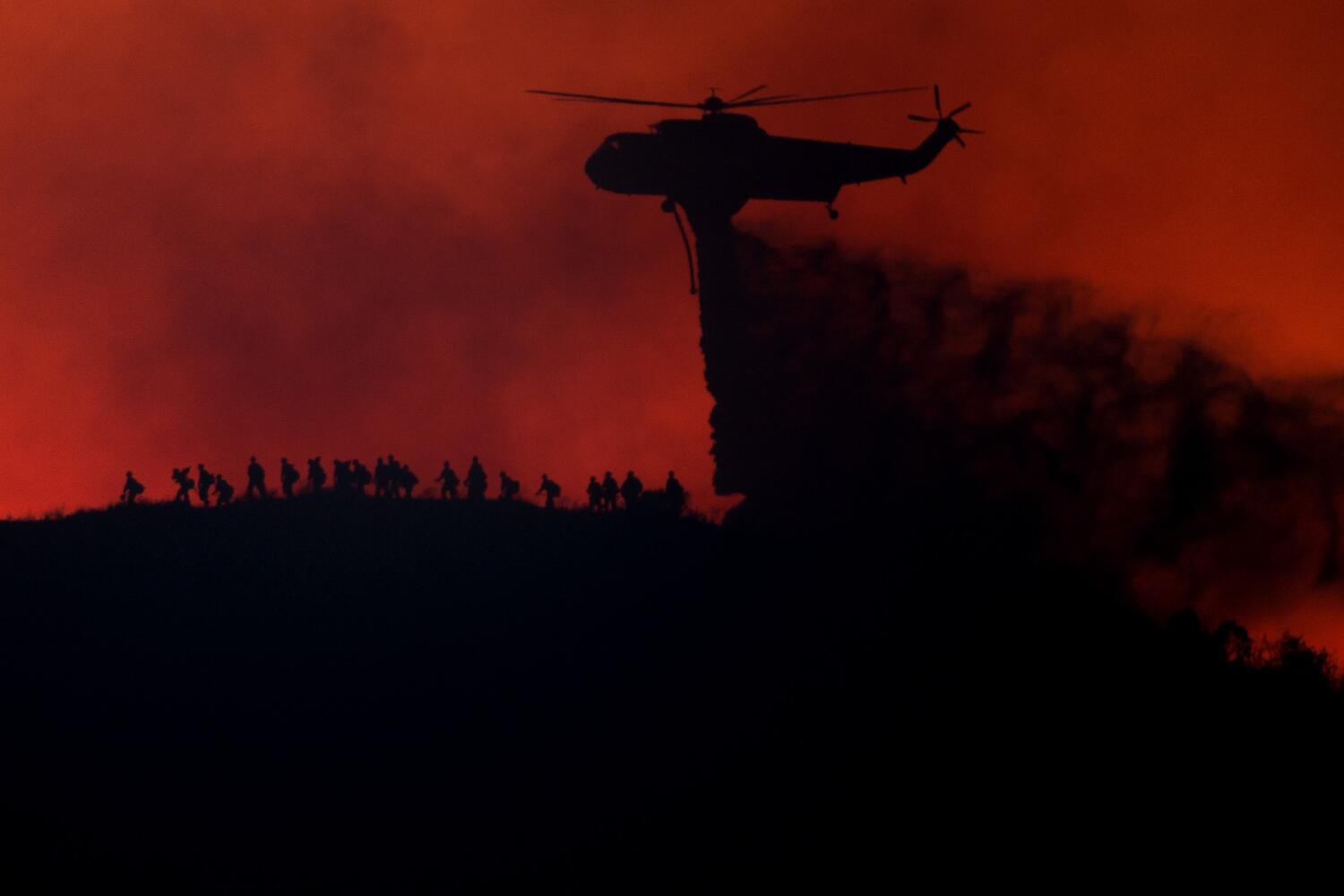
But containment is an illusion of geography. Draw a line on a map, throw down some retardant, and hope the wind plays nice. On the ground, containment looks like a crew of twenty-somethings hacking at the earth with Pulaskis, their faces caked in soot, their lungs burning as they try to scrape away every single blade of dry grass before the next ember flies. It is a battle fought in inches by exhausted people who know that a single gust of wind can erase twelve hours of agonizing work in twelve seconds.
The Line in the Dirt
Consider a hypothetical firefighter named Marcus. He is twenty-six, drinks too much black coffee, and hasn’t slept more than three consecutive hours since Tuesday. Right now, he is standing on a steep, crumbling hillside just outside the perimeter of the Sandy fire.
The fire itself is a living thing. It does not just burn; it breathes. When it gets large enough, it creates its own weather system, sucking in oxygen and spitting out vortexes of flame that the crews call fire whirls. Marcus is watching the brush across the canyon. The chaparral there is old. It hasn’t burned in thirty years, which means it is essentially a massive deposit of solid fuel, baked bone-dry by weeks of triple-digit temperatures.
The official report says the Sandy fire is thirty-five percent contained.
To the public, thirty-five percent sounds like progress. To Marcus, it means sixty-five percent of the fire is still completely wild, running free through canyons that are too steep for bulldozers and too smoky for air tankers. The numbers on the news are a macro view of a micro crisis. They hide the reality that containment is not a wall. It is a promise written in dirt, and the wind is always trying to rip it up.
[The Mechanics of Containment]
Fire Line Scraped to Mineral Soil <--- Fuel Removed
--------------------------------------------------
Active Burn Zone                 | unburned Brush
(Ash, Embers, Heat)             | (The Vulnerable Zone)
To understand why Southern California burns with such ferocity, you have to understand the landscape. This is not a pristine forest of towering pines. This is the chaparral—a dense, chaotic ecosystem of shrubs, scrub oak, and chamise that has evolved to burn. The plants themselves are oily. When the heat hits them, they don’t just scorch; they explode.
When you mix that volatile fuel with the geography of the region, you get a perfect funnel. The deep canyons act as chimneys. They draw the heat upward, accelerating the fire's speed until it moves faster than a human can run.
The Weight of the Shift
The real story of these fires is found in the quiet moments between the chaos. It is found in the evacuation centers set up in high school gymnasiums, where families sit on folding chairs, staring at their phones, waiting for an update that might not come for hours.
There is an old woman sitting by the bleachers at a shelter in San Bernardino. Let's call her Elena. She left her home with nothing but her medication, her cat, and a photo album she couldn't bear to lose. She has lived in the same stucco house since 1984. She remembers the Old Fire of 2003. She remembers the Esperanza fire. Every few years, the hills turn orange, the sky turns gray, and she has to pack her life into the trunk of a sedan.
This is the psychological toll that never makes it into the containment percentages. It is the chronic stress of living in a place where the earth periodically tries to burn you out.
Every time the wind picks up in October or November, a collective anxiety settles over millions of people. Windows are shut. Air purifiers are turned to high. People look at the horizon, searching for that telltale column of white or gray smoke.
But the problem goes deeper than weather patterns and dry brush. The real crisis is structural.
Consider what happens next: a fire is contained, the smoke clears, and the crews pack up their hoses. The immediate danger is gone, but the landscape has been fundamentally altered. The root systems that held the steep hillsides together are destroyed. The soil becomes hydrophobic, meaning it repels water instead of absorbing it.
Then come the winter rains. Without the vegetation to hold the mud in place, those same canyons that funneled the fire now funnel tons of debris, rocks, and mud down onto the homes below. The fire is just the first act in a two-part tragedy.
The Math of the Mountain
We tend to view these disasters through a lens of bad luck or extreme weather. But there is a predictable math to it. The state’s firefighting infrastructure is world-class, yet it is constantly being pushed to its absolute limit.
When multiple fires break out simultaneously—like the recent convergence of blazes across Riverside, San Diego, and Los Angeles counties—the resources get stretched thin. An engine crew from Oakland is called down to fight a fire in Malibu. A crew from Arizona is sent to the high desert. It is a massive, shifting jigsaw puzzle of personnel, heavy machinery, and aircraft.
- Fuel Moisture Levels: The percentage of water held by living vegetation. When it drops below sixty percent, the brush is considered critically flammable. This season, some areas saw levels dip into the single digits.
- The Santa Ana Factor: High-pressure systems over the Great Basin push air down toward the coast. As it drops in elevation, it compresses, heats up, and dries out, creating sustained winds that can exceed sixty miles per hour.
- The Wildland-Urban Interface (WUI): The zone where human development meets undeveloped wildland. This is where the highest stakes lie, as millions of homes are now built directly in the path of historical fire corridors.
The math is simple, and the conclusions are brutal. More people living in the hills means more ignition sources. More ignition sources combined with lower fuel moisture means more fires. More fires mean more strain on a system that is already running on fumes.
The Cold Ground
Back on the ridge, the sun is beginning to set, casting a deep, apocalyptic violet hue across the smoke-choked sky. Marcus finishes his shift. His hands are raw, his boots are ruined, and his throat feels like it has been scrubbed with sandpaper. His crew has managed to hold their section of the line. The thirty-five percent containment figure will likely tick up to forty by morning.
He climbs into the back of a transport truck, looking out at the blackened hillside. Small pockets of stump holes and roots are still glowing orange in the dark, looking like city lights from a distance. They will burn for days, requiring meticulous "mop-up" work to ensure they don't flare back up when the wind returns.
The news tomorrow will praise the increased containment. People will breathe a sigh of relief. They will think the danger has passed because the percentages are moving in the right direction.
But Marcus knows better. He knows that containment is just a temporary truce with a landscape that never stops waiting for the next spark. The line in the dirt holds for now, but the mountains are patient, and the wind always returns.