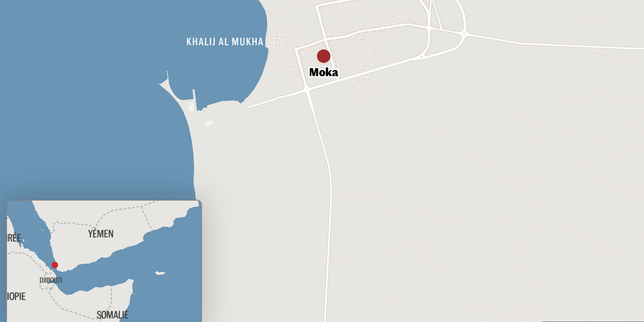
The sea comes in gray here, carrying the smell of salt and old diesel, brushing against the stone foundations of a city that has known too many centuries of siege. Mocha is not just a name printed on a shipping container or roasted in a morning cup across the globe. It is a place of chalk-white towers, carved wooden shutters swollen by humidity, and narrow alleyways where children chase rolling hoops through the dust. On an ordinary afternoon, the soundscape is a familiar layering of calls to prayer, the clink of ceramic cups in small open-air cafes, and the distant shouting of fishermen hauling their wooden skiffs onto the shore.
Then the sky tears open.
There is no grace in it. There is only a sudden, concussive pressure that flattens the breath in your chest before the sound even arrives—a sound like metal snapping under unimaginable weight.
In the immediate aftermath, silence does not return. Instead, a thick, greasy plume of black smoke climbs lazily into the blue, drifting over the rooftops toward the Red Sea. Beneath that smoke, on a stretch of coastal road that links the port to the interior, six lives ended in the blink of an eye. Saudi-led coalition airstrikes, reported by Houthi-aligned authorities, did what such strikes have done with numbing regularity across this battered coastline: they turned a routine moment of transit into a crater of ash and torn rubber.
To read about this in a dispatch thousands of miles away is to encounter a sterile sentence on a screen. Six dead. Saudi strikes. Mocha. The words slide off the mind because they are coated in the Teflon of geopolitical abstraction. We process numbers easily; we store them in a mental ledger and move on to the next tab, the next notification, the next cup of coffee.
We forget that every one of those numbers walked this earth with a pocketful of small change, a specific worry about tomorrow's rent, and a mother or a brother waiting for them to cross the street.
Consider what happens in a house just two blocks from the impact zone when the air stops shaking. The initial shock gives way to a frantic, irrational counting of heads. Who was out buying flour? Who went to check the generator parts down by the harbor? The terror of modern conflict is not merely the violence of the explosion itself; it is the agonizing void that opens up in the seconds afterward, when mobile networks stutter and the road is blocked by emergency workers and burning debris.
The geopolitical chess board looks very different from the ground level. In capital cities, analysts talk about corridors of influence, maritime security, regional deterrence, and proxy friction. They draw clean lines on maps with blue and red markers, calculating trajectories and acceptable margins of strategic pressure. But on the ground in Mocha, strategy is translated into a pile of smoking rubble where a minibus or a market stall used to stand.
The human cost of these operations is rarely captured in the crisp summaries issued by defense ministries or rebel press offices. It lives in the small, agonizing details. The shoe left behind in the dust. The scattered crates of tomatoes turning red in a different way. The dull, hollow gaze of a bystander who has watched this happen three times this year alone, wondering if the universe has simply designated his hometown as a place where life is cheap and death is accidental.
War has a way of turning ordinary geography into a graveyard of context. Mocha was once a bustling commercial hub that gave the world its word for coffee, a port that connected the Horn of Africa with the Arabian Peninsula through trade, spice, and shared culture. Today, it is better known as a frontline, a name whispered in tense news bulletins, an entry in the ledger of forgotten humanitarian crises.
The tragedy is not just that people die; it is that their deaths become background noise. When conflict stretches across years, it breeds a dangerous fatigue. The world grows tired of Yemen. The headlines shrink from the front page to the middle columns, and eventually, they vanish altogether, replaced by newer fires, fresher dramas, more immediate anxieties. Yet the strikes keep falling. The smoke keeps rising over the Red Sea.
We must ask ourselves what kind of world we inhabit when the destruction of a historic port city and the extinguishing of six human beings can be neatly filed away as a minor update in a distant conflict. The distance is an illusion. We are all tethered to these choices, whether through the energy markets that swing with every escalation in the Gulf or through the quiet erosion of our collective empathy.
When the dust finally settles over Mocha and the rescue workers pack up their tools, the silence returns. But it is a heavy, broken silence. It lingers in the empty chair at the dinner table. It echoes in the hollow stare of a child looking up at an indifferent sky. And until we learn to look past the political posturing and see the human faces obscured by the smoke, the world will keep turning on an axis of quiet, unending sorrow.