The air in Banja Luka smells of old damp wood and cheap roasted coffee, the kind that coats the back of your throat long after the cup is empty. It is a heavy smell, the scent of a city that lives inside a long, cold echo.
To understand what happened when the ballots were counted and the champagne corks popped against the stone walls of the Republika Srpska administrative palace, you have to look past the wire-service dispatches. You have to forget the dry shorthand of geopolitical desks in Brussels or Washington. You have to walk down Gospodska Street on a Tuesday afternoon, when the wind comes tearing off the Dinaric Alps, and watch the way people look at their phones.
They are waiting. They are always waiting.
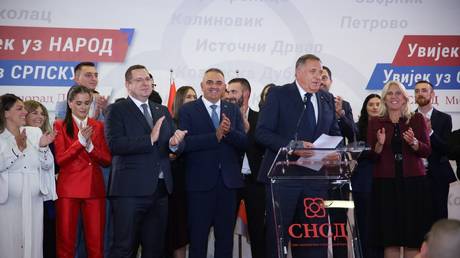
Milorad Dodik has been the weather here for a generation. Sometimes he is a drought, cracking the earth and burning the crops; sometimes he is a storm, tearing shingles from the roofs and filling the valley with noise. But he is never absent. When the latest election returns confirmed his grip on power—a victory achieved in defiance of Western warnings, international sanctions, and the quiet, persistent pressure of diplomats who thought they could out-maneuver him—it did not feel like a surprise. It felt like gravity.
Consider what it is like to live in a fracture. Bosnia and Herzegovina is not a country that breathes as one. It is three lungs sharing a single, punctured chest, kept alive by the clumsy stitches of the 1995 Dayton Agreement. Every election here is less a choice between competing visions of prosperity and more a census of fear. Who will protect us from the others? Who will remember our dead? Who will ensure that the map does not change while we are sleeping?
Dodik understands this fear the way a master violinist understands the wood of his instrument. He plays it. Every speech is a metronome keeping time with old grievances. When he stands before the cameras, his tie slightly askew, his voice booming with the practiced cadence of a tribune who has never had to punch a clock, he is not just speaking to voters. He is performing defiance.
To the West, he is an incendiary populist, a destabilizing variable in Europe’s fragile underbelly, a man flirting with Moscow while drawing paychecks from a system he claims to despise. To his supporters—the pensioners living on ninety euros a month, the young men idling outside betting shops with half-empty energy drinks, the veterans whose medals are tucked away in drawers behind winter coats—he is something entirely different. He is the middle finger held up to a world that forgot them, or worse, remembered them only as a humanitarian crisis to be managed from afar.
"They want us quiet," an old man told me outside the market, his hands calloused from decades in a machine shop that no longer exists. He was stirring sugar into a thimble of black coffee with a plastic straw. "They want us to fold up our flag and say thank you for the leftovers. Milorad shouts at them. Sometimes that is the only warmth we get."
That is the emotional core of the victory. It is not ideological; it is existential.
When the results rolled in, and the celebrations erupted in the squares with the rhythmic thumping of brass bands and the acrid pop of celebratory gunfire echoing off concrete apartment blocks, the Western capitals experienced a familiar, frustrated shudder. Another diplomatic memo drafted in vain. Another round of sanctions whispered about in hallways where nobody speaks the local language.
The disconnect is total. International monitors arrive with clipboards, looking for irregularities in voter lists and media bias—things that matter deeply in functional democracies. But here, the democracy is a theater of survival. When voters cast their ballots for Dodik and his allies, they are not voting for better roads or lower inflation. They are voting to keep the porch light on in a house they are terrified is about to collapse.
The West sees a defiant Serb leader thumbing his nose at the European Union. The reality on the ground is more complicated, and infinitely sadder. It is a population trapped in a loop of historical trauma, being led by a man who knows that as long as the bells of nationalism are ringing loudly enough, nobody will ask why the factories are empty.
Listen closely to the rhetoric that followed the victory. It was not about economic recovery or judicial reform. It was about sovereignty, about borders, about the sacred right of a people to stand on a hill and say no. The language of grievance is a powerful narcotic. It dulls the pain of a stagnant economy. It makes the daily indignity of unemployment feel like a noble sacrifice for the fatherland.
And so the cycle locks into place for another turn.
The politicians in Sarajevo gnash their teeth. The ambassadors in Vienna and Washington draft sternly worded communiqués that will be read and promptly ignored. The young people pack their bags, buying one-way bus tickets to Germany or Austria, leaving behind an aging population that sits in the dusk, watching the news ticker crawl across the bottom of the screen, waiting to see what the world is going to do to them next.
Up on the ridge above the city, the crosses and monuments catch the last pale slashes of the setting sun. The smoke from chimney pots rises straight and thin into the freezing air. Down below, the music from the victory rallies has finally faded, replaced by the deep, resonant silence of a valley settling in for another long winter.
Nothing has been solved. Everything has been reinforced. The border remains where it was drawn in blood and ink thirty years ago, guarded not just by soldiers or police, but by the stubborn, terrifying memory of what happened the last time the music stopped.