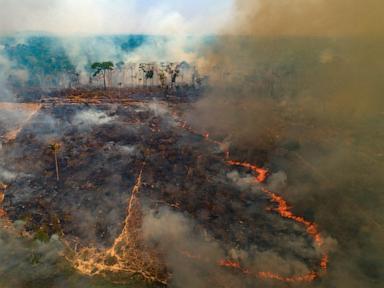
Ash does not fall like snow. Snow has a lightness to it, a hesitant drift that dances on the slightest breeze before settling softly against a windowpane. Ash falls heavy. It carries the density of ruin, a greasy, charcoal residue that clings to eyelashes, stains white siding a sickly gray, and smells unmistakably of things that should never have burned: old pine, plastic toys left too close to a porch, the insulation of a kitchen wall.
When Elena stepped onto her back deck in late July, she didn't smell the fire first. She tasted it. A metallic, copper tang on the back of her tongue, sharp enough to make her cough.
Across the valley, the ridgeline looked wrong. The familiar jagged teeth of the pine forest had vanished, swallowed by a bruised, towering pillar of smoke that rose high into the stratosphere before flattening out into a dirty orange anvil. It was a sight that had become as common to her summer calendar as lawnmowers and cicadas. Yet every time it happened, the stomach dropped a little lower.
Wildfires have a way of redefining horizons. They turn blue skies into hazy amber ceilings and transform a routine Tuesday afternoon into a frantic exercise in checking weather apps, wind directions, and evacuation zones. But behind the dramatic footage of wall-to-wall flames captured by news helicopters lies a quieter, more insidious emergency. It is an emergency of math.
Every year, the season grows longer. The ground dries out faster. The spark from a lightning strike or a discarded cigarette finds fuel that is drier, deadlier, and more abundant than anything previous generations managed. And every year, the financial architecture designed to fight these infernos struggles to keep pace.
A brand-new firefighting fund launched this week, heralded by officials as a vital step forward. It is money earmarked for boots on the ground, for retardant-dropping aircraft, for the heavy machinery required to cut lines through miles of dense brush. It is a necessary injection of resources into a system stretched to its absolute breaking point.
Yet, a funding gap remains.
To understand that gap, one must look past the press releases and into the ledger books of local municipalities and federal agencies. Fighting a major wildfire does not merely cost thousands of dollars; it burns through millions in a matter of days. Jet fuel, specialized training, hazard pay, equipment maintenance, and post-fire recovery efforts drain coffers with terrifying speed. When a fire season stretches from three months to six, the budget doesn't just stretch—it snaps.
Consider what happens when the money runs dry before the embers do.
Local fire districts, particularly in rural areas, often rely on volunteer departments and tight municipal budgets. When an extraordinary fire season hits, these communities are forced to make impossible choices. Do they pull funding from road repair, public health, or education to pay for the overtime hours of exhausted firefighters? Do they defer maintenance on aging trucks?
The new fund helps, but it is often a drop of water on a very hot stone. It arrives like a late bandage on an old wound. The gap between what it costs to contain a modern wildfire and what is actually allocated remains wide, dangerous, and persistent.
Wildfires do not care about fiscal years. They do not pause because a county council voted to table a budget discussion until next month. They move with an organic, ravenous logic, consuming everything in their path until they run out of fuel or the weather mercifully turns.
Elena remembers packing her car three summers ago. The mandatory evacuation order came at two in the morning. The sky glowed an unearthly magenta through her bedroom blinds, casting long, trembling shadows across the floor. In the frantic rush of those twenty minutes, she didn't grab photo albums or heirlooms. She grabbed her dog, a box of important tax documents, and a hard drive containing every digital photo of her late husband. Everything else—the house, the furniture, the books—was suddenly reduced to conditional variables. Would it still be there when she returned? Or would it be reduced to that greasy, heavy ash?
In the end, the wind shifted. The firefighters carved a line just two ridges over, and her home was spared. But she never forgot the feeling of standing at the edge of her property, watching the orange glow pulse against the night sky, acutely aware of how thin the margin was between safety and total erasure.
That margin is funded by dollars and cents. It is maintained by the people who strap on heavy Nomex gear, sling hoses through choking brush, and stare down walls of heat that reach temperatures capable of melting aluminum.
When we talk about the funding gap in modern wildfire management, we are not talking about abstract line items on a spreadsheet. We are talking about whether a crew will have enough retardant drops left for the afternoon shift. We are talking about whether an aging air tanker will be grounded due to maintenance delays while a fire races toward a mountain community. We are talking about the safety of people who run toward the smoke while everyone else is driving away.
The new fund is a welcome arrival, a sign that the scale of the crisis is finally being acknowledged at higher levels of government. But acknowledging the fire is not the same as putting it out. Until the resources match the raw, scaling fury of a changing climate, the smoke will continue to rise over the ridges, and communities will continue to hold their breath, waiting for the wind to change.


