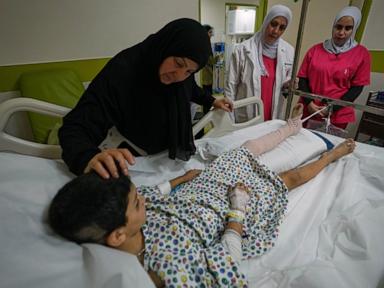
Dawn does not arrive softly in southern Lebanon. It does not paint the sky in gentle pastels or whisper through the olive groves with quiet grace. Here, the morning breaks with a sharp, metallic clarity, tearing open the horizon while the heavy scent of damp earth and woodsmoke still hangs low between the hills.
For generations, the people of these border villages lived by the rhythm of the soil. They knew the exact week the figs would swell with sweet juice. They knew which ancient stone terrace caught the last stubborn rays of the Mediterranean sun before the chill of the valley night set in. It was a life carved out of hard rock and stubborn patience. But patience is a fragile currency when the sky above becomes a highway for things that burn.
Consider what happens in a quiet kitchen when the world outside begins to fracture.
Picture an old man named Youssef. He has hands like gnarled oak, worn smooth by decades of coaxing life from stubborn dirt. On any other Tuesday, he would already be walking down the terraced slope toward his orchard, whistling a tuneless melody to his grandson who always trailed a few steps behind, kicking loose stones. Today, the kitchen clock ticks with an unbearable, mechanical loudness. The radio hums with frantic, overlapping voices speaking in tongues of urgency and statistical dread. Twelve lives. Extinguished in a single breath. Among them, two children whose laughter had barely begun to echo off the stone walls of their courtyard.
We read these numbers on glowing screens thousands of miles away. We scroll past them between bites of toast and sips of coffee, categorizing human tragedy into neat little boxes of geopolitical abstraction. Twelve people. A headline. A casualty count in a distant conflict zone.
The numbers lie. They sanitize the violence. They reduce a lifetime of spilled coffee, scraped knees, favorite songs, and whispered bedtime stories into a sterile tally sheet.
To understand what happened in that village, you have to look past the bureaucratic language of military briefings. You have to strip away the terminology of strategic deterrence and collateral assessment. You have to walk into that rubble-strewn street and feel the suffocating silence that follows an explosion.
The strike came without warning. That is the nature of modern geography-altering violence. It does not knock on the door or announce its intentions in advance. It arrives as a sudden, blinding flash that swallows sound, followed immediately by the suffocating weight of falling masonry and choking dust.
In the immediate aftermath, the air tasted of sulfur and crushed limestone. Neighbors became rescuers, tearing at concrete blocks with bare hands until their fingernails bled, desperate for the sound of a voice beneath the debris. They were searching for fragments of their own history. A pink sneaker. A school notebook with pages fluttering in the draft. A photograph frame half-buried in plaster dust.
This is the hidden cost of conflict. It is not merely the destruction of mortar and brick. It is the systematic erasure of ordinary tomorrows.
History teaches us that wars are fought by armies, but they are endured by people who simply wanted to harvest their olives in peace. When a family of twelve is wiped out in a southern Lebanese hamlet, the shockwaves do not stop at the crater's edge. They ripple outward through classrooms that will forever have empty desks, through family WhatsApp groups that will go silent, through the collective memory of a region already drowning in grief.
We talk endlessly about peace treaties, diplomatic channels, and red lines. We debate the mechanics of defense and retaliation in high-ceilinged rooms far removed from the dust and the blood. But down here, in the shadow of the mountains, the only metric that matters is the space left behind by someone who was here a moment ago and is gone now forever.
The sun continues its slow, indifferent climb over the valley. The smoke begins to thin, drifting lazily toward the indifferent blue sky. Down in the orchard, the unpicked fruit hangs heavy on the branches, waiting for hands that will never come. The wind rustles through the leaves, carrying a story that no headline can ever fully capture. A story of ordinary lives caught in an extraordinary storm, leaving behind a silence so loud it shakes the earth.