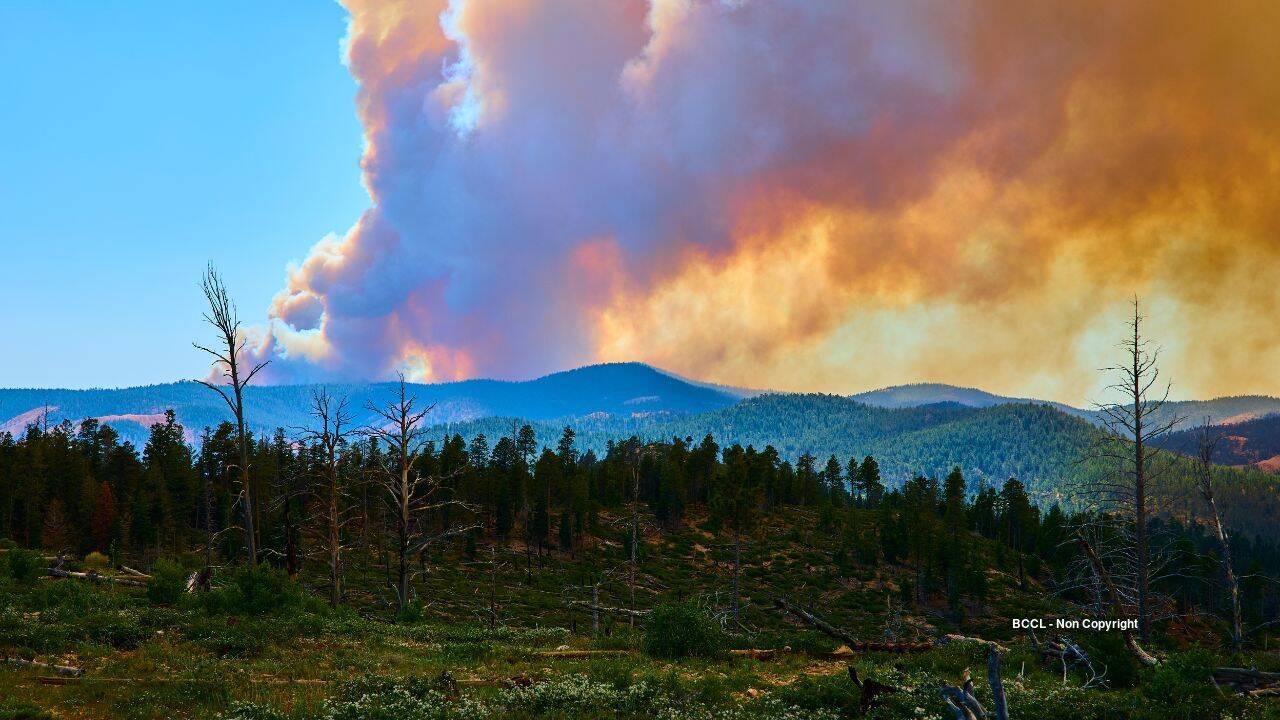
The flames creeping toward the edges of Bordeaux are only half the story. While historic French estates hold their breath as firefighters battle Europe's most ferocious mega-fires in decades, a silent chemistry experiment is unfolding across the region's prized vineyards. It is a threat that does not require a single vine to catch fire in order to destroy an entire year of labor.
Understanding the agricultural crisis unfolding in southwestern France means looking beyond the dramatic images of burning pine forests in the Landes. The real danger to the Bordeaux wine economy lies in the microscopic compounds carried by shifting winds, threatening a vintage already strained by historic drought and economic headwinds.
The Chemistry of Invisible Damage
Smoke taint is the agricultural world's most frustrating ghost. When massive wildfires rage through timberlands, they release volatile phenols into the atmosphere. These airborne compounds settle on ripening grapes, migrating through the porous skins and binding with natural sugars to form flavor-altering glycosides.
The terrifying part for winemakers is the timeline. Grapes exposed to heavy smoke can look completely pristine on the vine. They can taste sweet, plump, and healthy right up until harvest day. The chemical transformation often remains dormant until fermentation begins, meaning a producer might spend months crushing, aging, and bottling a wine only to discover it tastes distinctly like an ashtray.
Timing dictates everything in this equation. The recent fires struck precisely during veraison, that critical window when green grapes soften, change color, and begin accumulating sugars. Agricultural researchers note that vines are intensely vulnerable during this phase. A single prolonged shift in wind direction can deliver enough airborne particulate matter to ruin a parcel that sits fifteen miles away from the nearest actual flame.
Economic Pressures and Market Realities
This environmental shock arrives at a uniquely punishing moment for French viticulture. For months, producers across Gironde have dealt with weak global demand for red wine, forcing widespread government-backed uprooting programs to shrink surplus inventory. High-end fine wine indices have trended downward, and tourism revenue fluctuates with every emergency evacuation headline broadcast across international news channels.
Adding wildfire vulnerability to this mix creates severe financial anxiety for family-run estates. Insurance policies rarely cover smoke taint comprehensively, as proving the exact source and level of economic loss remains legally complex. Wineries face agonizing choices. They can harvest and risk releasing a compromised product that damages a decades-old reputation, or they can leave the fruit on the vine and take a total financial loss.
Precedent offers little comfort. When similar events forced difficult decisions in regions like California's Napa Valley during severe fire seasons, entire high-end vintages were abandoned entirely. Producers in Pessac-Léognan and Graves now find themselves scrutinizing weather patterns with an intensity usually reserved for meteorologists, knowing that a single bad week of air quality can wipe out years of brand equity.
Adapting to a Shifting Climate
The recurrence of these extreme weather events forces a hard conversation about the future of European agriculture. Traditional vineyard management relied on predictable seasonal rhythms, ancient varietal selections, and established terroir definitions that assumed stable environmental baselines. Those baselines no longer exist.
Talk of long-term adaptation is growing louder among estate managers and regional syndicates. Conversations that once felt heretical, such as shifting away from traditional Merlot and Cabernet Sauvignon plantings toward heat-resistant or thick-skinned varieties less susceptible to environmental stressors, are gaining traction behind closed cellar doors. Yet changing a vineyard's DNA takes decades, and the fires are happening now.
For the moment, the immediate priority remains containment, both of the physical blazes threatening local communities and of the panic surrounding product quality. Winemakers are running small-batch micro-fermentations to test fruit parcels before committing to a full harvest. Laboratories across the region are running at maximum capacity to screen for volatile phenols.
The smoke will eventually clear from the skies above the Gironde estuary. Whether the economic fallout clears just as easily depends entirely on what happens inside the fermentation tanks over the coming weeks.