The sea does not care about schedules. It does not care that your ticket cost a fraction of your monthly savings, or that your phone is packed with photos of pristine beaches you have not yet reached. At sea, grace is measured entirely by the thickness of a steel hull and the speed of a stranger's hand reaching through the dark.
Salt spray tastes like copper when the wind turns foul. Meanwhile, you can find related events here: The Anatomy of Presidential Deception Protocols During High Threat Exit Operations.
Smoke smells worse. It is thick, oily, and heavy with the scent of burning rubber and melted wiring. It is a smell that does not belong on the water, a landlocked menace that clings to wool and hair long after the danger has passed.
Imagine the Strait of Bali just before dawn. The water is a dark, churning sheet of obsidian, reflecting nothing save the indifferent stars. Ferries cross this stretch of water by the dozen every single day, lumbering iron beasts carrying scooters, families, tourists, and traders between Java and Bali. To most, it is a twenty-minute bridge made of brine. A transition. A preamble to a vacation or a commute. To explore the complete picture, check out the detailed analysis by The Guardian.
Until the alarms start.
We have all been on a vessel where we trusted too much in the architecture of modern travel. We sit in molded plastic seats, scrolling through screens, lulled by the low, steady thrum of the diesel engine beneath our feet. That vibration is a promise. It says: We are moving. We are contained. We are safe.
Then the vibration stutters.
Panic does not arrive as a cinematic scream. It arrives as a sudden silence in the chest.
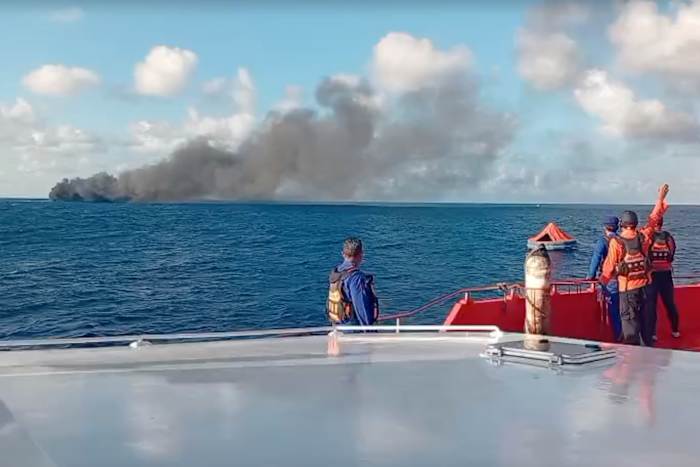
When fire broke out aboard a passenger ferry navigating the treacherous waters near Bali, the transition from routine crossing to maritime nightmare happened in seconds. Flames do not negotiate with marine engineers. They consume. Black plumes billowed into the tropical night, turning the velvet sky the color of a bruised plum.
Let us be honest about what happens next, because the cold news reports rarely capture the physical texture of terror. Reports will tell you that rescue crews worked through the night. They will list numbers: passenger manifests, vessel capacities, coordinates in the strait, the exact nautical distance from the port of Gilimanuk.
Numbers are comfortable. Numbers keep the horror at arm's length.
Step closer.
Smell the burning diesel. Hear the chaotic shouting echoing off the steel bulkheads as the power dies and the emergency lights flicker into a sickly, pulsing red. Picture a father clutching a canvas duffel bag in one hand and the slippery, sweat-dampened hand of a child in the other. Every instinct screams up and out, but the ship is listing. The deck is tilted just enough to make footing treacherous.
This is where the human element enters the crucible.
Rescue at sea is not a coordinated ballet performed by distant heroes in pristine uniforms. It is messy. It is desperate. It is local fishermen cutting their own nets to steer small wooden outriggers toward a burning leviathan. It is deckhands who should have been off-shift throwing life rafts over the rail, their knuckles bleeding against rough canvas.
Maritime history is written in the blood of safety oversights and redeemed by the sheer, stubborn bravery of ordinary people who refuse to look away. When the alarm sounded on that burning ferry, the gap between life and death was bridged not by automated systems, but by muscle, bone, and adrenaline.
We rely heavily on statistics to tell us that flying is safer than driving, that ferries are safer than walking down a busy highway. We look at the data tables and feel comforted. But data cannot hold your hand when the deck grows hot beneath your sneakers. Data cannot smell the smoke.
When disaster strikes the water, the abstraction of travel evaporates instantly. You realize, with sudden and absolute clarity, how thin the barrier is between your daily routine and the primal elements. The ocean is ancient and unyielding. We are merely temporary guests passing across its skin on borrowed iron.
Yet, in that same terrifying realization lies the counterweight: our fierce, unbreakable insistence on saving one another.
As the rescue vessels converged on the burning hull, slicing white scars through the dark water, they were not just hauling bodies out of harm's way. They were performing an ancient ritual of mutual survival. Local crews threw ropes. Passengers who could barely swim grabbed strangers by the collar and hauled them over gunwales.
By the time the sun finally cracked the horizon, bleeding a harsh, unapologetic orange over the Bali Strait, the smoke had thinned to a miserable gray wispy trail. The passengers were ashore. They were shivering, wrapped in foil blankets handed out by local authorities, coughing up soot, staring down at their ruined shoes.
They were alive.
The ferry remained out there, a blackened hulk settling lower into the indifferent tide, a stark monument to how quickly the world can turn upside down. But the people were on the dock. Breathing. Safe.
The water closes over the wake of every tragedy, smoothing it down until the surface looks like glass again, waiting for the next crossing.