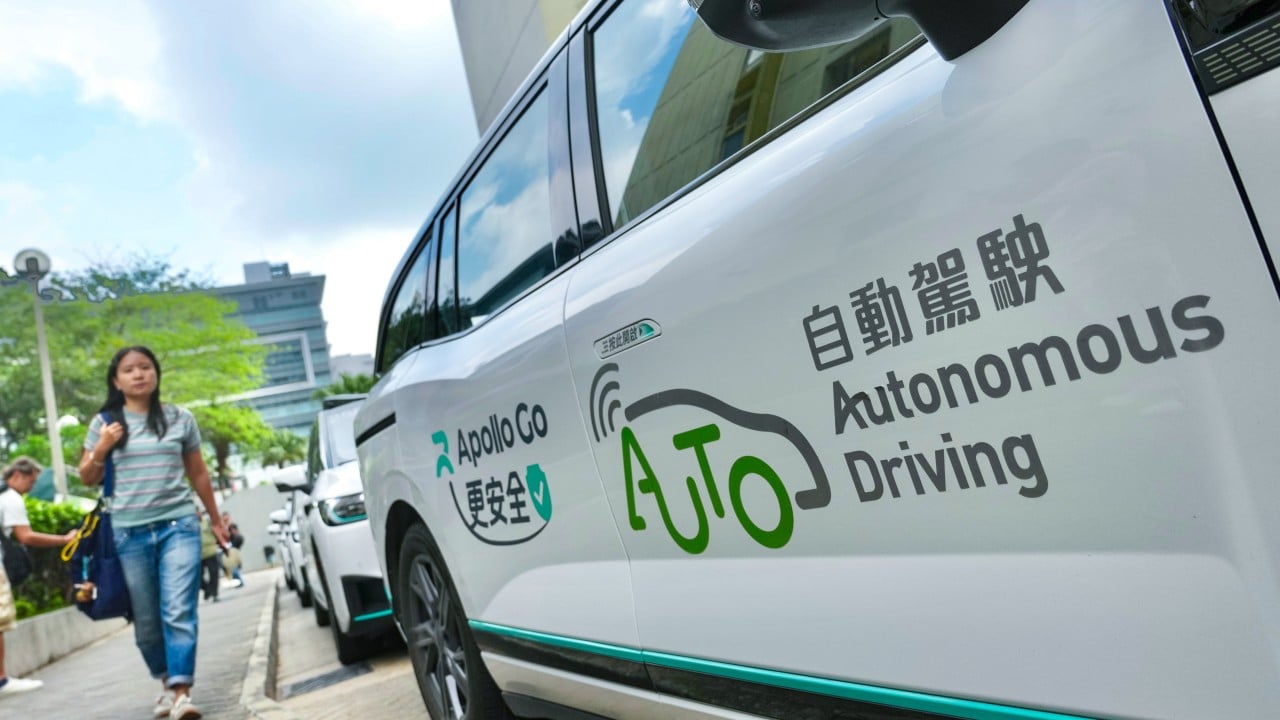
Autonomous vehicle deployment stalls at the final 0.01% of driving scenarios—the low-probability, high-consequence edge cases that physical fleet testing cannot economically capture. Baidu’s deployment of a generative AI simulator to expose its Apollo robotaxis to rare road hazards addresses the central economic bottleneck of Level 4 autonomy: the decoupling of safety validation from physical mileage accumulation. Rather than relying on brute-force road hours to encounter statistically improbable events, synthetic simulation compresses decades of rare tail-risk exposure into deterministic compute cycles, shifting the unit economics of autonomous validation from physical fleet capital expenditure to scalable cloud compute.
The Economics of the Long-Tail Validation Bottleneck
To understand why generative simulation is an operational necessity rather than an incremental tool, one must examine the statistical mathematics of autonomous safety validation. Under standard binomial probability models, proving that an autonomous system achieves a fatality rate lower than human drivers (roughly 1.1 to 1.3 fatalities per 100 million miles driven in the United States) requires hundreds of millions—and often billions—of test miles with zero catastrophic failures.
Accumulating those miles in the physical world hits three structural walls:
- The Linear Mileage Trap: Physical testing scales linearly with fleet size and time. Adding vehicles increases data collection, but it simultaneously multiplies hardware depreciation, safety driver payroll, maintenance overhead, and municipal permitting friction.
- Data Diminishing Returns: Approximately 99% of physical driving consists of routine highway cruising, standard lane-keeping, and predictable intersection stops. Once a perception and planning stack masters these baseline distributions, additional physical miles yield near-zero marginal learning. The system repeatedly processes redundant telemetry while starving for edge-case variance.
- The Safety-Data Paradox: You cannot safely test catastrophic failure modes on public roads. Deliberately staging a pedestrian darting from behind a double-parked delivery truck at dusk in heavy rain violates municipal regulations and endangers human life. Yet without exposure to that exact multi-variable intersection, the neural network’s behavior remains unverified.
Baidu’s operational scale—operating thousands of Apollo Go robotaxis across complex, high-density Chinese urban centers like Wuhan, Beijing, and Chongqing—exposes its fleet to higher traffic entropy than suburban US test zones. Even with tens of millions of accumulated commercial miles, real-world fleet data remains heavily skewed toward common interactions. Generative AI simulation resolves this asymmetry by inverting the data pipeline: instead of waiting for the physical world to produce a rare hazard, engineers synthesize the hazard mathematically and force the autonomy stack to solve it repeatedly.
Architectural Mechanics of Generative Hazard Simulation
Legacy autonomous simulators relied on deterministic game engines (such as Unity or Unreal derivatives) paired with hand-coded rule-based agents. While useful for basic kinematic testing, rule-based environments fail at scale because human engineers cannot manually script every permutation of erratic human behavior, sensor degradation, and environmental occlusion.
Modern generative simulators—built on diffusion models, neural radiance fields (NeRFs), 3D Gaussian Splatting, and transformer-based world models—replace manual asset creation with data-driven reconstruction and synthesis. Baidu’s architecture operates across three distinct technical layers to stress-test its Apollo perception and planning modules.
1. Real-to-Sim Scene Reconstruction
The foundation of credible simulation is photorealistic and physically accurate sensor fidelity. If the simulated camera pixels, LiDAR point clouds, and radar reflections do not match the statistical noise profiles of physical hardware, the autonomy stack learns artifacts rather than real-world physics—a failure mode known as the sim-to-real gap.
Using recorded logs from physical Apollo fleet encounters, neural rendering techniques reconstruct static 3D environments (road geometry, signage, building facades, surface reflectivity) while isolating dynamic actors (vehicles, cyclists, pedestrians). Engineers can then extract a nominal driving log—for example, a routine left turn at a busy Wuhan intersection—and convert it into an editable, parameterized 3D scene graph.
2. Adversarial Trajectory and Agent Generation
Once the static baseline is reconstructed, generative behavior models alter the trajectories and kinematics of dynamic agents. Unlike scripted non-player characters (NPCs) that follow rigid splines, transformer-based traffic models predict multi-agent interactions based on real human driving distributions—and then deliberately push those distributions toward the statistical tails.
The simulator introduces adversarial perturbations:
- Kinematic Extremes: An oncoming vehicle suddenly executes an illegal U-turn across a double-yellow line at 50 km/h, violating standard right-of-way assumptions.
- Occlusion Cascades: A child steps into the crosswalk precisely as a high-profile bus passes between the robotaxi’s LiDAR array and the curb, minimizing the time-to-collision (TTC) window upon line-of-sight acquisition.
- Behavioral Non-Compliance: E-bikes weaving unpredictably against traffic flow while a traffic signal malfunctions, forcing the planner to resolve conflicting semantic rules without human intervention.
3. Sensor Physics and Environmental Domain Randomization
Rare road hazards rarely occur under optimal midday lighting. A perception stack that detects an overturned cargo box at noon may fail entirely when wet asphalt creates specular glare from oncoming headlights.
Generative diffusion layers modify environmental parameters across the reconstructed scene without requiring physical re-recording. The simulator injects calibrated sensor degradation: raindrop refraction on camera lenses, LiDAR point-cloud attenuation caused by dense fog or exhaust plumes, low-angle sun flare, and uneven nighttime illumination. By coupling adversarial agent trajectories with degraded sensor physics, the system generates combinatorial stress tests that represent the exact failure modes responsible for real-world disengagements.
Closed-Loop Evaluation vs. Open-Loop Replay
A critical distinction in autonomous simulation architecture lies between open-loop and closed-loop testing. Many early industry benchmarks relied on open-loop log replay: feeding recorded sensor data into an updated software stack and measuring whether the new planner’s predicted trajectory matched the human safety driver’s historical path.
Open-loop testing contains a fatal logical flaw: causal divergence. The moment the updated autonomous vehicle chooses a slightly different braking profile or steering angle than the original human driver, the historical sensor recording becomes invalid. In the real world, if the robotaxi slows down early, surrounding human drivers react by merging ahead of it; in open-loop replay, the surrounding vehicles blindly follow their pre-recorded trajectories, leading to phantom collisions or unrealistic spacing.
Baidu’s generative simulator enforces closed-loop reactive evaluation. When the Apollo planning module alters its velocity or lateral offset in response to a simulated hazard, the surrounding AI traffic agents dynamically recalculate their own trajectories based on the robotaxi’s new state. This closed-loop feedback mechanism validates two essential capabilities:
- First-Order Collision Avoidance: Does the vehicle execute an emergency maneuver without exceeding tire friction limits or causing passenger injury?
- Second-Order Traffic Flow Stability: Does the evasive maneuver trigger a secondary rear-end collision from trailing traffic, or trap the robotaxi in an unrecoverable deadlock (freezing in the middle of an intersection)?
The Four-Stage Data Flywheel
Deploying generative simulation is not a static validation step; it operates as a continuous closed-loop optimization engine that connects physical fleet operations directly to neural network retraining.
- Disengagement and Near-Miss Mining: Every physical Apollo robotaxi operates shadow-mode monitors and anomaly triggers. When a vehicle experiences a hard-braking event, a perception confidence drop, or a remote-assistance intervention, the raw multi-sensor telemetry is uploaded to the cloud.
- Combinatorial Scenario Multiplication: The simulator ingests that single real-world near-miss and generates thousands of synthetic variations. If a physical vehicle encountered a stray dog darting across a suburban road at 2:00 PM, the simulator generates 5,000 variants: changing the animal's size, entry velocity, lighting conditions, road surface friction, and adjacent traffic density.
- Reinforcement and Imitation Policy Training: The autonomy stack’s planning and prediction networks are trained against these synthetic edge cases. By optimizing a multi-objective cost function—balancing collision probability, kinematic comfort (jerk and lateral acceleration), and route progress—the planner learns generalized defensive driving policies rather than memorizing specific map coordinates.
- Regression Gating Before OTA Deployment: Before any updated software build is pushed over-the-air (OTA) to the commercial fleet, it must pass a standardized regression suite containing tens of thousands of historical and synthetic edge cases. If fixing a left-turn occlusion bug degrades performance on unprotected highway merges, the build is automatically rejected.
Structural Limitations and Operational Blind Spots
While generative AI simulation dramatically compresses validation timelines, treating synthetic environments as a complete substitute for physical testing introduces severe engineering risks. Practitioners managing autonomous validation pipelines must account for three fundamental constraints.
The Distribution Shift and Hallucination Risk
Generative models learn from historical training distributions. When prompted to synthesize extreme edge cases far outside the training manifold, diffusion and world models can generate physically impossible artifacts—such as vehicles clipping through guardrails, shadows detaching from objects, or LiDAR reflections violating basic optics. If an autonomy stack is over-trained on hallucinated physics, its real-world calibration degrades. Rigorous physical constraint layers (rigid-body dynamics and ray-tracing verification) must bound the generative outputs to prevent synthetic overfitting.
Unknown Unknowns (Out-of-Distribution Semantics)
Generative simulators excel at combinatorial variations of known object classes (vehicles, pedestrians, debris, weather). They struggle to invent entirely novel semantic hazards that have zero representation in the training weights—for example, a flatbed truck carrying a mirror-reflective glass sheet that tricks LiDAR into perceiving an empty road ahead, or a localized road collapse caused by a burst water main. Physical fleet diversity remains irreplaceable for discovering truly out-of-distribution anomalies.
Compute Cost vs. Marginal Safety Gain
High-fidelity closed-loop sensor simulation—rendering multi-camera 4K video streams alongside 128-beam LiDAR point clouds in real time—requires immense GPU cluster capacity. Running millions of closed-loop iterations incurs substantial cloud compute expenditure. Without intelligent active learning (algorithms that specifically identify and prioritize scenarios where the autonomy model exhibits high epistemic uncertainty), engineering teams risk burning millions in GPU hours simulating high-variance noise that yields negligible improvements in real-world mean time between interventions (MTBI).
Competitive Positioning in the Global Robotaxi Race
Baidu’s aggressive investment in generative hazard simulation mirrors a broader architectural convergence across tier-one autonomous developers—specifically Waymo’s SimulationCity and Waymo World Model, Tesla’s FSD World Simulator, and Waabi’s Waabi World. However, the strategic execution diverges based on hardware architecture and operational geography.
Tesla relies almost exclusively on vision-only neural networks trained on massive-scale, low-cost consumer fleet video clips, using generative video synthesis to test end-to-end camera policies. Waymo and Baidu operate multi-modal sensor suites (LiDAR, imaging radar, high-resolution cameras) in dense, geo-fenced urban commercial networks.
For Baidu, the competitive advantage lies in cost-per-mile compression paired with high-entropy urban data. By transitioning from expensive legacy Apollo hardware generations to its sixth-generation RT6 robotaxi (which cut vehicle manufacturing costs by more than half to roughly $30,000 per unit), Baidu solved the hardware CapEx barrier. Generative simulation solves the corresponding software OpEx barrier. Operating in Chinese megacities exposes Apollo vehicles to dense, aggressive multi-modal traffic (scooters, delivery carts, heavy pedestrian spillover) at a fraction of US operational costs, feeding the generative world model with exceptionally rich behavioral priors.
Strategic Execution for Autonomous Validation Teams
Engineering leaders and autonomous mobility operators evaluating or scaling generative simulation pipelines must execute three concrete shifts to avoid wasted compute and false safety confidence:
- Enforce Strict Sensor-Level Physics Verification: Do not validate perception stacks solely on RGB video synthesis. Require generative pipelines to output synchronized, physically grounded LiDAR intensity and radar Doppler signatures validated against real-world hardware test benches before allowing synthetic data into training weights.
- Shift KPIs from Total Simulated Miles to Coverage-Weighted Risk Reduction: Stop reporting raw simulated mileage as a vanity metric. Measure simulation efficacy strictly by scenario coverage density across defined Operational Design Domain (ODD) hazard taxonomies and track the reduction in real-world disengagement rates per 10,000 physical miles following each synthetic training cycle.
- Allocate Compute via Epistemic Uncertainty Sampling: Couple the generative simulator directly to the autonomy stack’s uncertainty estimators. Automate scenario generation to dynamically mutate parameters around the exact kinematic thresholds where the planner’s confidence drops, concentrating GPU budget exclusively on the decision boundaries where catastrophic failures actually occur.



