The air in the biosafety level 4 lab doesn’t circulate like the air in your living room. It hisses. It pulls against the heavy rubber of your suit, a constant, positive-pressure reminder that the only thing keeping you alive is a thin layer of polyurethane and a mechanical blue hose hanging from the ceiling.
Dr. Robert Redfield knows that hiss. As the former director of the Centers for Disease Control and Prevention, he has spent a lifetime listening to the quiet, bureaucratic machinery that stands between humanity and the microbes trying to dismantle us. But lately, his warnings carry a different kind of weight. They sound less like agency press releases and more like a man trying to describe a fire he can see through a locked window. If you enjoyed this article, you should look at: this related article.
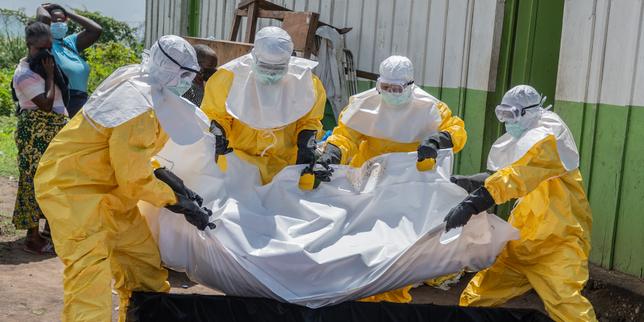
When an Ebola outbreak flares, the headlines usually follow a predictable script. We see images of distant villages, workers in bright yellow hazmat suits against red dirt, and rising death tolls that feel tragically remote to anyone sitting in a suburban coffee shop. We treat it as a localized tragedy. A localized problem.
That is our first, and perhaps most fatal, mistake. For another angle on this event, refer to the latest coverage from Everyday Health.
The Mirage of Distance
Imagine a single drop of ink falling into a glass of water. At first, it’s just a dark, isolated swirl. You can look at the other side of the glass and think, the water over here is perfectly clear. But molecular diffusion is patient. The swirl expands. The boundaries blur. Eventually, the entire glass is gray.
The modern world is that glass of water.
Every day, millions of people step onto airplanes. They carry briefcases, laptops, heartaches, and, occasionally, microscopic passengers. A person can catch a virus in a remote forest in central Africa, walk through an international terminal twelve hours later, and sit next to you on a flight to Chicago before they even show a flicker of a fever.
When Redfield voiced his deep, unsettling fear that a future Ebola outbreak could transform into a "very significant pandemic," he wasn't indulging in Hollywood sensationalism. He was looking at the math of human movement.
Ebola has historically been contained by its own sheer, terrifying brutality. It kills so quickly, and so visibly, that it effectively burns out its own transmission chains. If a virus incapacitates its host within days, the host cannot walk through a crowded marketplace or board a transatlantic flight. The virus traps itself.
But viruses change. They adapt. They find the cracks in our armor.
When the Armor Cracks
To understand the stakes, we have to look past the sterile statistics and look at a hypothetical, yet scientifically grounded, scenario.
Let us call her Amina. She is a nurse in a underfunded clinic. When a young man arrives with a splitting headache and a mild fever, she treats him for malaria. It is the common choice. The logical choice. She wipes his brow with a cloth. She doesn't have access to the heavy-duty personal protective equipment stored in specialized containment centers miles away. She has latex gloves and a cloth mask.
Days later, the young man is dead, and Amina begins to feel a chill in her bones.
By the time the global health community realizes that this isn't a standard flare-up—that this specific strain has a slightly longer incubation period, allowing people to walk around for two weeks without a single symptom—the ink has already dropped into the glass.
This is the invisible threshold. It is the moment a localized outbreak mutates from a medical crisis into a societal fracture.
If an Ebola strain evolves to transmit more easily through close contact or respiratory droplets before severe symptoms manifest, the classic playbook falls apart. Contact tracing becomes impossible. Isolation wards overflow within forty-eight hours. The fear alone becomes a secondary contagion, shutting down borders, crashing supply chains, and causing healthcare systems to collapse under the sheer weight of panic.
The Failure of the Reactive Mind
We are a species that reacts to smoke, not the accumulation of dry brush.
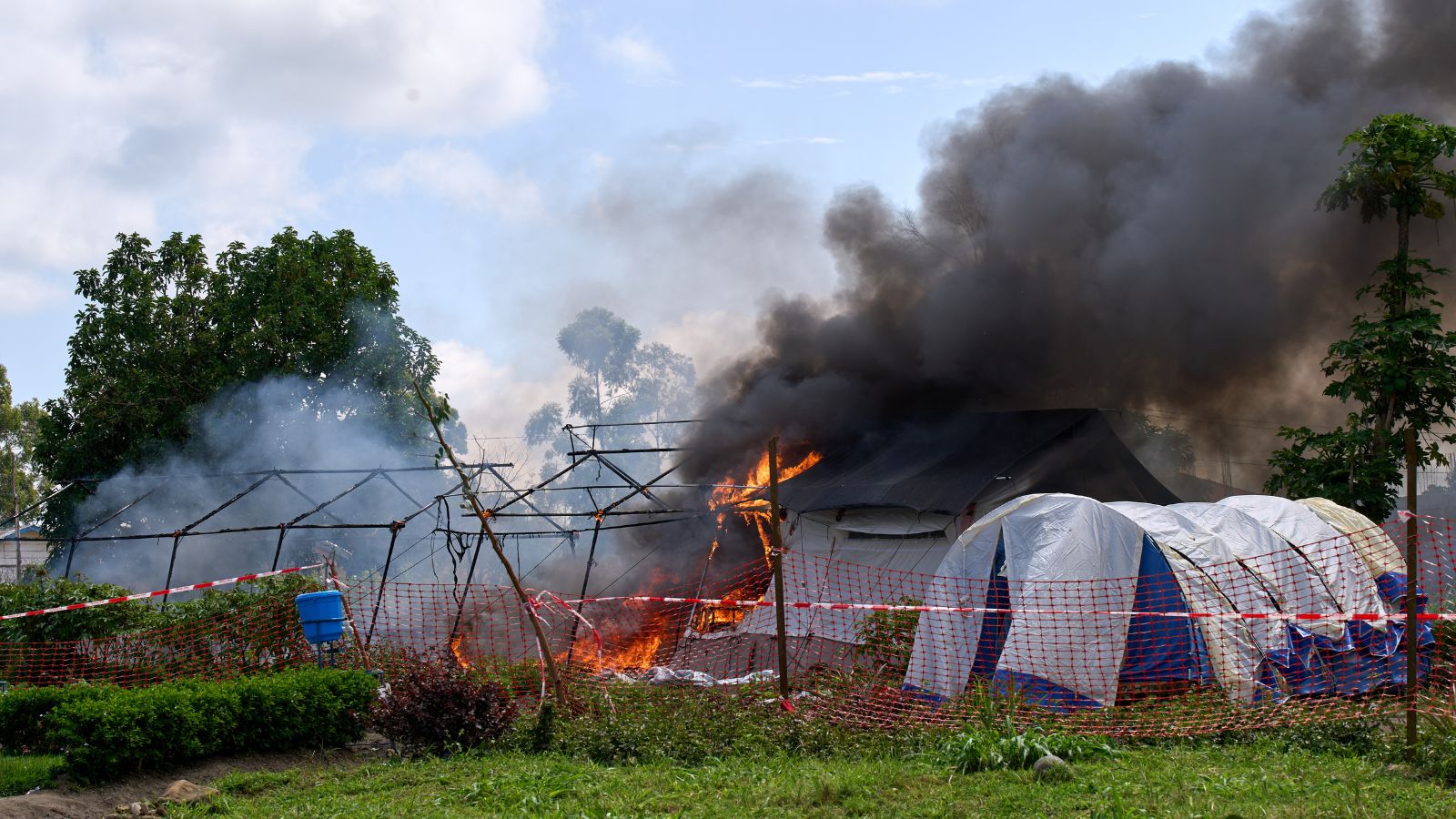
During my years analyzing public health responses, I have watched this cycle repeat with agonizing predictability. Funding pours in when the bodies stack up. The world panics, pledges billions, builds temporary field hospitals, and promises that this time we will fix the structural holes. Then, the outbreak wanes. The headlines shift to politics or celebrity scandals. The funding dries up. The field hospitals rot in the rain.
We treat global health security like a fire department that we only fund while a house is actively burning. The moment the embers go cold, we lay off the firefighters and sell the trucks.
Redfield’s warnings are an attempt to break that cycle of collective amnesia. The infrastructure required to stop a "very significant pandemic" cannot be built on the fly. You cannot manufacture trust in a vaccine during a riot. You cannot train an epidemiologist while the morgues are full.
Consider the reality of our current global safety net. It relies heavily on transparency and speed. Yet, the political incentives for nations to report early signs of a deadly outbreak are entirely negative. A country that steps forward and says, "We think we have a highly transmissible hemorrhagic fever here," is immediately rewarded with travel bans, economic isolation, and financial ruin.
We have incentivized secrecy over survival.
The Cost of Looking Away
The true danger of Ebola transforming into a global threat isn't just the biological lethality of the virus itself. It is what the virus does to our humanity.
When a disease with a high mortality rate enters a community, the basic social contracts begin to fray. Parents hesitate to hold their sick children. Neighbors look at neighbors with suspicion. The simple, necessary acts of human caregiving become vectors for death.
If we continue to view these outbreaks as distant, foreign anomalies rather than vulnerabilities in our shared human ecosystem, we guarantee our own surprise. The virus does not care about national sovereignty. It does not recognize borders drawn on a map. It views a human body in a rural village and a human body in a high-rise apartment as exactly the same thing: fuel.
The clock is ticking, even if the sound is muffled by our daily distractions. We can choose to invest in the quiet, unglamorous work of permanent global surveillance, resilient local healthcare systems, and rapid-response manufacturing. Or we can wait for the day when the positive-pressure hiss of the biosafety lab becomes the only safe sound left to hear.
Somewhere right now, a virus is replicating, making tiny, random errors in its genetic code, waiting for the one mistake that unlocks the door to the world.