The air in eastern North Carolina smells of pine resin and old asphalt. Drive down any county road when the sun dips below the tree line, and you notice something quieter than it used to be. Porch lights flicker on earlier. Front door deadbolts click into place with an absolute, uncompromising finality.
Safety is not an abstract political talking point here. It is the rhythmic jingle of keys in a pocket before walking to the car. It is the calculation parents make when their teenagers stay out past dusk. When political figures step onto stages in this state to talk about law and order, they are not speaking into a vacuum. They are tapping into a raw, collective nerve that has been rubbed raw by rising crime rates, overwhelmed police departments, and the creeping anxiety that the social contract is fraying at the edges.
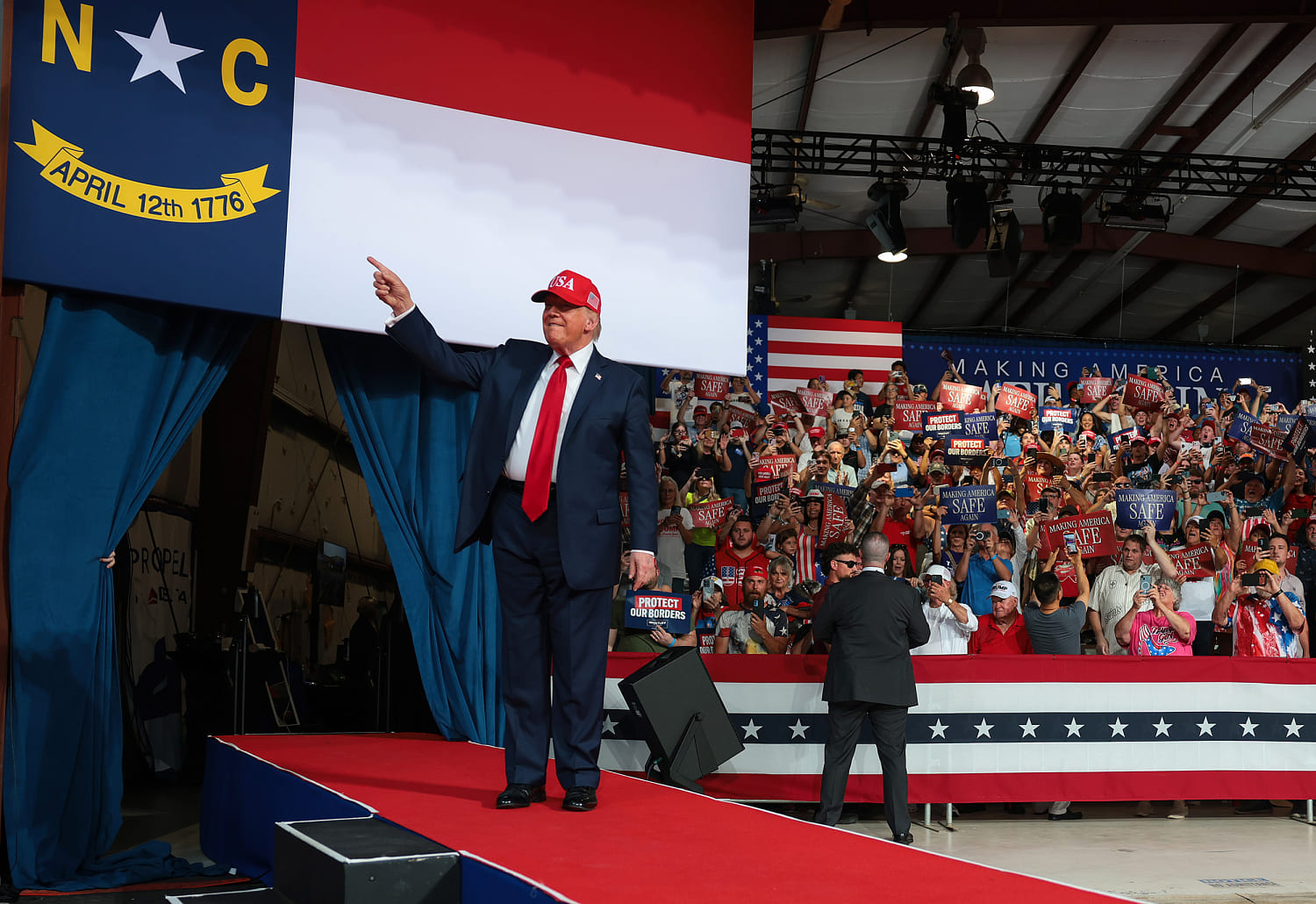
Consider what happened in North Carolina's political arena when Donald Trump took the microphone to campaign for Michael Whatley. The rhetoric was sharp. The accusations flew thick and fast against the opposition party, painting a picture of urban decay spilling over into quiet suburbs and rural towns alike. But beneath the campaign speeches and the cheering crowds lies a deeper human reality. People are scared. And fear is a powerful architect.
To understand why these speeches resonate so deeply, you have to look past the cable news chayouts and step inside a convenience store at eleven o'clock at night. Watch the clerk behind the bullet-resistant glass. Watch the way their eyes track every person who opens the front door. That hyper-vigilance is the invisible tax that modern insecurity levies on everyday life.
Political campaigns love to treat crime like a scoreboard. They tally up statistics, point fingers at opponents, and draft policy papers that smell like conference rooms. Yet, the emotional core of this issue has nothing to do with Washington, DC, or state party headquarters. It has everything to do with the feeling of vulnerability. When residents hear politicians debate criminal justice reform or aggressive policing, they aren't thinking about abstract legal philosophies. They are thinking about their windows, their locks, and the unfamiliar car idling down their street.
Michael Whatley’s rise and Trump’s endorsement of his leadership represent a specific faction’s answer to this anxiety: a hardline return to traditional deterrence, unwavering support for law enforcement, and an unyielding critique of progressive prosecuting strategies. Critics argue this approach relies on fear-mongering and overlooks systemic socioeconomic roots. Supporters argue that without immediate physical security, all other conversations become entirely academic.
Both sides miss the human center of the tragedy.
When a neighborhood feels unsafe, community rots from the inside out. People stop walking their dogs after dark. Block parties fade away. Neighbors become strangers behind privacy fences. The erosion of public safety is simultaneously an erosion of community trust.
Trump’s messaging in North Carolina struck a chord because it acknowledged that burden. Whether his solutions are the right medicine is a question voters will answer at the ballot box. But the diagnosis of public anxiety is undeniably accurate. People feel exposed. They feel like the rules protecting the innocent have been quietly rewritten in favor of those who break them.
History shows us that whenever economic uncertainty and social division spike, crime narrative takes center stage. It is an ancient political script. Yet, scripts become powerful only when they reflect a genuine wound. The wound in North Carolina, as in much of America, is the persistent, gnawing doubt that help is too far away when trouble knocks.
Fixing that requires more than campaign rallies. It requires bridging the chasm between communities and the institutions sworn to protect them. It requires acknowledging that public safety is a civil right, disproportionately affecting the working-class neighborhoods that cannot afford private security guards or gated driveways.
The sun comes up the next morning over the North Carolina pines. The dew burns off the grass. The morning commute begins with the same old traffic jams and coffee cups. But the lock remains tight on the front door, and the quiet tension remains in the air, waiting for the next speech, the next headline, the next promise of peace.