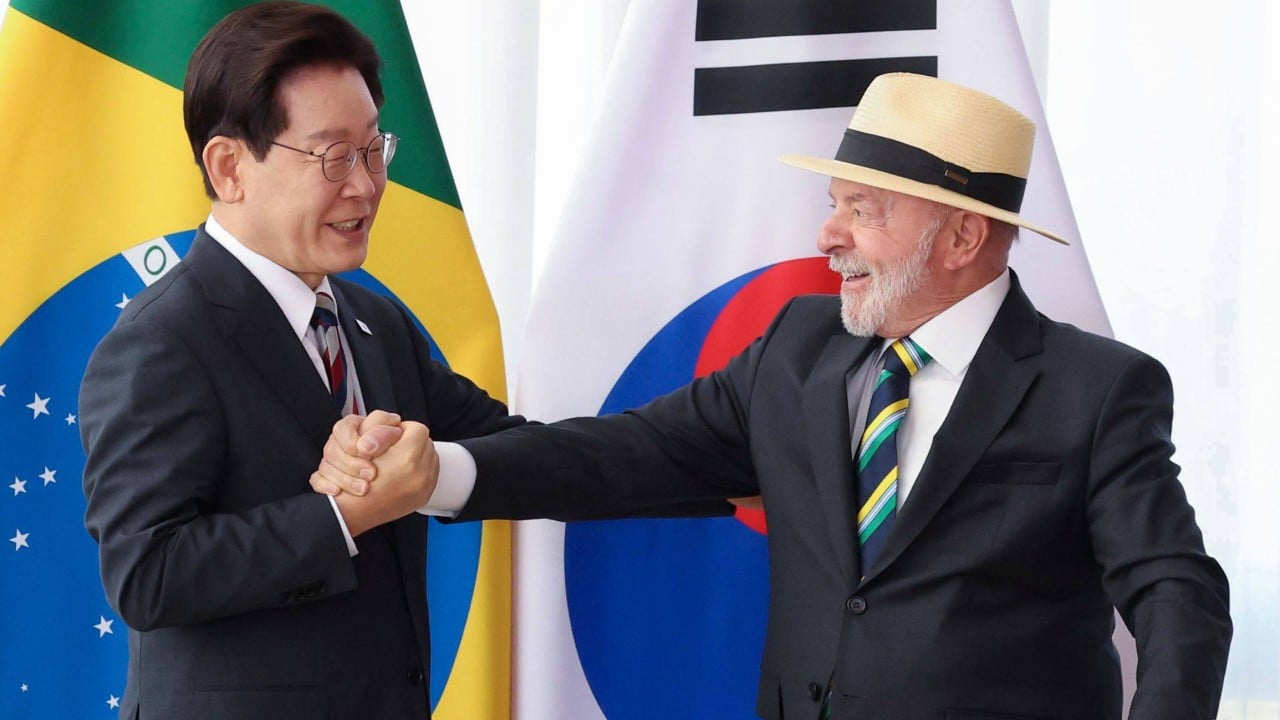
Seoul is sweating over the wrong continent. Every trade delegation landing in Brasília or Buenos Aires brings the same tired playbook: endless negotiations over sanitary certificates, beef quotas, and lithium supply chains, all wrapped in anxious hand-wringing about how to ease Brazilian regulatory anxiety. It is a masterclass in wasted diplomatic capital.
The lazy consensus in international trade circles is that South Korea must kowtow to Mercosur bureaucracy, smooth over agricultural protectionism, and sign sweeping bilateral pacts to unlock South America. Meanwhile, you can read related events here: Why Moving Middle East Oil Is Getting Dangerously Hard.
That theory belongs in a shredder.
I have watched corporate strategy teams blow millions of dollars trying to crack the front door of South American commodity markets, only to get crushed by local protectionist cartels and currency volatility. The problem is not that South Korea needs to "ease Brazilian concerns." The problem is that Seoul is treating a continent of structural friction like it is a plug-and-play Asian supply chain. To understand the full picture, check out the recent report by Harvard Business Review.
The Mercosur Myth
Let us look at the data. Mercosur is a customs union in name, but a chronic economic standoff in practice. Brazil and Argentina spend half their political cycles fighting each other’s protectionist impulses, while inflation rates dance like a polyrhythm. When South Korean policymakers talk about unlocking trade through bilateral tax harmonization or mutual recognition agreements, they are chasing a mirage.
Brazil does not care about Seoul’s goodwill. Brazil cares about protecting domestic industrial lobbies that cannot survive thirty seconds in a cage match with South Korean manufacturing efficiency.
If you want to understand why trade talks stall, stop reading diplomatic communiqués and look at historical tariff walls. For decades, Brazilian industrial policy has relied on the Lei de Informática and heavy local-content requirements. They do not want Seoul's finished goods; they want Seoul's factories inside their borders behind high protective walls, paying local taxes, and employing local unions.
Easing concerns means surrendering domestic margin. South Korea’s export-driven conglomerates are not built to play charity games in high-inflation domestic markets.
The Wrong Question About Lithium and Agriculture
Trade analysts love to ask: How can South Korea secure critical minerals and agricultural imports from South America while satisfying local environmental mandates?
This is a flawed question. It assumes South Korea's primary objective in South America should be sourcing raw inputs like a hungry empire scraping the bottom of a barrel.
Let us flip the premise. South Korea should stop treating South America as a warehouse and start treating it as a digital and logistical proving ground. The value is not in shipping soybeans or raw spodumene across the Pacific. The value is in embedding proprietary logistics technology, port automation software, and green energy grid architecture into the region before anyone else does.
While Seoul argues over beef sanitary inspections, Chinese state-owned enterprises are buying up the ports, laying the fiber optics, and locking down the infrastructure choke points. China understands something South Korea's risk-averse planners refuse to admit: You do not win South America by being polite at the negotiating table. You win by controlling the arteries of commerce.
The Battle Scars of Bureaucratic Optimism
I have seen mid-sized Korean electronics and mobility firms try to enter South America by partnering with local Brazilian distributors. It is a slaughterhouse. Tax compliance in Brazil requires an army of lawyers just to interpret conflicting municipal, state, and federal rules—a nightmare known locally as the Custo Brasil.
Companies spend three years trying to navigate bureaucratic mazes, only to find that currency fluctuations wiped out their entire margin before the first container cleared customs.
The downside of my contrarian approach is brutal: It requires abandoning traditional, risk-mitigated diplomacy. It demands high-stakes, direct infrastructure investment and aggressive B2B positioning that bypasses federal handshakes entirely. You stop waiting for trade ministers to sign treaties and start building localized tech hubs in agile, business-friendly enclaves like Uruguay or Paraguay, using them as launchpads to service the Southern Cone on your own terms.
Why the Tech Play Trumps Commodities
Seoul's obsession with securing raw lithium and agricultural commodities blinds it to the digital transformation happening underneath the surface in Latin America. Fintech, logistics software, and cloud infrastructure are surging across Santiago, São Paulo, and Bogotá.
South Korea has world-class capabilities in smart-city infrastructure, 5G deployment, and semiconductor design. Yet, trade delegations spend ninety percent of their time talking about agriculture. It is absurd. You do not trade high-value technological supremacy for frozen poultry access.
Imagine a scenario where South Korea completely freezes comprehensive trade pact negotiations with Mercosur for three years. Imagine the shockwave through Seoul's ministries if they redirected that entire budget into direct venture capital deployment, private-sector tech acquisitions, and localized supply chain software integration.
The bureaucracy would panic. The diplomats would hyperventilate.
And South Korean exporters would finally start making money.
Stop trying to soothe Brazilian protectionism. Build products they cannot live without, route them through modernized private logistics, and let them come to you.