The Avignon Festival has long functioned as the unofficial barometer for global performance art. When the French festival shines its spotlight on a specific region, it does not just book acts; it validates a cultural movement. This year, the focus has shifted decisively toward South Korea, bringing a wave of dark, intense, and deeply psychological productions to European audiences. While casual observers might view this as a sudden trend, the integration of Korean theater into Western festivals is the result of a calculated, decade-long institutional push. European programmers are scrambling to capture the same raw, subversively dark energy that has already conquered global cinema and television.
The State Orchestration Behind the Dark Wave
Western media frequently attributes the global rise of Korean culture to spontaneous viral success. The reality is far more clinical. Following the 1997 Asian financial crisis, the South Korean government systematically restructured its export economy, treating cultural output with the same strategic importance as semiconductors or automobiles.
The Ministry of Culture, Sports, and Tourism, alongside arms-length bodies like the Korea Arts Management Service (KAMS), operates with immense fiscal precision. They do not merely fund artists; they actively study foreign markets to determine what will resonate.
For Europe, and Avignon specifically, the strategy focuses on high-concept, somber drama. While domestic K-drama television series often lean into melodrama or romance, the theatrical exports chosen for European prestige festivals deal heavily in historical trauma, societal alienation, and psychological dread.
This is not accidental alignment. It is a targeted portfolio designed to meet the specific intellectual demands of the European avant-garde.
The financial underwriting provided by these state agencies alters the traditional risk calculation for international festival directors. Touring a large-scale theatrical production across continents is normally a logistical nightmare fraught with financial peril. By subsidizing transport, translation, and artist fees, South Korean institutions effectively eliminate the economic barriers that stop other non-Western theater companies from securing prime slots in Avignon. The artistic merit of these productions is undeniable, but their ubiquity is bought and paid for by a highly effective bureaucratic machine.
Subverting the Western Conception of Korean Art
To understand why these specific "dark gems" are resonating now, one must look at the thematic friction they introduce to Western stages. For decades, Western audiences expected Asian theater to conform to traditional aesthetics—ritualistic movements, classical music, or explicit folklore. The current wave of Korean directors entering Avignon rejects this exoticism completely.
Instead, they present an uncompromising mirror to the anxieties of late-stage capitalism, hyper-competition, and collective grief.
[Traditional Expectation] -> Folkloric, Ritualistic, Historical
[Modern Reality]           -> Hyper-Modern, Fragmented, Psychological Trauma
Directors like Jaha Koo have previously illustrated this shift by blending documentary theater with personal narrative, exposing how deeply the 1997 economic crash scarred the collective psyche of a generation. The work arriving in Avignon now takes this structural critique even further. It uses minimalist, often industrial set designs paired with intense physical theater to communicate a sense of claustrophobia that feels instantly recognizable to European youth, despite the geographical distance.
This thematic dark turn appeals directly to Avignon’s core demographic, which thrives on politically charged, confrontational art. By focusing on universal pain points—such as the isolation of urban living, systemic corruption, and the crushing weight of societal expectations—these South Korean productions bypass the need for deep cultural context. The dread translates perfectly.
The Friction Between Commercial Appeal and Artistic Integrity
This institutional success has created an underlying tension within the South Korean theater community. The artists selected for major international tours often find themselves walking a fine line between genuine creative expression and acting as cultural ambassadors for a state brand.
When a government entity funds your international breakthrough, the pressure to deliver a specific version of Korean identity is immense.
Some independent creators within Seoul’s thriving Daehangno theater district argue that the selection process for Western tours heavily favors a specific type of palatable radicalism. The work must be edgy enough to satisfy European critics who crave subversion, but structured enough to fit within the logistical constraints of international touring bodies. This creates a paradox where the "darkness" of the theater can become a curated commodity, polished for export.
Furthermore, the domestic reality of making theater in South Korea is vastly different from the funded glamour of an Avignon showcase. Independent companies in Seoul frequently struggle with rising rent, low wages, and a lack of sustained domestic subsidies for experimental work that does not have clear export potential. The international prestige gained at Avignon rarely trickles down to sustain the broader, more fragile ecosystem of local theater makers who choose not to target Western tastes.
Breaking the Language Barrier Through Physicality
One of the greatest operational achievements of the Korean productions featured at Avignon is how they handle the inherent language barrier. Subtitles are an imperfect solution in live theater; they pull the viewer’s eyes away from the performers and disrupt the rhythm of a scene.
To counter this, modern Korean directors rely heavily on extreme physical discipline and meticulous sound design.
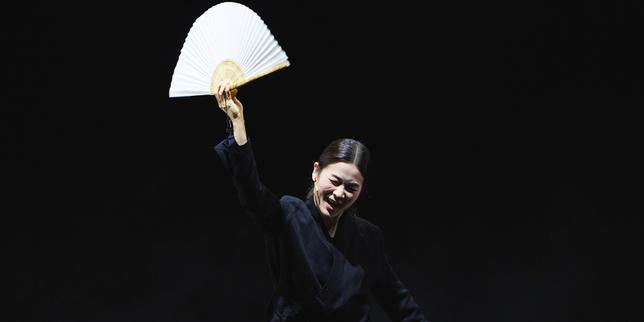
The staging choices often prioritize visceral, somatic storytelling over text-heavy dialogue. Movements are sharp, repetitive, and exhausting. The physical toll on the actors is visible, creating a tense, empathetic bond with an audience that might not understand a single word of spoken Korean. The auditory landscape is equally deliberate, frequently utilizing live percussion, traditional instruments stripped of their melodic context, or harsh electronic drones to dictate the emotional atmosphere of the venue.
This sensory bombardment ensures that the intellectual concepts of the play are felt before they are rationally understood through the reading of surtitles. It is a highly sophisticated adaptation to the realities of international touring, turning a linguistic deficit into a structural strength that leaves a lasting impression on Western critics.
The Longevity of the Hallyu Theater Push
The critical reception at Avignon will determine whether this focus on South Korean theater remains a temporary seasonal trend or transforms into a permanent fixture of the European cultural calendar. Festivals are notoriously fickle, often moving from one regional focus to another in a constant search for novelty.
For South Korea’s cultural strategists, the goal is to move past the novelty phase and establish deep, co-productive relationships with European venues.
This means moving beyond merely sending completed packages abroad. The next phase of this cultural integration involves co-productions, where European directors work with Korean performers, and vice versa. Such collaborations ensure that South Korean theater makers are embedded directly into the fabric of European institutional art, making their presence indispensable regardless of shifting festival trends.
The dark, uncompromising narratives seen on stage this season are not a passing anomaly. They represent the calculated arrival of a theatrical powerhouse that has spent decades perfecting its craft, refining its export mechanisms, and waiting for the global mood to match its internal anxieties.