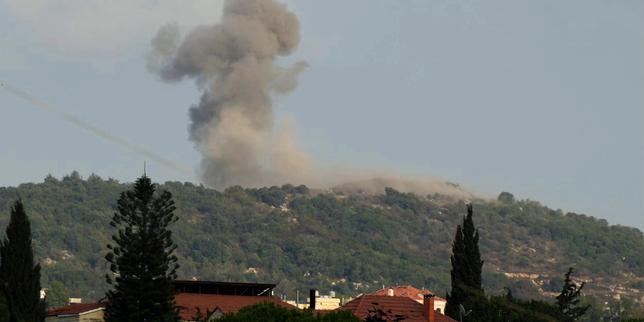
An Israeli airstrike in southern Lebanon killed three people, intensifying an already volatile cross-border conflict that threatens to engulf the wider region. This latest casualty count underscores a grim reality on the ground. The southern strip of Lebanon has transformed into an active combat zone where localized skirmishes continuously risk boiling over into a full-scale war.
For months, the borderlands have witnessed a grinding war of attrition. Military analysts and regional observers watch every movement with growing alarm. The mechanics of this conflict are rooted in tactical positioning, deterrence doctrines, and domestic political pressures in both Jerusalem and Beirut. Understanding why these strikes persist requires looking past the immediate body count and examining the structural architecture of the confrontation. Meanwhile, you can explore related developments here: Institutional Failure and the Economics of Campus Security.
The Anatomy of a Low-Intensity War
Low-intensity conflict is a misnomer for those living beneath the flight path of drones and artillery shells. Every day brings a calculated exchange of fire. The rules of engagement are unwritten yet fiercely enforced by both sides, designed to inflict pain without crossing the threshold that triggers total war.
Yet, these boundaries prove fragile. A single miscalculated missile trajectory or an unexpectedly high death toll can shatter the informal ceiling. When three lives are snuffed out in a single strike, the political math changes instantly. Domestic pressure mounts on leadership factions to retaliate disproportionately, feeding a dangerous cycle of action and reaction. To see the bigger picture, check out the excellent article by NPR.
Strategic Calculus Along the Blue Line
The demarcation line separating Lebanon and Israel, known as the Blue Line, is one of the most heavily monitored borders on earth. Despite this surveillance, intelligence failures and tactical miscalculations occur with alarming frequency.
- Deterrence Signaling: Both military establishments use targeted strikes to signal red lines regarding weapons transfers, troop movements, and infrastructure development.
- Domestic Imperatives: Political leaders facing internal dissent often project strength outwardly, hardening their stances against adversary movements.
- Civilian Displacement: Tens of thousands of residents on both sides of the frontier have abandoned their homes, creating a humanitarian and economic crisis that neither government can easily absorb.
Military planners operating in these environments understand that conventional deterrence often fails when actors misread each other's intent. When intelligence agencies miscalculate the presence of non-combatants or the strategic value of a targeted site, civilian casualties mount. These deaths are rarely statistical anomalies. They are the predictable byproduct of waging war in densely populated civilian zones.
The Humanitarian Toll on Southern Communities
Behind every headline reporting casualties lies the quiet devastation of rural Lebanese communities. Towns like Khiam, Naqoura, and Bint Jbeil have seen their agricultural economies crippled. Olive groves, tobacco fields, and greenhouses lie abandoned or charred by white phosphorus and explosive ordnance.
Farmers who have worked the same ancestral land for generations now must choose between harvesting their crops and surviving the next drone strike. The economic infrastructure of southern Lebanon is buckling under the weight of continuous bombardment.
Infrastructure Destruction and Economic Paralysis
The damage extends far beyond destroyed homes and lost harvests. Water supply systems, electrical grids, and local roadways have sustained heavy damage from repeated strikes. Repair crews often operate under the constant threat of secondary attacks, making essential maintenance a deadly endeavor.
International aid organizations struggle to reach isolated pockets of displaced people. Funding is strained, and logistical corridors remain hazardous. The state apparatus in Beirut, already paralyzed by years of profound economic collapse and political deadlock, offers little meaningful relief to the affected population. Communities in the south are largely left to fend for themselves amid the ruins of a war they did not choose.
Regional Implications and the Risk of Miscalculation
The local dynamics of southern Lebanon do not exist in a vacuum. Every explosion reverberates across regional capitals, from Tehran to Washington. The primary fear among diplomats is not the current level of violence, but the trajectory.
A wider war remains a distinct possibility precisely because the current containment mechanisms are wearing thin. As mutual exhaustion sets in, the temptation for a decisive, preemptive blow grows within military command structures. History suggests that when two heavily armed adversaries lock into a permanent state of friction, peace rarely arrives through exhaustion alone. It arrives through a catastrophic escalation that forces a reluctant reset.
The smoke continues to rise over the southern hills, signaling that the margin for error has vanished entirely.