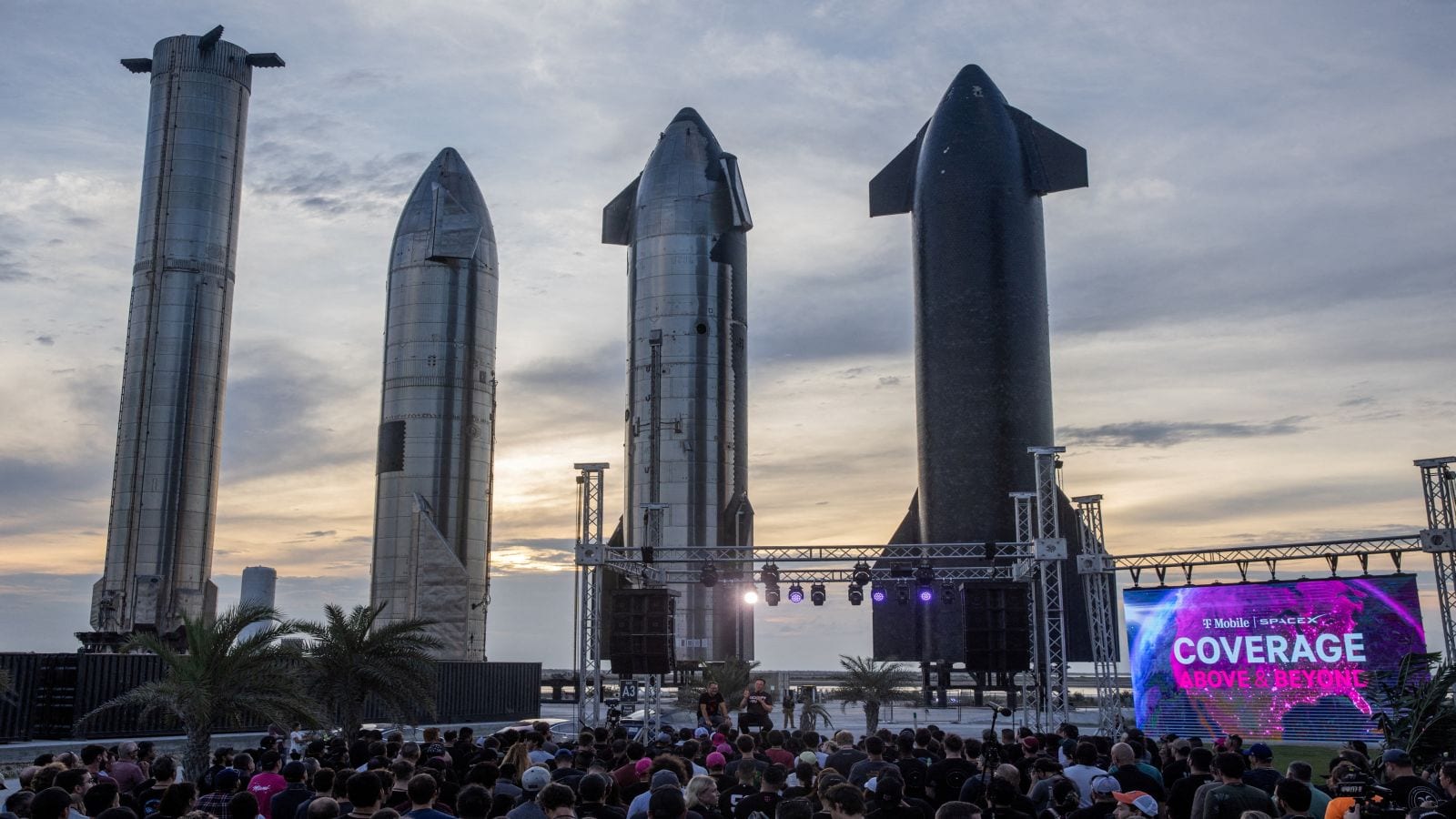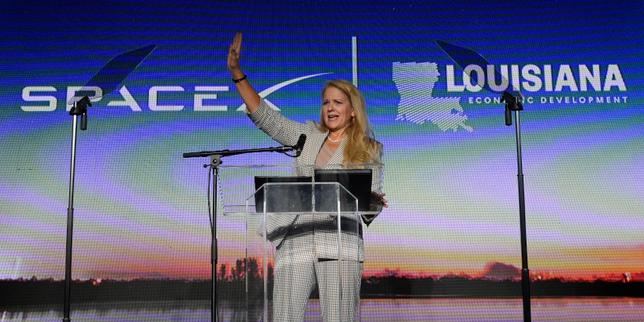
Capital allocation in commercial aerospace is shifting from vehicle iteration velocity to ground infrastructure throughput optimization. When strategic expansion proposals target greenfield sites for high-frequency orbital launch operations, the underlying evaluation framework must move beyond raw acreage metrics and political announcements. The proposal to establish a major launch facility in Louisiana requires a rigorous deconstruction of orbital mechanics constraints, regulatory friction, supply chain logistics, and capital expenditure amortization curves.
Orbital launch facility design is governed by three non-negotiable vectors: geographic latitude limitations on inclination access, downrange safety corridors over unpopulated zones or open water, and heavy-manufacturing proximity. Evaluating a new site requires analyzing whether these vectors outweigh the operational inertia of established nodes like Boca Chica, Cape Canaveral, and Vandenberg.
The Geodetic Constraint Matrix
Earth's rotational velocity provides an inherent delta-v boost that scales with proximity to the equator, measured in meters per second equivalent to $v_e = \omega \cdot R \cdot \cos(\phi)$, where $\phi$ is latitude. Louisiana sits between approximately 29 and 33 degrees North latitude. This latitudinal band offers favorable dynamics for mid-inclination orbits, specifically commercial communications constellations and International Space Station resupply trajectories, but imposes significant penalties for equatorial insertions compared to lower-latitude sites like Kourou or even southern Texas.
The dominant engineering bottleneck for high-cadence heavy-lift operations is not launch pad real estate, but downrange trajectory clearance. A launch facility situated along the Gulf Coast faces immediate maritime and airspace management challenges. Trajectories heading east or southeast must navigate commercial shipping lanes, offshore energy infrastructure, and international airspace boundaries.
[Manufacturing Node] ---> [Barge Logistics] ---> [Coastal Launch Integration] ---> [Trajectory / Downrange Clearance]
Unlike isolated island sites or expansive desert ranges, Gulf Coast locations require sophisticated real-time telemetry tracking and maritime exclusion zone enforcement that scales linearly with launch frequency. The economic viability of the site depends on whether regulatory clearance times can match the target vehicle turnaround rate. If pad turnaround drops below forty-eight hours but maritime clearance queues span days, the physical infrastructure sits idle, degrading the capital utilization rate.
Supply Chain Logistics and Heavy Component Transit
Heavy-lift vehicle architectures rely on massive structural fuel tanks and integrated propulsion assemblies that defy standard over-the-road freight logistics. Transporting flight-hardware components with diameters exceeding nine meters mandates either direct maritime access or dedicated heavy-haul corridors.
Louisiana possesses a distinct structural advantage in this domain: the inland waterway network and access to the Gulf of Mexico. Water transport minimizes mechanical stress on thin-walled stainless steel structures or carbon-composite structures compared to highway transit.
- Barge Transport Integration: Direct integration with river and coastal barge systems allows sub-assemblies to move from fabrication facilities directly to the integration hangar.
- Material Ingestion Efficiency: Prototyping and material supply chains for aerospace-grade alloys and propellants benefit from regional proximity to Gulf Coast industrial chemical refineries and metal processing hubs.
- Workforce Migration Economics: Access to specialized welding, marine engineering, and heavy fabrication labor from the offshore oil and gas sector reduces the friction of workforce acquisition.
The conversion of offshore fabrication expertise into aerospace manufacturing is not trivial. Aerospace tolerances demand strict statistical process control that outstrips traditional shipbuilding standards. However, the foundational metallurgical and structural welding competencies already present in the region bypass the multi-year training lag typical of non-industrial locales.
The Cost Function of Pad Proximity Versus Centralized Integration
The economic rationale for dispersing launch infrastructure against consolidating at primary homeports involves a trade-off between transportation cost savings and infrastructure replication overhead.
Let the total cost function $C$ for a network of launch sites be expressed as:
$$C = C_{\text{capex}} + C_{\text{logistics}}(d) + N \cdot C_{\text{ops}}$$
Where $C_{\text{capex}}$ represents the fixed capital expenditure of building flame trenches, propellant farm storage tanks, integration towers, and deluge systems; $C_{\text{logistics}}(d)$ represents the transport cost over distance $d$; and $N \cdot C_{\text{ops}}$ accounts for the recurring operational overhead multiplied by the number of active sites $N$.
Consolidating operations at Starbase or Cape Canaveral maximizes resource sharing among engineering teams, launch controllers, and GSE (Ground Support Equipment) maintenance crews. Spreading operations to a new geographic zone in Louisiana duplicates fixed overhead. To justify this capital expenditure, the marginal utility of the new site must neutralize the overhead penalty through one of two mechanisms:
- Regulatory Capacity Relief: Relieving environmental and launch-slot congestion at legacy sites where annual launch caps threaten cadence goals.
- Trajectory Optimization: Eliminating intermediate transport legs for payloads originating from centralized domestic manufacturing hubs directly to the pad.
If environmental review bottlenecks at existing facilities restrict flight rates below the vehicle production rate, a new facility acts as a pressure valve. The cost of redundant ground infrastructure is offset by the revenue generated from uninterrupted flight schedules.
Environmental Mitigation and Infrastructure Overhead
A coastal Louisiana site introduces severe localized environmental engineering challenges. Soil mechanics in coastal wetlands and deltaic plains require deep foundation pilings to support the static and dynamic loads of a fully fueled heavy-lift rocket system, which can exceed five million kilograms at liftoff.
Acoustic suppression systems and flame trench design must account for high water tables and saturated soils. The acoustic energy generated by full-thrust static fire tests couples directly with surrounding water and sediment, requiring massive water-injection mitigation systems to prevent structural damage to the launch mount and surrounding ecology.
Furthermore, storm surge vulnerability in the Gulf of Mexico dictates robust flood protection engineering for propellant storage farms and avionics bunkers. Ground support equipment must be hardened against corrosive marine atmospheres and extreme weather events, increasing baseline equipment maintenance costs relative to arid inland environments.
The Strategic Play
Deploying capital into a greenfield mega-launch complex in Louisiana represents a structural hedge against regulatory and spatial saturation at primary coastal ranges. The initiative succeeds only if the maritime transit efficiency for heavy structures and regional labor availability outweigh the capital duplication costs and severe foundation engineering constraints of deltaic geography. Long-term orbital throughput will not be bottlenecked by vehicle design, but by the physical capacity of ground infrastructure to safely process, fuel, and clear high-frequency flight manifests. Integration pathways must prioritize automated propellant loading systems and decoupled launch mounts to prevent localized delays from cascading across the entire flight schedule.