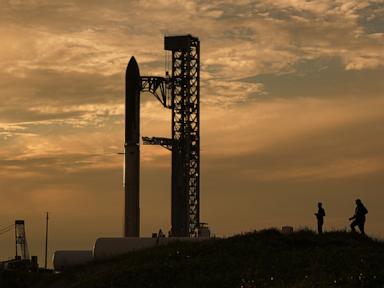
Catching a 230-foot stainless steel rocket booster out of mid-air with giant mechanical arms sounds like bad sci-fi until you actually watch SpaceX pull it off. They nailed it once. Then they tried to push the envelope by attempting a double catch, and the Super Heavy booster ended up splashing down in the Gulf of Mexico instead of resting comfortably in the Mechazilla chopsticks.
If you're wondering why SpaceX aborted the booster catch and sent millions of dollars of hardware into saltwater, the answer comes down to automated safety overrides and real-time telemetry. They didn't lose control. The rocket didn't blow up on ascent. Rather, the system detected an anomaly in the tower or vehicle health parameters during the final descent phase, triggering an automatic divert to the water.
When you're dealing with the largest, most powerful launch vehicle ever built, "close enough" gets you a crater on the launchpad.
What Actually Happened During the Double Catch Attempt
Let's clear up the biggest misconception right away. A water landing in the Gulf wasn't a catastrophic failure. In fact, SpaceX engineers explicitly program the Super Heavy booster to aim for an offshore splashdown point throughout its entire return trajectory.
It only pitches over toward the launch tower—nicknamed Mechazilla—in the final seconds of flight if thousands of health checks pass simultaneously.
During this specific flight test, SpaceX aimed to coordinate an ambitious sequence. While the upper stage Starship continued its suborbital trek toward the Indian Ocean, the Super Heavy booster executed its boostback burn and began plummeting back toward Starbase in Boca Chica, Texas.
Everything looked textbook through the upper atmosphere. The grid fins deployed, steering the massive cylinder through hypersonic and supersonic speeds as aerodynamic heating turned the steel hull orange.
Then came the landing burn.
Right as the Raptor engines relit to decelerate the booster from terminal velocity to a hover, the automated flight computer flagged a criteria violation. Instead of commanding the booster to slide laterally between the launch tower's two giant mechanical arms, the software kept it on its default offshore trajectory. The booster decelerated, hovered briefly just above the waves, and tipped over into the Gulf of Mexico.
Why SpaceX Calls a Gulf Splashdown a Smart Abort
You might think watching a rocket tip over and explode upon hitting the ocean counts as a bad day at the office. It isn't.
If a booster attempts a tower catch with degraded communications, a damaged structural sensor, or a sluggish hydraulic actuator on the catch arms, the risk shifts from losing one rocket to destroying the entire orbital launch mount. Rebuilding a booster takes months at Starbase's massive Mega Bay facilities. Rebuilding an orbital launch tower and stage zero ground support equipment would set the entire Artemis lunar program and Starlink deployment schedule back by a year or more.
SpaceX learned this lesson the hard way during the first integrated flight test in April 2023, when the thrust of 33 Raptor engines obliterated the concrete pad beneath the mount, throwing boulders miles away and forcing a massive redesign involving a water-cooled steel flame deflector.
Because of that experience, the catch commit criteria are ruthlessly strict. Both the vehicle and the tower have to be in near-perfect health. Specifically, the system checks:
- Tower structural telemetry: Ensuring the chopsticks and their massive pulley systems are properly positioned and responsive.
- Booster propulsion health: Verifying that the inner ring of Raptor engines has enough gimbal authority and throttle margin to hover precisely.
- Communication links: Confirming zero packet loss between the ground computers and the descending booster.
When even one sensor reads outside nominal bounds, the abort is instantaneous. No human in launch control has to hit a panic button. The physics and the software simply refuse to let the rocket approach the pad.
The Engineering Madness Behind a Starship Double Catch
To appreciate why attempting a double catch is so difficult, you have to look at the sheer scale of the hardware involved. We aren't talking about Falcon 9 boosters landing on concrete pads with deployable aluminum legs.
Super Heavy doesn't have landing legs. SpaceX deleted them to save mass.
Instead, two small load-bearing pins—often called lift points—jut out from the upper section of the booster just below the forward grid fins. The launch tower's arms have to close around the booster as it hovers, catching those pins on cushioned rails while the rocket is still firing its engines.
Now multiply that complexity by two.
A true double catch scenario involves orchestrating rapid turnarounds or sequential recoveries where both the booster and eventually the upper-stage Ship return to Starbase for tower captures. Even when focusing purely on repeating the booster catch while pushing the upper stage's reentry profile, the thermal and mechanical stresses are brutal.
During the descent, the booster experiences intense acoustic vibrations and aerodynamic loads. The Raptor engines run on subcooled liquid methane and liquid oxygen, operating at chamber pressures higher than any operational rocket engine in history. Restarting those engines in mid-air while falling tail-first through thick coastal air requires split-second propellant settling and turbopump spin-up.
If a single pressure sensor on a methane manifold glitches, or if a communications dish on the tower loses a redundant channel due to plasma interference, the catch is off.
Common Myths About the Booster Landing in the Gulf
Whenever a SpaceX test ends with hardware in the water, headlines inevitably frame it as a dramatic failure. Traditional aerospace reporting often misses how iterative hardware-rich development actually works.
Here is what people usually get wrong about these ocean splashdowns:
- Myth 1: The booster ran out of fuel and crashed.
Reality: Super Heavy actually performed a controlled soft splashdown. It hovered at zero velocity right at sea level before shutting down its engines and tipping over. That proves the guidance, navigation, and control algorithms worked flawlessly right down to the water's surface. - Myth 2: SpaceX lost valuable data because the rocket sank.
Reality: Nearly all critical flight telemetry is streamed in real time via Starlink terminals mounted on the vehicle. By the time the hull hits the saltwater, engineers already have terabytes of pressure, temperature, and vibration data sitting on their servers in Hawthorne and Boca Chica. - Myth 3: The tower arms failed to close in time.
Reality: The arms never even attempted to close because the booster never entered the catch zone. The trajectory remained safely over the water the entire time.
How This Shapes the Road to Full Reusability
SpaceX's entire business model for Starship hinges on rapid reusability. Elon Musk and the engineering team aren't building an expendable moon rocket like NASA's Space Launch System. They are building an orbital airliner designed to fly multiple times a day, refueling in low Earth orbit to send massive payloads to the Moon and Mars.
You can't achieve airline-style turnaround times if you have to fish boosters out of the ocean, scrub off corrosive saltwater, and rebuild engines from scratch. You have to catch them dry, set them right back onto the orbital launch mount, inspect the heat shield, pump in fresh propellants, and launch again.
Every time a booster diverts to the Gulf, it exposes a fragile link in that operational chain. Maybe it was a sensor wire damaged by exhaust recirculation during stage separation. Maybe it was a software timeout caused by high-altitude wind shear forcing the grid fins to work harder than predicted.
Finding those weak points during uncrewed test flights is the entire point.
If you want to track how SpaceX iterates on these catches in real time, stop looking at mainstream news headlines that sensationalize every splashdown. Instead, watch the live telemetry streams during future flights, paying close attention to the "Booster Catch Commit" callout roughly two minutes before landing, and follow independent aerospace observers who monitor FAA airspace closures around Boca Chica to see how quickly SpaceX rolls the next booster out to the pad.