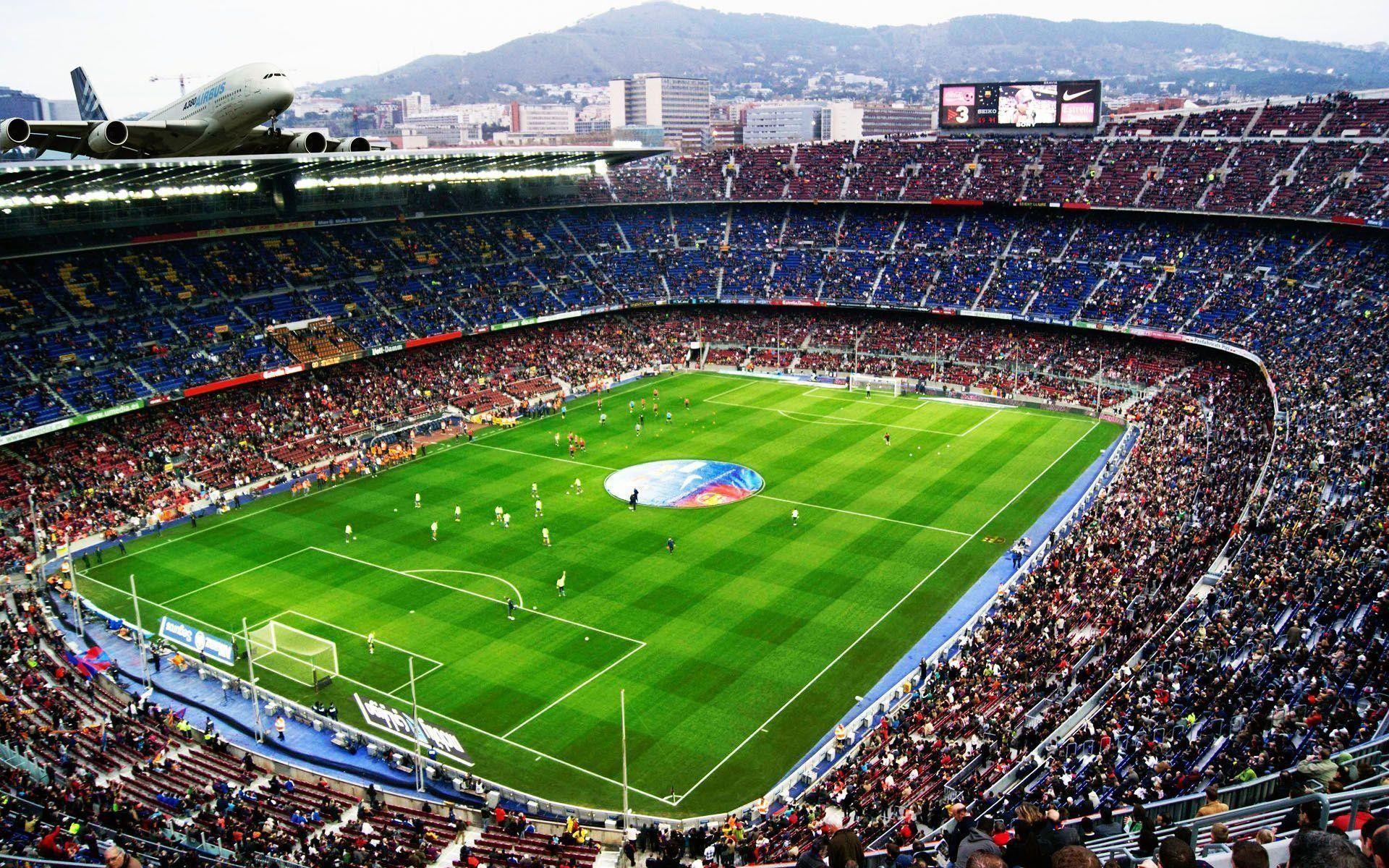
The smell of wet wool, cheap espresso, and stadium turf. If you have ever stood in the concourse of a European arena thirty minutes before kickoff, you know that specific, electric hum in your chest. It feels like neutral ground. It feels like the one place on earth where borders dissolve into ninety minutes of shared obsession.
That illusion is dying. You might also find this related coverage useful: Inside the $151 Million Ontario Student Aid Blind Spot That Triggered a Province-Wide Freeze.
Somewhere in the glass corridors of Brussels, a quiet bureaucratic earthquake is taking shape, and it carries the weight of a sledgehammer aimed directly at the world's favorite distraction. The European Union is drafting a sweeping new sanctions package against Russia, and buried beneath the familiar language of frozen bank accounts, energy caps, and dual-use technology exports lies something far more intimate. A broad, uncompromising ban on Russian participation across European sports.
Not just a tweak to visa rules. Not just a polite request for athletes to compete under a plain white flag. This proposal targets the infrastructure of athletic legitimacy itself—broadcasting rights, sponsorship pipelines, administrative seats on governing boards, and the physical entry of athletes, coaches, and officials into the Schengen zone. As reported in latest reports by TIME, the results are worth noting.
To understand why a diplomat in a tailored suit cares who skates in Milan or who kicks a ball in Munich, you have to stop thinking of sports as a game. You have to start seeing it for what autocracies have always known it to be.
A megaphone.
The Myth of the Apolitical Arena
Consider a hypothetical nineteen-year-old figure skater from Yekaterinburg. Let us call her Alina. She has spent fourteen years waking up at four in the morning, lacing stiff leather boots over bruised ankles, and sacrificing every normal teenage milestone on the altar of a quadruple jump. She does not draft foreign policy. She does not sit in Kremlin war rooms. When she steps onto the ice in Paris or Prague, she wants one thing—to land cleanly and see a number flash on the scoreboard that justifies her childhood.
It is brutally unfair to Alina. That is the first truth we have to swallow, and pretending otherwise makes us dishonest. I have sat across from athletes whose entire life windows—four short years between Olympic cycles—evaporated because of flags sewn onto their shoulders that they never chose. The grief in those rooms is real, heavy, and suffocating. You can taste the bitterness in the back of your throat when you watch a twenty-two-year-old realize their peak physical prime will expire in an empty training rink in Siberia while the rest of the world competes under bright lights.
Yet look at what happens the moment Alina steps onto the podium in a European capital.
The cameras zoom in. State television back home cuts away from grim economic briefings and casualty figures to show a triumphant daughter of the motherland conquering the West. The medal around her neck stops being hers the second the shutter clicks. It becomes state property, melted down into domestic propaganda to prove that the nation is thriving, respected, and unbroken.
Think of international sport like a high-end luxury storefront on a busy Parisian boulevard. Even if the owner of the brand is committing arson down the street, letting them keep their glittering window display on the main avenue tells every passerby that business is normal, that the owner is welcome in polite society, and that the smoke rising two blocks away is none of your concern.
Brussels has finally decided to board up the window.
How the Machinery Actually Works
When headlines reduce complex policy to a phrase like "sports ban," our minds jump straight to customs officers turning away a basketball team at the airport. The reality inside the European Union's new sanctions architecture is much sharper, quieter, and harder to dodge.
Over the past several years, sports federations played a dizzying game of semantic gymnastics. International bodies invented categories like "Individual Neutral Athletes," stripping away national anthems and tricolor flags while still allowing state-funded competitors to enter European venues. On paper, it looked like a compromise. In practice, it was a sieve. Athletes tied to military sports clubs like CSKA Moscow—institutions literally funded by the Russian Ministry of Defense—slipped through vetting cracks. Oligarchs retained quiet influence on executive committees. European broadcasters and betting firms still routed millions of euros into rights packages that kept the Russian sports ecosystem breathing.
The proposed EU sanctions package attacks the plumbing rather than just the tap.
First, it tightens the visa noose across all twenty-seven member states. Up until now, a sympathetic government inside the bloc could issue a short-term humanitarian or cultural visa, allowing an athlete or sports executive to enter the passport-free Schengen area and travel freely to a tournament in another country. The new framework closes that back door, harmonizing entry bans so a rejection in Warsaw or Tallinn holds across the entire continent.
Second, it goes after the money and the microphones. European entities face strict prohibitions on financial transfers, sponsorship deals, and broadcasting agreements linked to Russian state-backed sporting organizations. If a European company cannot legally wire money for broadcast feeds, and a European bank cannot process prize money without triggering compliance alarms, the commercial oxygen vanishes overnight.
Third, and perhaps most painfully for Moscow, it targets governance. For decades, Russian officials and state-aligned billionaires poured billions into international sports federations, buying influence in fencing, boxing, gymnastics, judo, and aquatics. Those seats gave Moscow a veto over its own accountability. By placing key sports administrators and state-affiliated club owners directly onto the sanctions roster, Brussels is forcing international federations—many of which are headquartered in Switzerland or inside EU territory—to choose between keeping Russian board members or keeping access to European banking and legal systems.
In a fight between a Swiss federation's bank account and a Russian vice president, the bank account wins every single time.
Ghosts of Games Past
We tend to suffer from historical amnesia whenever politics collides with athletics, clutching our pearls as if the Olympic charter were carved into stone tablets on Mount Sinai. It was never pure. Not once.
In 1920, following the devastation of the First World War, Germany, Austria, Hungary, Bulgaria, and the Ottoman Empire were barred from the Antwerp Games. After World War II, Germany and Japan were excluded from London in 1948. In 1992, as Yugoslavia tore itself apart in brutal ethnic warfare, the United Nations Security Council passed Resolution 757, explicitly banning Yugoslav teams from international competition. The Danish football team—called back from summer vacations at the last minute to replace Yugoslavia at Euro 1992—went on to win the entire tournament.
And then there is South Africa.
For nearly three decades, apartheid South Africa was systematically starved of international sport. No Springbok rugby tours. No Olympic track teams. No Davis Cup tennis. Critics at the time made the exact arguments echoing through sports bars and editorial pages today. They argued that isolating white South African athletes punished innocent individuals for the sins of Pretoria. They insisted that keeping the lines of communication open through friendly matches would soften the regime's heart.
They were wrong.
Historians and anti-apartheid leaders alike later testified that few things pierced the psychological armor of ordinary white South Africans quite like waking up on a Saturday morning and realizing the world refused to play rugby with them. Economic sanctions moved slowly, buried in trade ledgers and currency exchanges. The sports boycott hit the living room sofa at three o'clock every afternoon. It made moral pariah status visceral. You could ignore a dip in the rand; you could not ignore an empty stadium where the All Blacks used to play.
The Uncomfortable Mirror
Still, if you sit quietly with this policy, a nagging doubt refuses to leave the room. Is this justice, or is it collective punishment dressed up in diplomatic finery?
I do not have a clean, comforting answer for that, and anyone who claims they do is selling you certainty they haven't earned. When Brussels draws a thick black line around an entire passport, it catches both the propagandist and the kid who just wanted to swim the two-hundred-meter freestyle.
Look at the mechanics of modern Russian sports, though, and the boundary between "innocent individual" and "state instrument" blurs until you can barely find it with a magnifying glass. Unlike the American or Western European models, where elite athletes cobble together private sponsorships, university scholarships, and club salaries, high-performance sport in Russia remains deeply fused with the state apparatus. Training centers, coaching stipends, medical teams, and travel budgets flow directly from federal ministries or state-owned energy giants like Gazprom.
When a regime nationalizes athletic glory—using Olympic gold medals to validate territorial aggression and silence domestic dissent—it forfeits the right to demand that the rest of the world treat its athletes as private citizens. The Kremlin built a machine where every victory belongs to the state. It cannot act shocked when the consequences belong to the state, too.
There is another layer here, one that rarely makes it into official press releases from the European Commission. Walk through the locker rooms of international competitions over the last few years and listen to the whispers. Ukrainian athletes—many of whom have lost teammates, coaches, and training facilities to missile strikes—have been forced to share warm-up areas with competitors who publicly endorsed the war or posed at state rallies. When a Ukrainian fencer refused to shake the hand of a Russian opponent in Milan, it was the Ukrainian who was initially disqualified under outdated rules of "sporting etiquette."
Europe looked at that scene and saw a moral absurdity. How do you preach European solidarity at a summit in Brussels on Tuesday, and then force a Ukrainian athlete to bow to a representative of the aggressor state in a European arena on Wednesday? You cannot. The hypocrisy eventually rots the floor beneath your feet.
What Happens When the Whistle Blows
If this sanctions package clears the final hurdles among EU member states—and diplomatic resistance from usual holdouts like Hungary remains the primary obstacle to watch—the fallout will reshape global sports for a generation.
International federations like FIFA, UEFA, and the International Olympic Committee will suddenly find themselves trapped in a vise. Technically, these organizations answer to their own charters, not to the European Parliament. Practically, Europe is the beating commercial heart of world sport. You cannot host a credible World Cup qualifier, a Champions League night, or a European athletics tour if a third of the eligible athletes cannot legally cross the border and broadcasters cannot legally air the feed.
Moscow will almost certainly respond by accelerating its pivot toward parallel tournaments—state-funded spectacles like the BRICS Games or the World Friendship Games, inviting friendly nations and offering inflated prize purses to manufacture the illusion of global relevance. Yet everyone involved knows the difference between winning a tournament in front of handpicked allies and standing atop the podium in Paris, Rome, or Berlin. Prestige cannot be printed on a state press.
Imagine our nineteen-year-old skater from Yekaterinburg again. Picture her standing beside the boards in a cavernous, half-lit rink in the Urals next winter. Her blades are freshly sharpened. Her routine is flawless. Outside, snow piles silently against the concrete walls, and the nearest European border is three thousand kilometers away.
She glides to center ice, takes her starting pose, and waits for the music to begin—performing for an empty balcony, a state camera crew, and a world that has finally turned off the lights.


