The desk lamp in the basement study of a graduate researcher in Cambridge casts a long, amber shadow across a stack of printed lab notes. Outside, the New England air is crisp, biting at the edges of November. Inside, the only sound is the rhythmic hum of a hard drive processing protein folding simulations.
For Elena, that hum used to sound like a future.
She came to the United States on a J-1 visa, a document designed more than six decades ago with a singular, idealistic dream in mind: cultural exchange, shared knowledge, the belief that when bright minds from every corner of the earth gather in American laboratories, everyone wins. She did not come for wealth. She came because the linear accelerator at her university was one of six in the world capable of measuring what she needed to measure.
Then the mail arrived. Not a physical letter, but an encrypted notification from the university’s international office, buried beneath automated alerts about registration deadlines and parking permits.
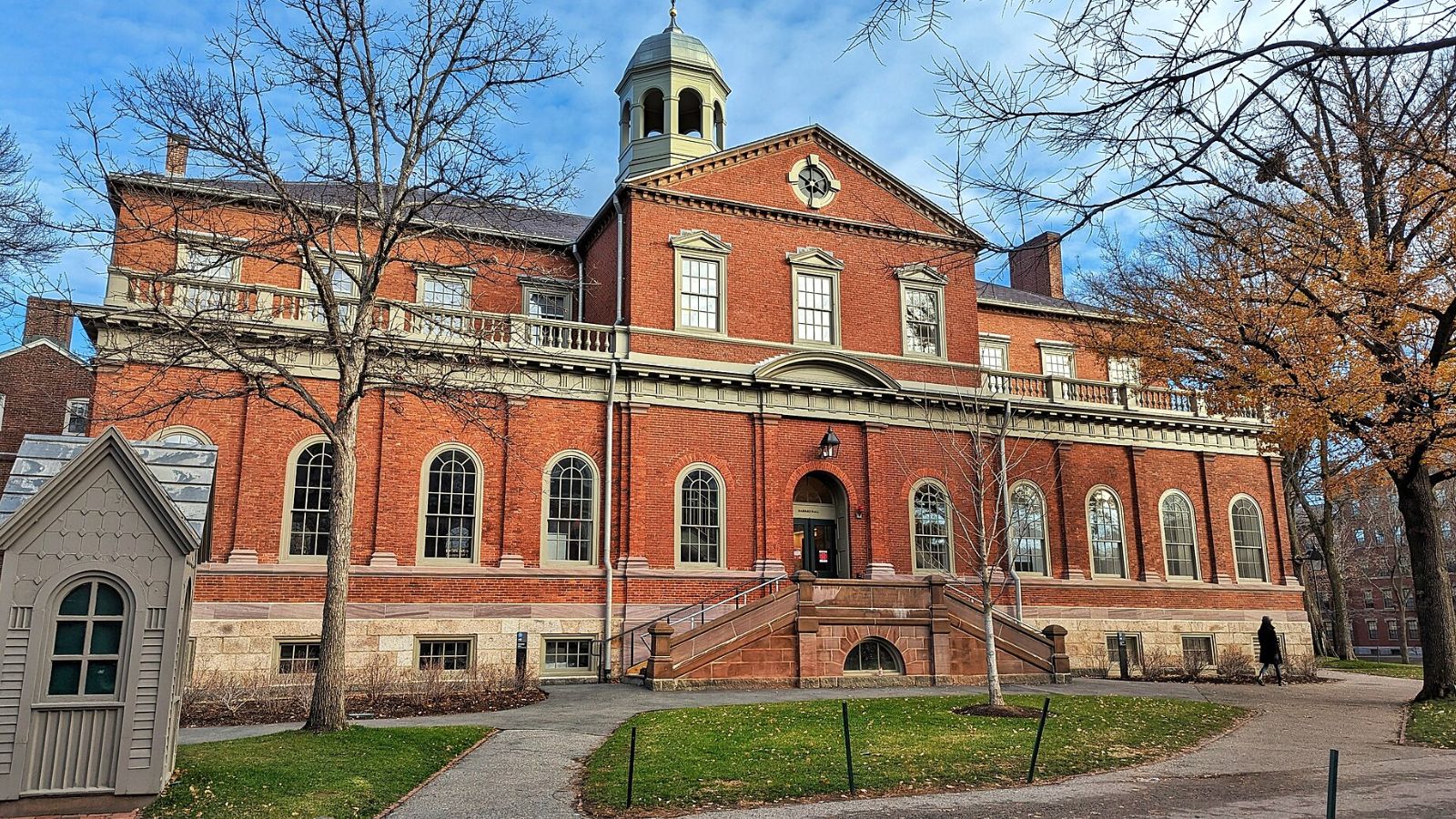
Federal scrutiny. Audits. A sweeping investigation launched into nine elite American institutions—Harvard, MIT, and seven others—over how they manage, track, and protect the very scholars who build their academic prestige.
Suddenly, Elena is no longer just a researcher trying to map a cure for a rare neurodegenerative disorder. She is a variable in a geopolitical equation. She is a line item in an administrative crossfire.
We forget how fragile academic ecosystems actually are. We look at ivory towers and see ancient stone, immutable endowments, and names etched into marble porticos. We assume that institutions of this magnitude operate with the permanence of mountain ranges. But universities are not made of brick. They are made of motion. They are sustained by the constant, breathing influx of international talent—graduate students, visiting professors, postdoctoral researchers—who cross oceans with a single suitcase and a notebook full of equations.
When that motion stutters, the whole machine begins to lock up.
To understand why federal regulators turned their attention toward the J-1 visa programs of America’s most revered universities, you have to look past the dense legalese of administrative compliance and into the mechanics of modern migration.
The J-1 exchange visitor visa is distinct from the more common H-1B work visa or the F-1 student visa. It is governed by the Department of State, not the Department of Homeland Security. Its original architect, J. William Fulbright, envisioned it as a tool of soft diplomacy. Bring young leaders to America, let them experience open academic freedom, let them break bread in university dining halls, and watch them carry those democratic values back to their home nations.
Over the decades, however, the visa mutated into something else entirely: the backbone of America’s advanced scientific research labor force.
Walk into any laboratory in Kendall Square or the quiet quadrangles of Cambridge, and speak softly. You will hear an acoustic map of the world. Mandarin, Spanish, Hindi, French, Persian, Arabic. These are the voices running the spectrometers, writing the algorithms, and pulling seventy-hour weeks over petri dishes. Without them, America’s premier research facilities would effectively grind to a halt.
Yet, the federal government’s recent probe targets something very specific: oversight. Regulators want to know how well universities are tracking these scholars, whether third-party sponsors are cutting corners, if foreign funding is being properly disclosed, and whether the delicate balance between open collaboration and national security is being preserved.
These are fair questions on paper. In practice, they land on the desks of compliance officers who are already drowning in red tape, and on the minds of scholars who now check their email every morning with a cold knot in their stomach.
Consider the human cost of an administrative chill.
When federal agencies open investigations into institutional compliance, universities react defensively. Legal counsels step in. Protocols tighten. Bureaucracy swells. For an international researcher, this manifests as an invisible, suffocating pressure.
A postdoctoral fellow from New Delhi scheduled to speak at an international conference in Zurich suddenly hesitates to book the ticket. Will their re-entry stamp trigger secondary inspection? Will a change in sponsor guidelines invalidate their fellowship?
A brilliant doctoral candidate from Seoul debates whether to accept a tenure-track offer in the United States or take a stable, predictable post in Singapore, where immigration policy isn't a political football tossed back and forth across a polarized aisle.
Talent is remarkably mobile. It flows toward stability the way water flows toward the lowest elevation. When a nation begins to signal, even implicitly, that its guest researchers are viewed primarily through the lens of suspicion rather than partnership, the water starts to change course.
We are witnessing a slow-motion collision between two incompatible worldviews.
On one side sits the twentieth-century paradigm of national borders, sovereign security, and strict regulatory control. Governments have a legitimate duty to protect intellectual property, prevent illicit technology transfer, and ensure that public or private research infrastructure is not exploited by strategic competitors. That is the reality of the twenty-first-century geopolitical landscape.
On the other side sits the reality of twenty-first-century science. Knowledge is no longer a localized crop harvested in national silos. It is a global cloud. A breakthrough in artificial intelligence made in Shenzhen instantly changes the parameters of a laboratory in Boston, which in turn sparks a clinical trial in London. Innovation is cooperative, cumulative, and borderless.
When you throw sand into the gears of that exchange in the name of rigorous enforcement, you aren't just frustrating bureaucrats. You are slowing down the cure for cancer. You are delaying the transition to scalable green energy. You are missing the next paradigm-shifting breakthrough because the person who would have discovered it decided to board a flight in the opposite direction.
The investigation into Harvard, MIT, and their peers will likely yield reams of new compliance manuals, updated auditing software, and perhaps a few levied fines or mandated procedural overhauls. Bureaucracies always respond to pressure by producing more bureaucracy.
But the deeper damage cannot be remedied by an amended compliance form.
Back in her basement study, Elena closes her laptop for the evening. The protein model she is building remains incomplete, spinning slowly in the amber light of her screen. She loves this country’s libraries. She loves the fierce, unfiltered debates in the seminar rooms. She loves the sheer audacity of the scientific enterprise here.
Yet, for the first time since she arrived, she wonders if she is standing on solid ground or on a sheet of thin spring ice.
She picks up her phone, scrolls past the news alerts about federal subpoenas and congressional hearings, and looks at a photograph pinned to the corkboard above her desk: her parents standing outside their home in Eastern Europe, smiling proudly beneath a banner that reads our scientist.
She turns off the desk lamp. The room goes dark. The hard drive hums on, waiting for morning.