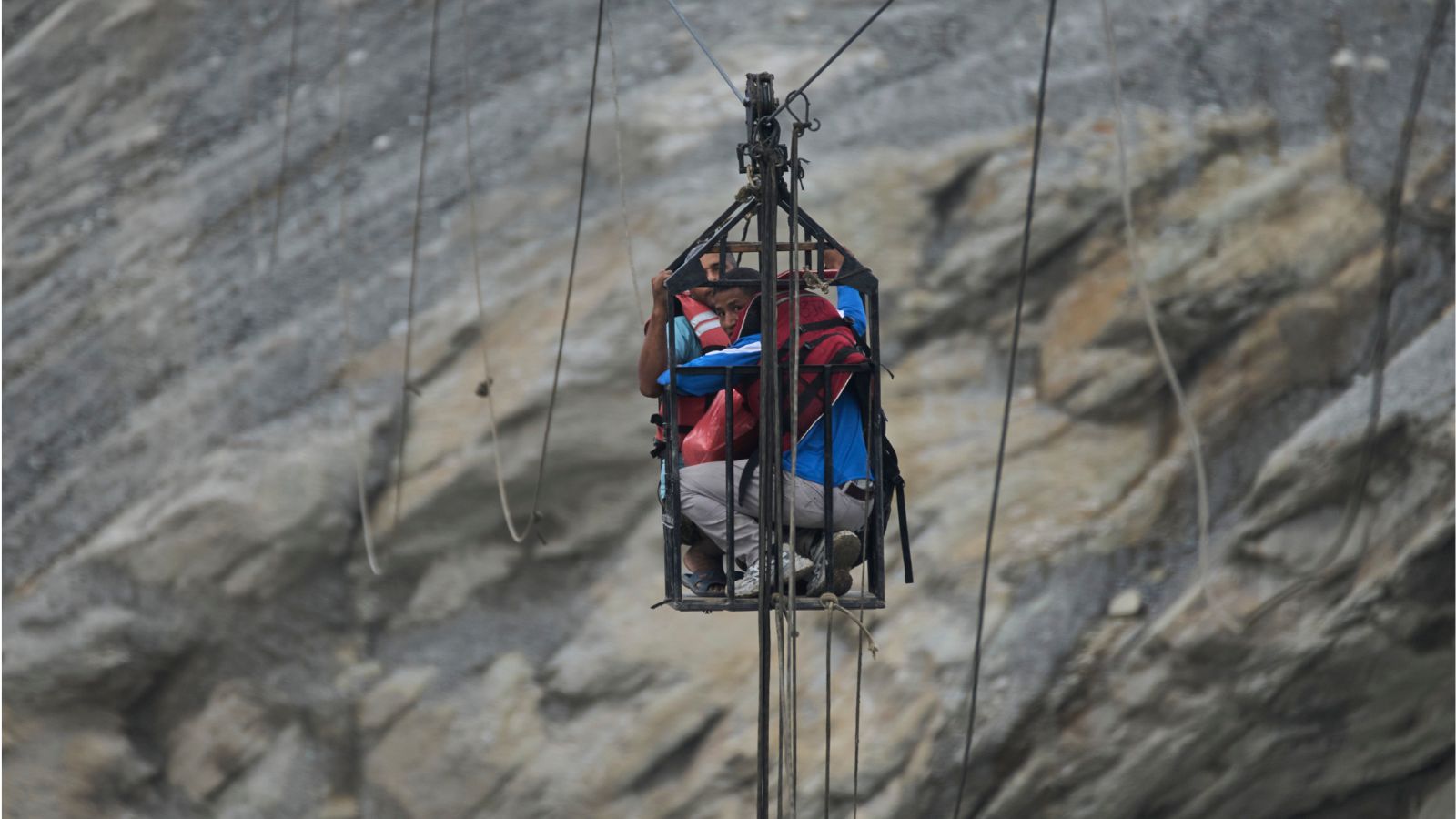
The monsoon does not negotiate. When the skies over Nepal rupture, the water arrives not as a gentle soaking but as a heavy, slate-colored wall that strips hillsides of topsoil, rolls boulder fields down river valleys, and turns arterial highways into churning mud chutes.
Official disaster management frameworks in Kathmandu love paperwork. They produce multi-page PDF strategies, allocate emergency funds through bureaucratic funnels that take weeks to clear, and dispatch assessment committees long after the current has swept away the evidence. When catastrophic floods tear through rural districts, the people left standing in the ruins do not wait for a ministerial convoy. They wade into the debris themselves.
Survivor-led rescue operations represent an unwritten rule of rural survival across South Asia. When state machinery stalls, community solidarity becomes the primary emergency response unit. This dynamic exposes a systemic failure in disaster preparedness that goes far beyond seasonal weather anomalies. It points to a structural neglect of mountain geography, fragile infrastructure, and decentralized early warning systems.
The Anatomy of State Absence in Mountain Valleys
Nepal spans some of the most rugged terrain on the planet. Its river basins are steep, narrow, and ecologically fragile. Heavy precipitation events triggered by shifting climate patterns concentrate massive volumes of water into tight gorges before spilling over agrarian plains.
When these flash floods occur, communication lines drop within minutes. Bridges snap like dry twigs, and dirt tracks connecting remote settlements to district headquarters vanish beneath landslides. The central government in Kathmandu relies on the Nepal Army, the Armed Police Force, and the Nepal Police for search and rescue. Yet, centralized security forces face severe logistical bottlenecks.
Logistical isolation is the primary killer during the first forty-eight hours of a crisis. Heavy military helicopters cannot fly through violent storm cells or thick cloud cover hugging the lower Himalayas. Ground troops must march on foot through blocked passes, carrying manual tools. By the time state-backed rescue teams reach remote hamlets in districts like Sindhupalchok, Kavrepalanchok, or Taplejung, the critical window for saving trapped individuals has often closed.
Survivors understand this brutal math. They know that if someone is pinned beneath a collapsed stone masonry wall or swept into an eddy of the Trishuli or Sun Koshi rivers, the first response must come from the neighbor standing fifty feet away.
Inside the Mud and Grief
The physical labor of rescue is only half the burden. The psychological toll of searching for missing family members while knee-deep in silt requires a resilience that defies easy categorization.
Local volunteers use whatever is at hand. Long bamboo poles serve as probes to test the density of mudbanks where houses once stood. Kitchen utensils, iron agricultural mattocks, and bare hands replace specialized excavation gear. There are no thermal imaging drones operated by villagers, no trained cadaver dogs, and no professional scuba divers checking river bends. There are only tired shoulders, wet clothes, and an agonizing desire to recover the bodies of children, parents, and siblings before the river carries them downstream into India.
Journalists often frame these moments through the lens of inspiring resilience. That framing misses the point. Resilience is frequently a polite word for abandonment. When villagers spend days digging through debris with kitchen knives because the state failed to preposition heavy machinery in high-risk zones, that is not a triumph of the human spirit. That is a systemic failure of governance.
The grief in these communities is compounded by economic ruin. Subsistence farmers lose their standing maize crops just weeks before harvest, along with their livestock, grain stores, and legal land documents. Without land deeds, proving ownership to claim government relief payouts becomes an administrative nightmare. The survivors find themselves fighting a two-front war against nature's fury and bureaucratic indifference.
Structural Vulnerability and Unplanned Infrastructure
The severity of Nepal's annual flood disaster is not purely meteorological. Human activity has aggressively altered the landscape over the past two decades. Unscientific road expansion sits at the epicenter of the crisis.
Local politicians and contractors eager to deliver rural road access use bulldozers to cut unpaved tracks into steep mountain slopes without proper geological surveys or drainage management. Millions of tons of loose earth are pushed down-slope, creating massive artificial debris traps. When heavy monsoon rains hit, these loose soil heaps turn into hyper-concentrated mudflows that bury downstream villages with terrifying velocity.
Unregulated rural road building has effectively weaponized the landscape against the people living in the valleys. Environmental scientists have warned about this phenomenon for years, pointing out that poorly engineered earth-moving operations amplify landslide risks exponentially. Yet, local governments continue the practice to satisfy short-term political demands for road connectivity.
Hydropower development adds another layer of tension. Dozens of run-of-the-river projects choke Nepal's turbulent rivers. While these projects generate vital electricity, sudden water releases from dams during peak monsoon surges—often done to protect plant infrastructure—frequently catch downstream fishermen and riverside dwellers entirely by surprise. When flash floods combine with sudden dam discharges, the resulting torrents wipe out entire settlements before residents can sound an alarm.
The Failure of Early Warning Systems
Nepal has made strides in installing siren-based early warning systems along major river corridors like the Karnali and Narayani basins. International donors have poured funding into SMS alert systems designed to warn downstream communities of rising water levels.
However, these systems suffer from severe last-mile failures. A text message warning sent to a mobile phone is useless if the cell tower loses power five minutes into the storm. Furthermore, many marginalized communities—particularly indigenous groups living in remote river pockets—may not speak Nepali fluently, may lack literacy skills, or may simply ignore automated warnings that sound too frequently during the monsoon season without clear instructions on where to evacuate.
When the warning fails, the burden shifts entirely back to local observation. Elders who know the sound of the river shifting its bed become the only functional weather radar. They look for sudden changes in water color, listen for the deep subsonic rumble of upstream landslides, and shout warnings down the valley line.
Reforming Disaster Response from the Ground Up
If Nepal is to break this cycle of seasonal tragedy, disaster management must undergo a radical decentralization. Relying on centralized emergency funds dispatched from Kathmandu is an outdated colonial administrative model unsuited to a rugged federal republic.
District-level disaster management committees must be given independent financial autonomy and pre-positioned resources. Instead of storing rescue boats, satellite phones, and hydraulic rescue tools in central warehouses in Kathmandu or Pokhara, these assets must be housed directly within high-risk rural municipalities.
Crucially, local youth networks and community forest user groups must receive professional training and certification in search and rescue protocols. These groups are already the first responders on the ground. Equipping them with proper radios, life vests, heavy-duty shovels, and portable water purification units would save more lives in the critical first twelve hours than a battalion of soldiers flying in from the capital three days later.
Insurance mechanisms for smallholder farmers must also evolve. Traditional crop insurance schemes in Nepal remain inaccessible to subsistence farmers who operate outside formal banking channels. Without financial cushions, survivors are forced into high-interest debt with local money lenders just to buy corrugated tin sheets for temporary shelter before winter sets in.
The monsoon will return next year. The clouds will gather over the Tibetan plateau, the warm moisture will sweep up from the Bay of Bengal, and the rivers will rise again. Whether the victims of the next deluge are left to claw through the mud alone depends entirely on whether policymakers in Kathmandu are willing to trade their glossy white papers for the brutal, muddy reality of the mountain valleys.