The Rio Grande does not respect blueprints. For centuries, it has carved its way through the Chihuahuan Desert, a muddy ribbon of life slicing through sheer limestone canyons. If you stand on the banks near Big Bend National Park, the silence is heavy, broken only by the rustle of river cane and the occasional splash of a softshell turtle. The air smells of baked clay and creosote bushes after a rare rain. It feels permanent.
But a few miles away, the quiet gives way to the grinding gears of bulldozers.
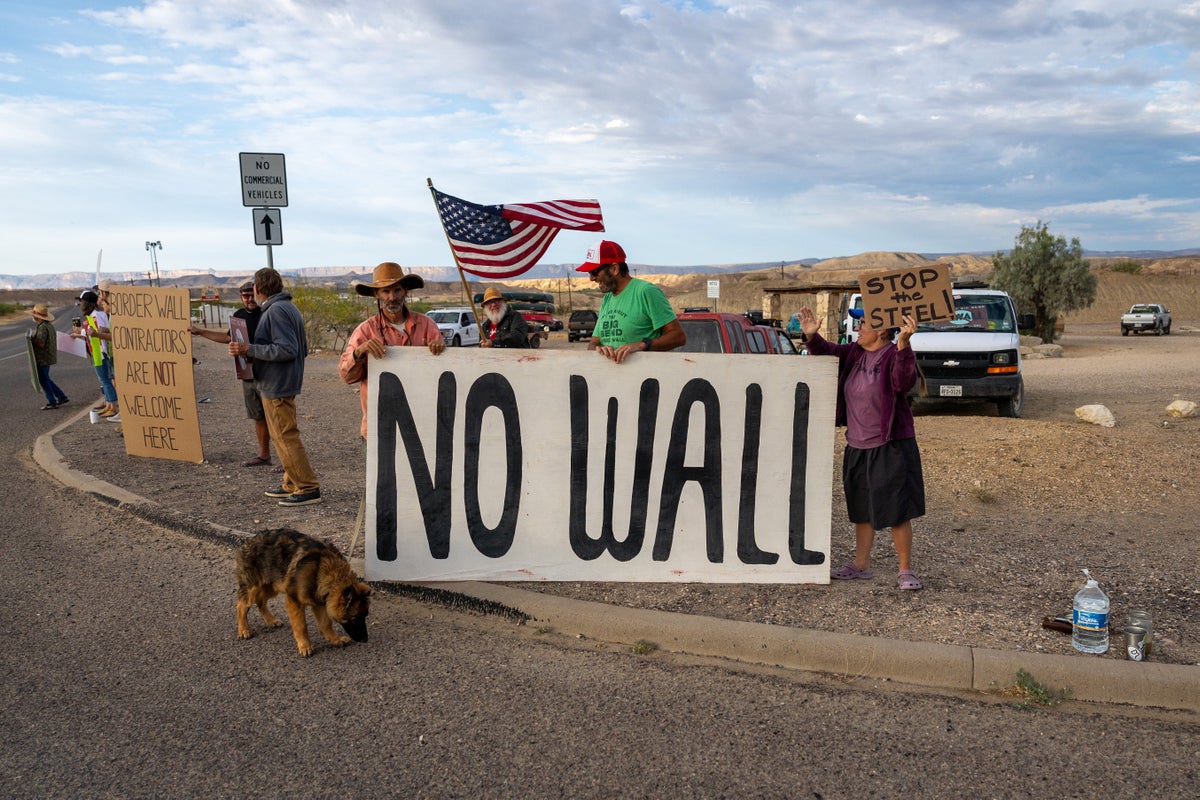
A massive steel barrier is slated to slice through this delicate ecosystem. Proponents call it a vital measure for national security. Environmentalists and local landowners call it something else: a dam in disguise. A federal lawsuit now warns that when the torrential rains of the monsoon season hit, this steel wall will trap debris, choke the river's natural overflow, and trigger catastrophic flooding that could alter this ancient landscape forever.
To understand how a wall becomes a flood hazard, you have to look at how water behaves when it meets a cage.
When the Desert Turns to Sea
Imagine a rancher named Mateo. His family has run cattle on the Texas border for three generations. Mateo knows that the desert is a place of extremes. For ten months of the year, the earth is bone-dry, cracked like old leather. But when the summer monsoons hit, the sky opens.
Dry arroyos turn into raging torrents within minutes. The Rio Grande swells, bursting its banks and spreading across the floodplain. This flooding isn't a disaster to the local ecology; it is a life-blood. It deposits rich sediment, flushes out stagnant salt deposits, and sustains the cottonwood groves that host hundreds of migrating bird species.
Now, place a thirty-foot-tall steel barrier made of thick bollards spaced just inches apart directly in that floodplain.
When the floodwaters rush toward the river, they don't just carry water. They carry uprooted mesquite trees, massive clumps of river cane, dead brush, and tons of sediment. As this debris hits the closely spaced steel bollards, it catches. Twig by twig, branch by branch, a natural wicker wall forms against the steel.
The barrier is no longer a fence. It is a dam.
Unable to flow into the river channel, the trapped water backs up. It swells outward, drowning the surrounding desert under feet of muddy water. For someone like Mateo, this means submerged grazing lands, drowned livestock, and the destruction of historic property. For Big Bend National Park, it means the potential erasure of pristine habitats and the scarring of a landscape that millions of Americans cherish as a untouched wilderness.
The Friction of Frictionless Design
Engineers who design these barriers point out that the bollards have gaps. They argue that water can pass through. On paper, in a clean laboratory simulation, it works.
Reality is messy.
The lawsuit filed against the project highlights a fundamental flaw in the planning: the failure to account for flash flood debris. The international boundary treaties between the United States and Mexico explicitly prohibit the construction of structures that could deflect or obstruct the flow of the river, precisely because water diverted on one side can cause devastating erosion and flooding on the other.
Consider what happens next. When water is blocked on the American side, it builds immense hydraulic pressure. If the wall holds, the water forces its way laterally, scouring the earth beneath its foundations and creating massive sinkholes. If the water is deflected toward the Mexican side, it gouges out the opposite bank, destroying Mexican farmland and shifting the actual physical border of the United States.
The river will have its way. You can try to cage it, but water always finds the path of least resistance, even if it has to tear down the earth to do it.
The Invisible Stakes of a Changing Border
It is easy to view this conflict through a purely political lens. The national conversation around border security is loud, fiercely partisan, and often completely detached from the physical reality of the geography it discusses.
But on the ground, the stakes are tangible. They are measured in acre-feet of water and tons of displaced silt.
The area targeted for the wall is adjacent to some of the most rugged, spectacular terrain in North America. Tourism keeps the small gateway towns alive. People travel from all over the world to hike the Lost Mine Trail, to canoe through Santa Elena Canyon, and to see the stars in one of the darkest night-sky reserves on the planet.
If the proposed wall causes the Rio Grande to back up and flood catastrophically, the infrastructure of the park—roads, campgrounds, historic visitor centers—could be ruined. The economic engine of an entire region hangs in the balance, threatened by a design that treats a dynamic, living river system as a flat line on a map.
The lawsuit is a desperate attempt to force a pause, a demand that human engineering respect the laws of hydrology before the concrete is poured and the steel is welded.
The Long Memory of the River
The sun begins to dip below the Chisos Mountains, casting long, purple shadows across the canyon walls. The river glides by, a deep, murky green. It looks peaceful, almost fragile, under the vast Texas sky.
But the river has a long memory. It remembers every flood, every drought, every attempt by humans to channel, dam, or redirect its path. Every previous attempt to wall off portions of the Rio Grande floodplain has resulted in unexpected erosion, localized flooding, and expensive repair bills funded by taxpayers.
The bulldozers continue their work, their rumbling echoing off the limestone cliffs. The steel posts wait in neat rows, ready to be driven deep into the desert floor. Everyone is waiting for the summer clouds to gather on the horizon, knowing that the true test of the wall won't be decided in a courtroom, but by the irresistible weight of the rising water.