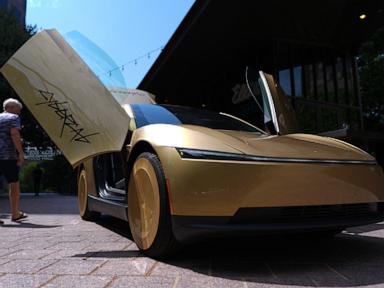
The metal circle in front of you has been there since the beginning. Your grandfather held it on dusty dirt roads with white-knuckled grip. Your mother turned it to dodge a sudden patch of black ice on the highway. You adjusted your hands at ten and two before your very first driving test, listening to an instructor drone on about posture and safety. It feels permanent. It feels like an extension of your own hands.
It is gone.
Tesla has officially crossed a threshold that science fiction promised for decades but reality continually pushed into tomorrow. Real passengers are sliding into the back seats and front cabins of vehicles rolling down public streets, looking forward at empty dashboards. No steering wheel. No pedals. Just open space where the command center of the automobile used to live.
Most people look at this milestone and see a gadget. They see a tech company flexing its engineering muscle, another incremental software update wrapped in sheet metal. They are missing the entire point.
This is not about cars. This is about surrender.
To understand why this moment feels so quietly terrifying, you have to remember what driving actually means to the modern human. We spend years of our lives staring through a windshield, micro-adjusting our trajectory every half-second. It is an act of total control masked as routine. Every merge, every tap of the brake, every slight twitch of the wrist keeps disaster at arm's length. We are conditioned to believe that safety lives in our fingertips.
Then comes the Cybercab, or the fully autonomous iteration making its rounds. You open the door. You look at the floorboards. Nothing is there.
Imagine, for a hypothetical moment, that you are sitting in that front passenger seat as the vehicle detaches from the curb. Your right foot instinctively twitches toward a floor mat that holds only empty air. Your hands hover over your lap, fingers curling into phantom grips. Your brain screams that something is broken. There is a primal panic that surges up from the base of your skull when the car approaches a tight intersection, turns the front wheels with an audible hum, and steers itself through the gap without a single human hand touching the metal.
It feels wrong. Until it feels normal.
That transition period, that uncomfortable friction between what we have always known and what is actually happening, is where history is made.
For the past decade, autonomous vehicle development has felt like a perpetual science fair. Companies promised robotaxis next year, every year. They draped sensor towers over sedans like awkward party hats. They geofenced tiny, perfectly mapped neighborhoods in sun-drenched cities and called it a revolution. Skeptics pointed at every disengagement report, every confused sensor in a heavy downpour, every bizarre traffic cone standoff, and declared that full autonomy was a pipe dream.
They were looking at a linear timeline for an exponential technology.
When a vehicle removes the mechanical controls entirely, the engineering philosophy shifts. You are no longer designing a tool for a human to operate with machine assistance. You are designing a machine that operates independently, with humans purely as cargo. It changes the structural architecture of the cabin. It changes how we think about space, time, and travel.
Consider the commute. For millions of people, the morning and evening drives are a daily ritual of stress. Brake lights stretching into the horizon. Aggressive lane changers cutting across three lanes of traffic. The low-grade hum of cortisol pumping through your veins before you even reach your desk. We accept this as the baseline cost of earning a living.
Now, imagine that commute replaced by forty minutes of uninterrupted silence. Or reading. Or sleeping. Or simply staring out the window at the passing sky without your brain constantly calculating stopping distances.
Critics often ask the inevitable question: Is it safe?
The answer is brutally honest, and it is one that tech executives rarely frame correctly. It is not about perfection. It is about comparison. Human drivers are catastrophically bad at operating multi-ton metal boxes. We text. We daydream. We drink. We get angry at people who cut us off. We kill tens of thousands of people every single year because our attention spans are built for wandering savannas, not sixty-mile-per-hour concrete corridors.
Autonomous systems do not get road rage. They do not look down at a glowing screen to read a text message. They have cameras that see in three hundred and sixty degrees simultaneously, processing petabytes of spatial data faster than a human neuron can fire a single thought. They make mistakes, yes. But their mistakes are algorithmic, patchable, and shared instantly across an entire global fleet. When one car learns a lesson about an unexpected obstacle, every car on the network knows it a second later.
No human driver can download an update on how to handle black ice while sleeping.
We are standing at the exact midpoint of a massive psychological pivot. Right now, riding in a wheel-less car feels like a novelty ride at an amusement park. People record videos on their phones, laughing nervously as the steering column remains stubbornly smooth and bare. They test the system, watching the screen visualize pedestrians as flickering green boxes, waiting for it to falter.
That novelty will curdle into indifference surprisingly fast.
Think back to the first time you stepped onto an escalator or an elevator without an operator. Think about how strange it felt to trust a cable and a motor with your life, standing in a small box while gravity did the heavy lifting. Today, you do not think twice about it. You step in, stare at your phone, and step out on your floor.
The steering wheel is heading for the same historical dustbin as the manual crank starter and the horse whip.
There is a profound sadness in that, too. We are losing a physical connection to our machines. The car was the ultimate symbol of twentieth-century independence. The open road, the midnight drive with the windows down, the absolute authority of the wheel under your palms. To strip that away is to admit that we are too clumsy, too distracted, and too dangerous to be trusted with our own transit.
And yet, as the vehicle pulls up to the destination, gliding to a gentle, perfectly calculated halt at the exact curb edge, the door pops open. You step out onto the pavement. You look back at the empty cabin, glowing softly in the twilight.
The road ahead is clear. Nobody is driving.